
Stepping into the 6th semester of BICTE brings you face to face with the core pedagogical principles that define effective classroom teaching and educational measurement. Mastering how tests are built, scored, and interpreted requires consistent engagement with authentic university exam questions.
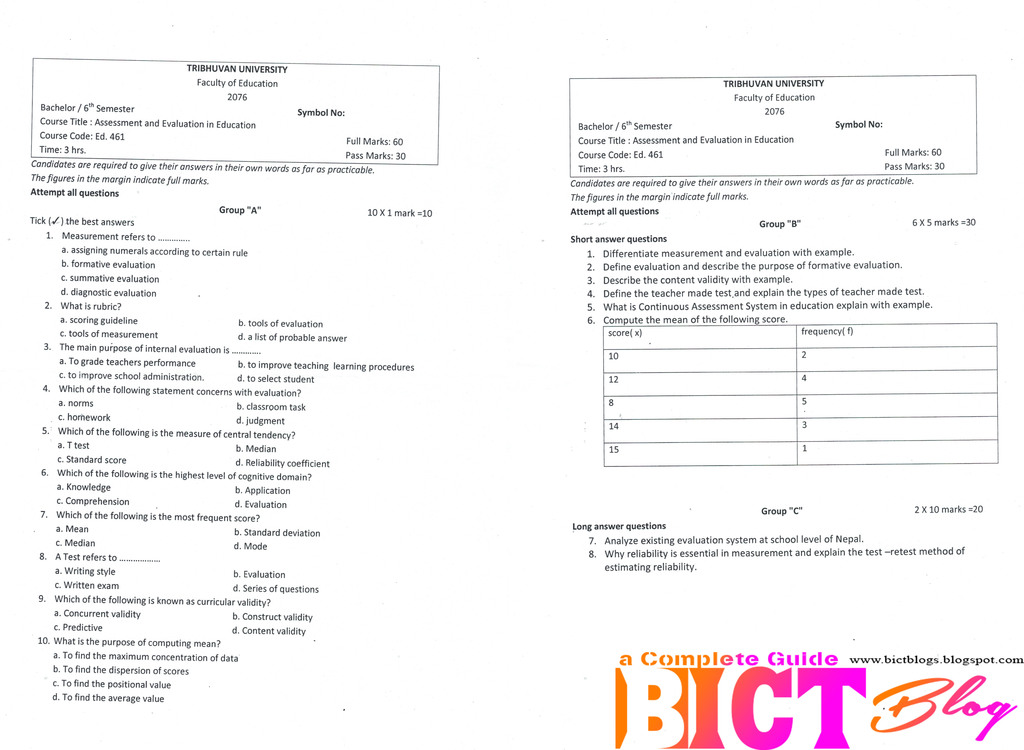
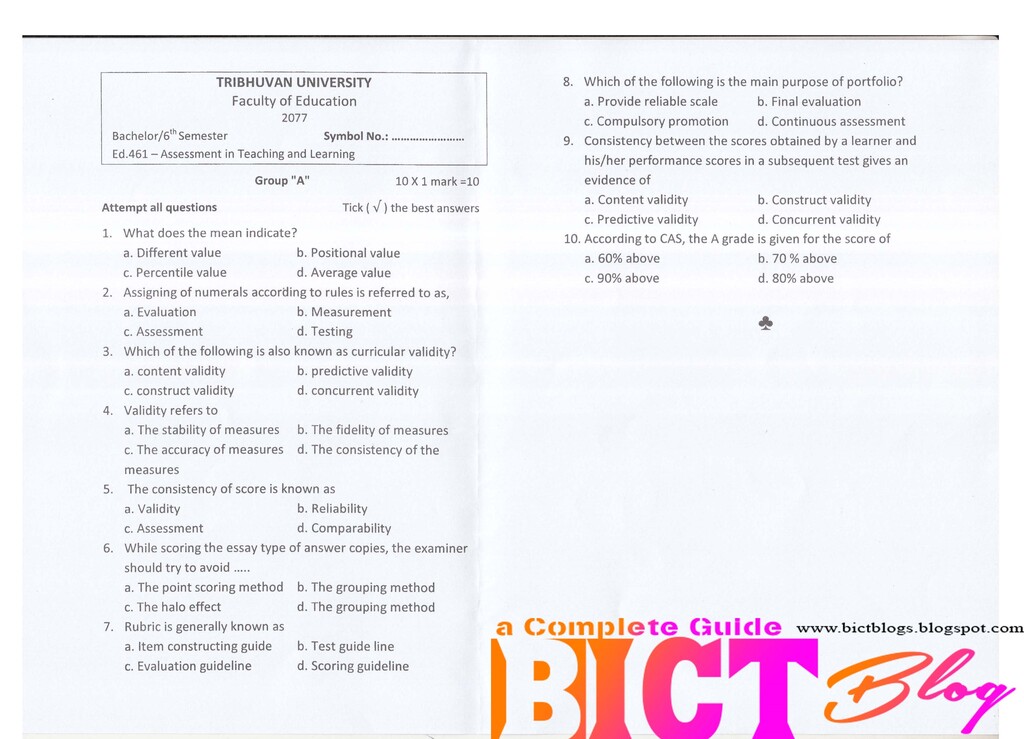
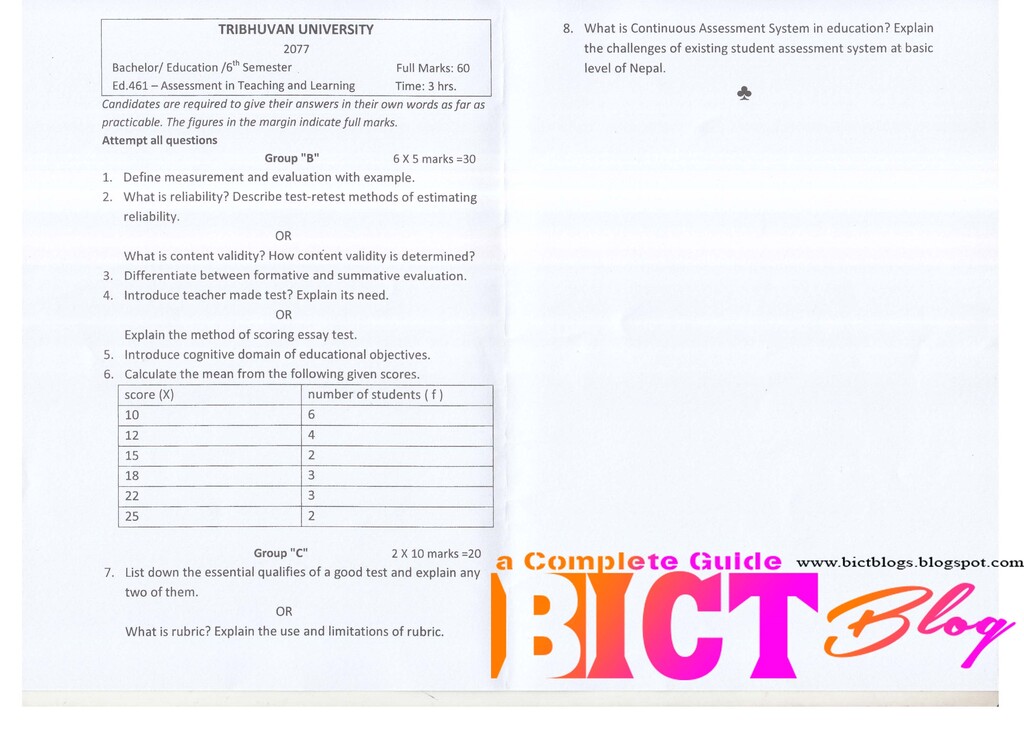
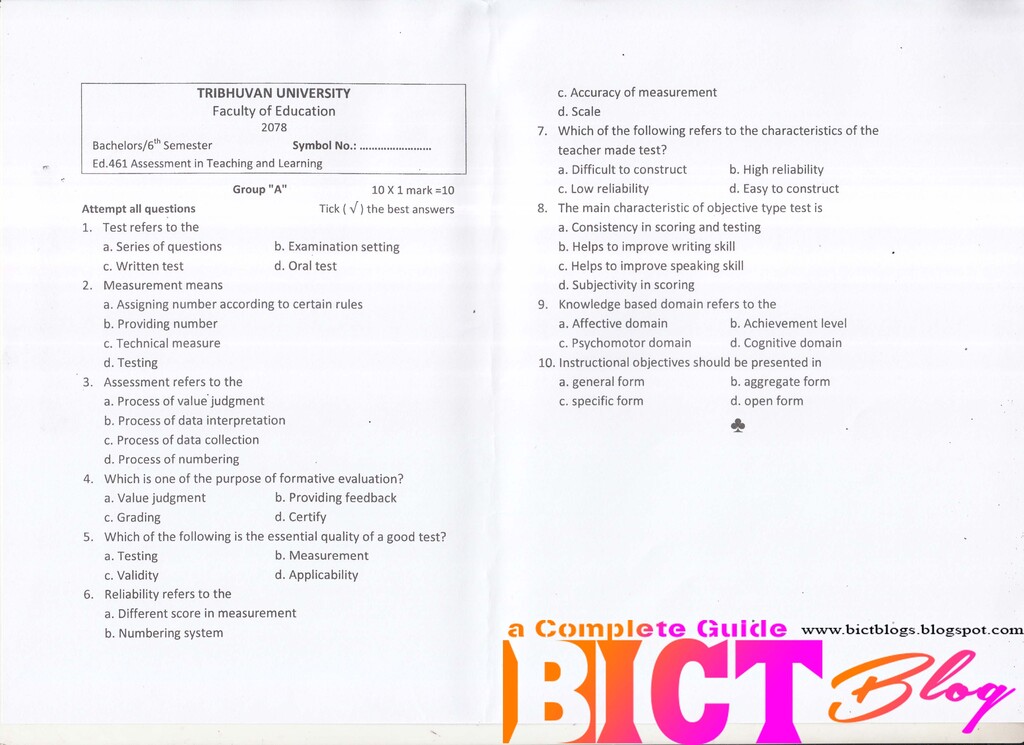
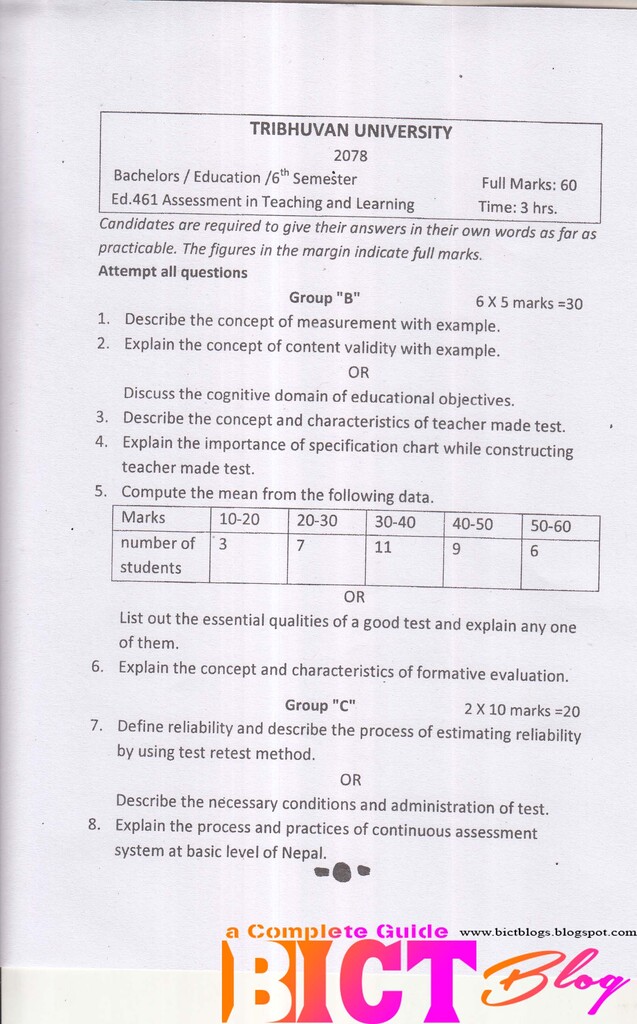
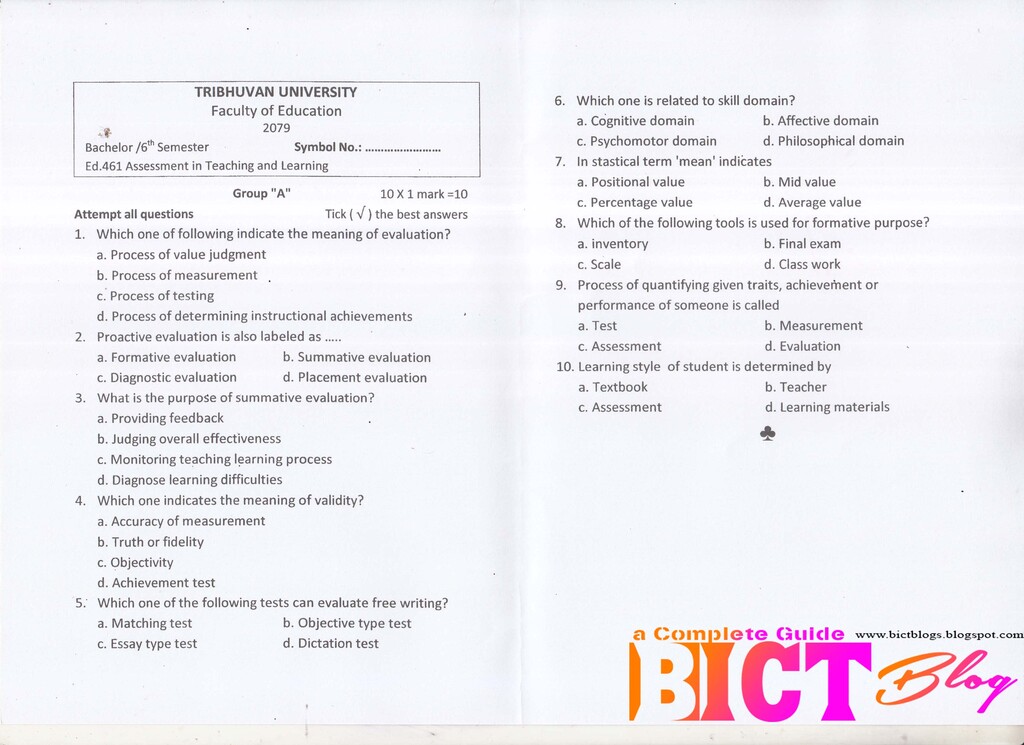
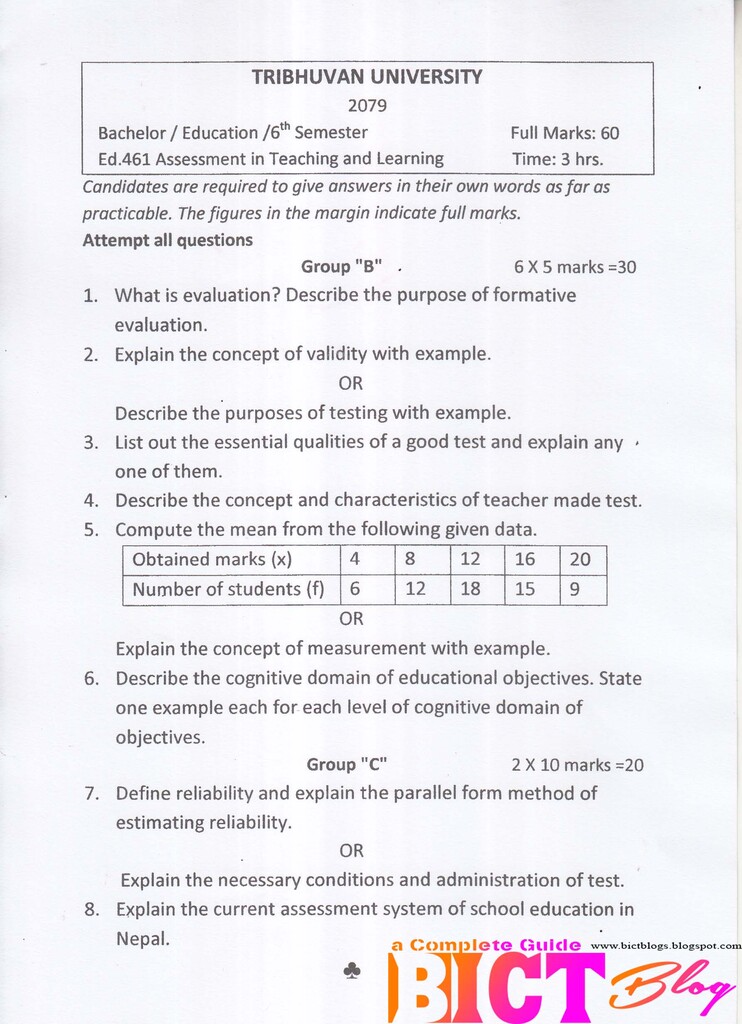
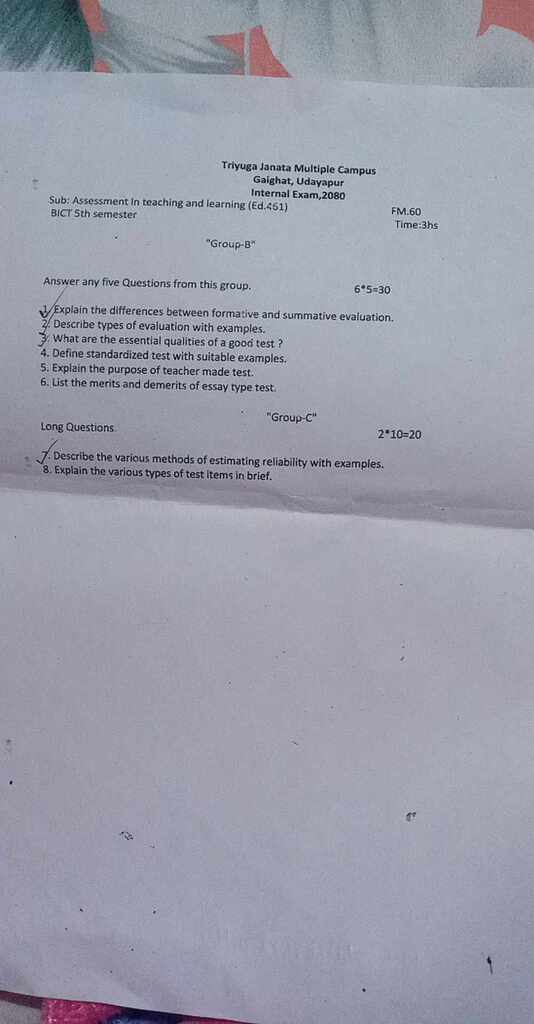
This collection gathers Tribhuvan University past question papers for Assessment and Evaluation in Education (also titled Assessment in Teaching and Learning, course code Ed. 461) covering exam sessions from 2076 to 2079 BS. The material also features an included 2076 paper for Fundamental of Curriculum (Ed. 451), giving students under the Faculty of Education a comprehensive look at how professional education courses are evaluated.
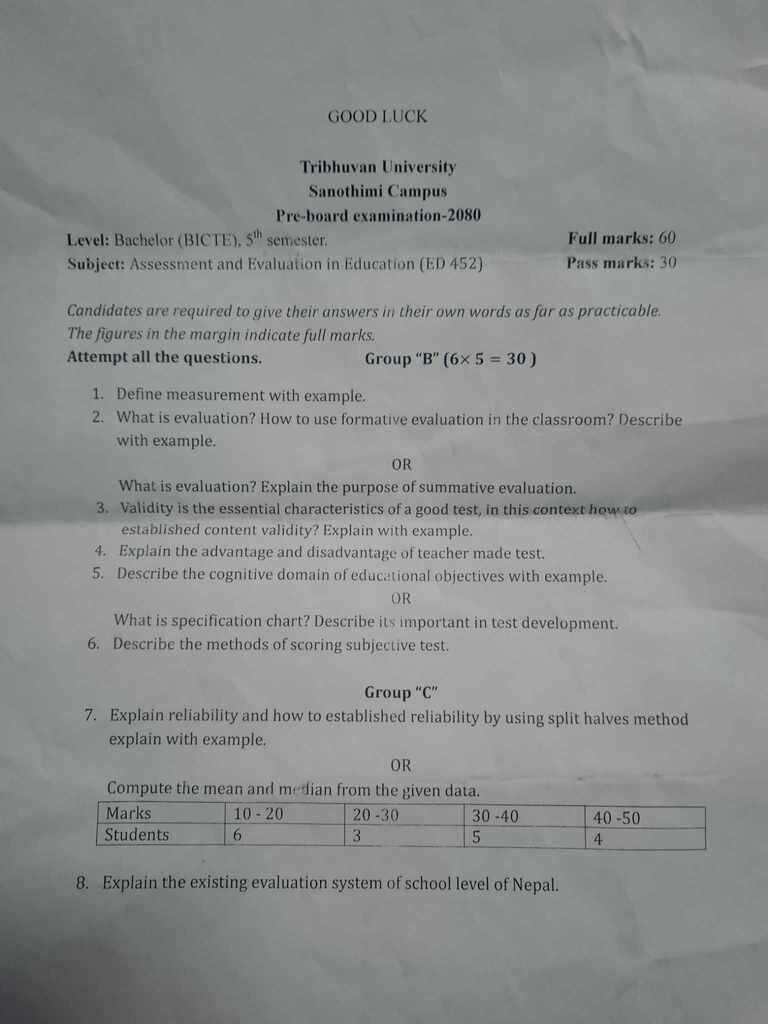
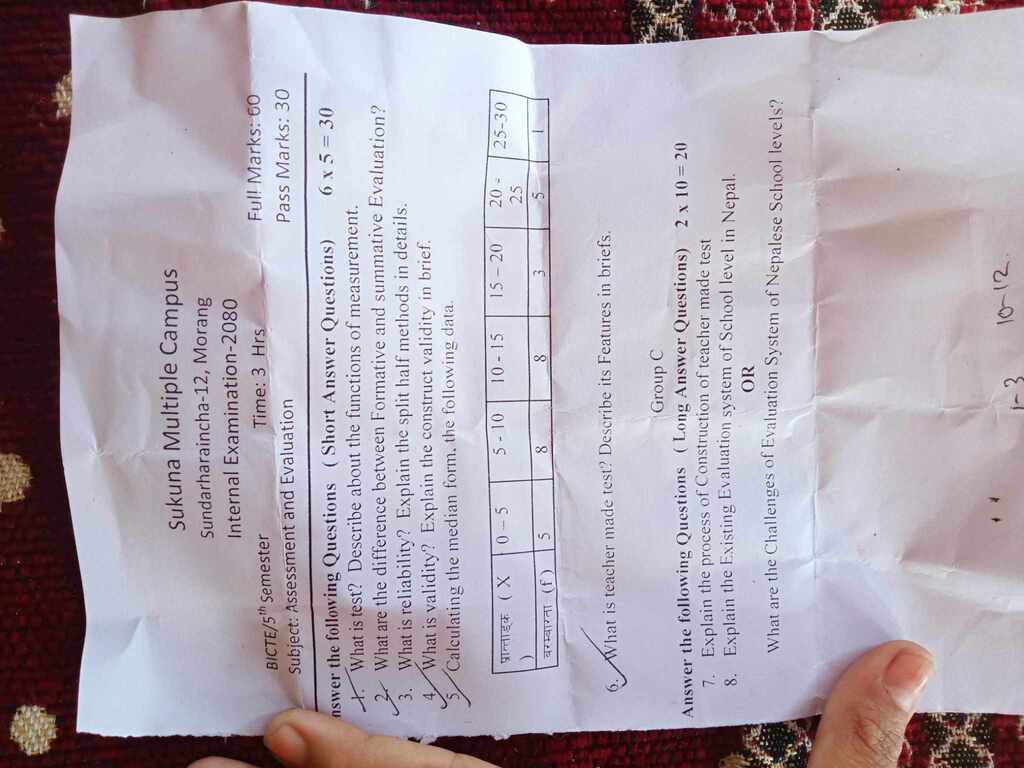
Reviewing these past board papers helps BICTE and B.Ed students identify recurring conceptual questions, understand the balance between objective and theoretical problems, and practice numerical calculations such as mean and central tendency. Working through real exam prompts is the most reliable way to build confidence before the final university examinations.
BICTE Assessment and Evaluation Question Papers 2076–2079

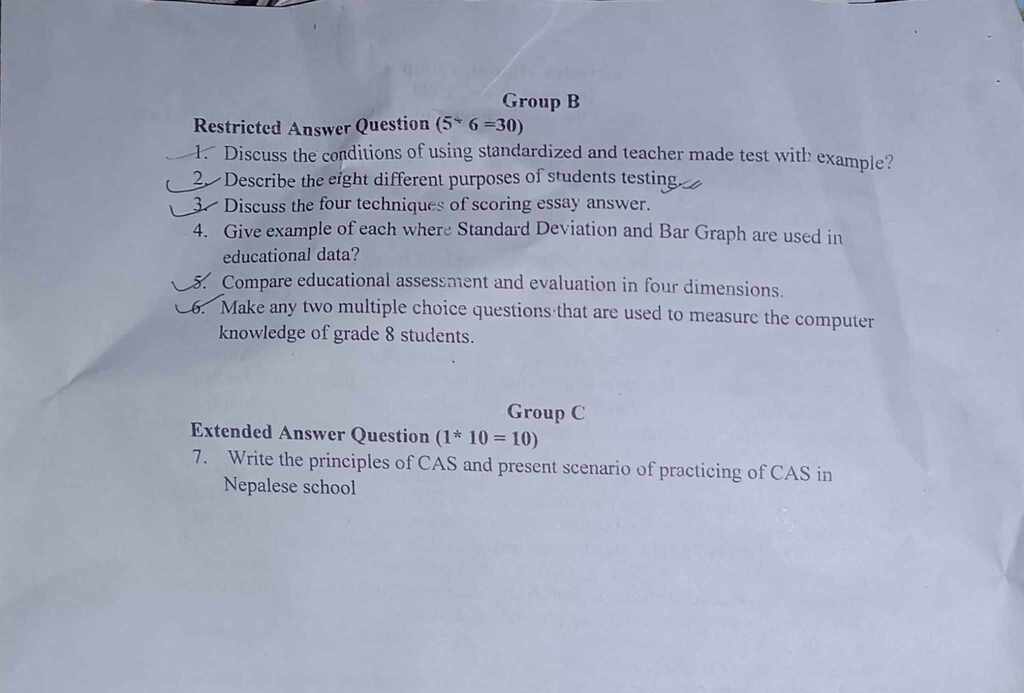
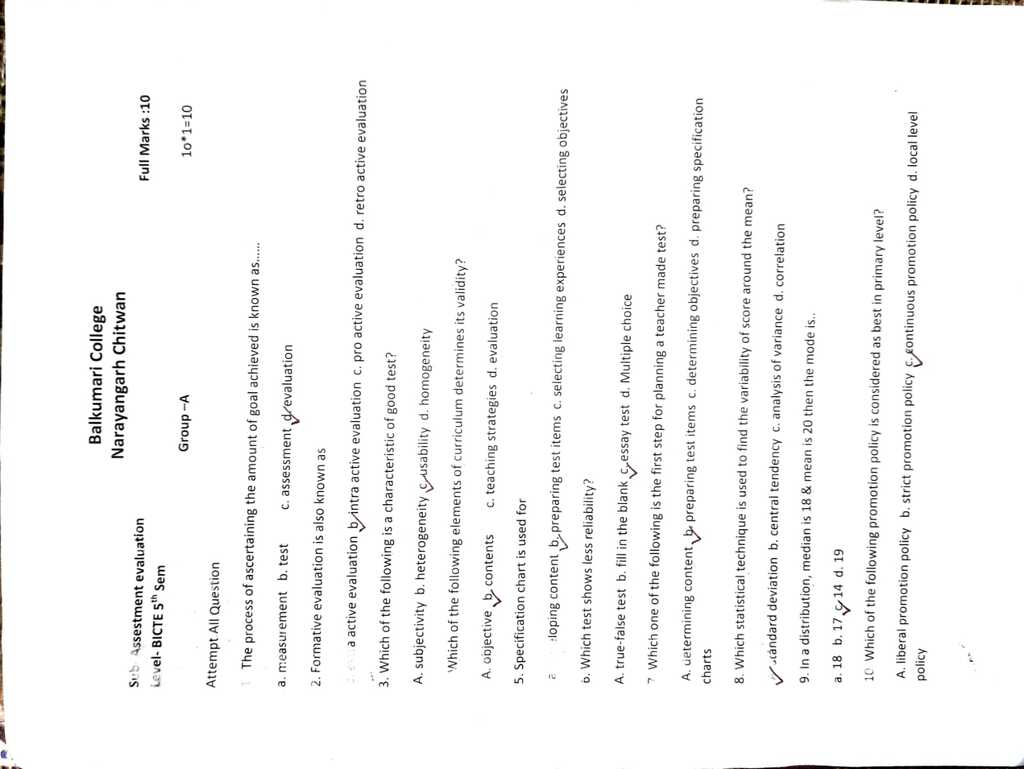
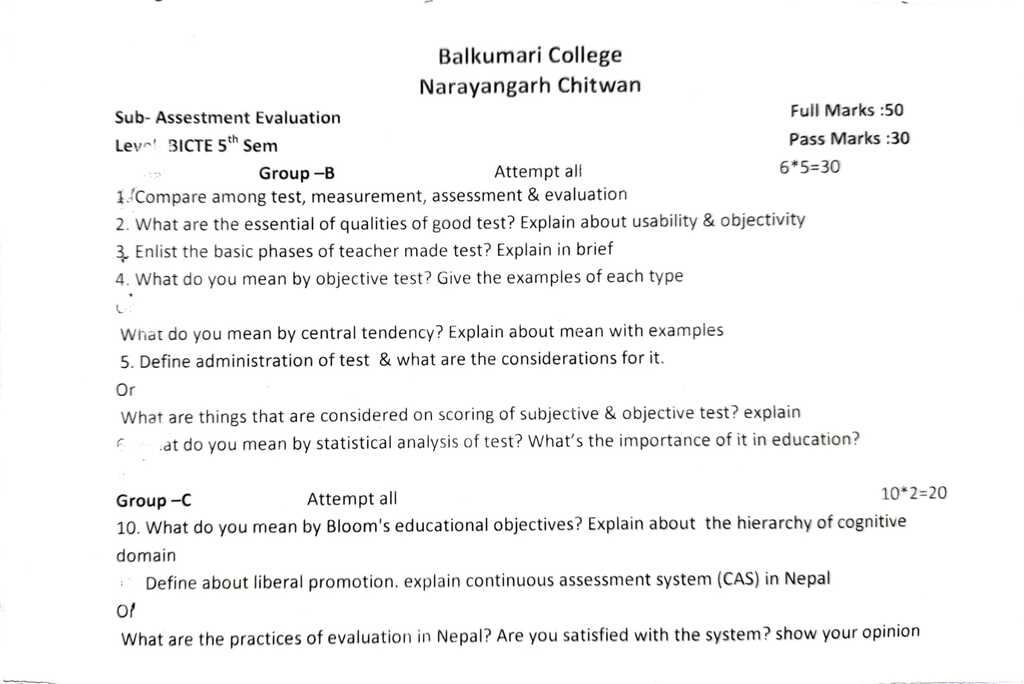
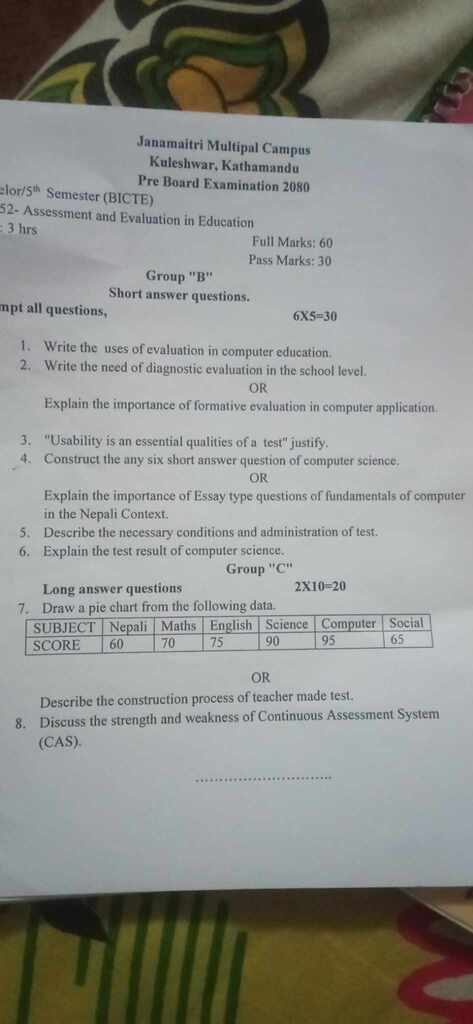
What Assessment and Evaluation Covers
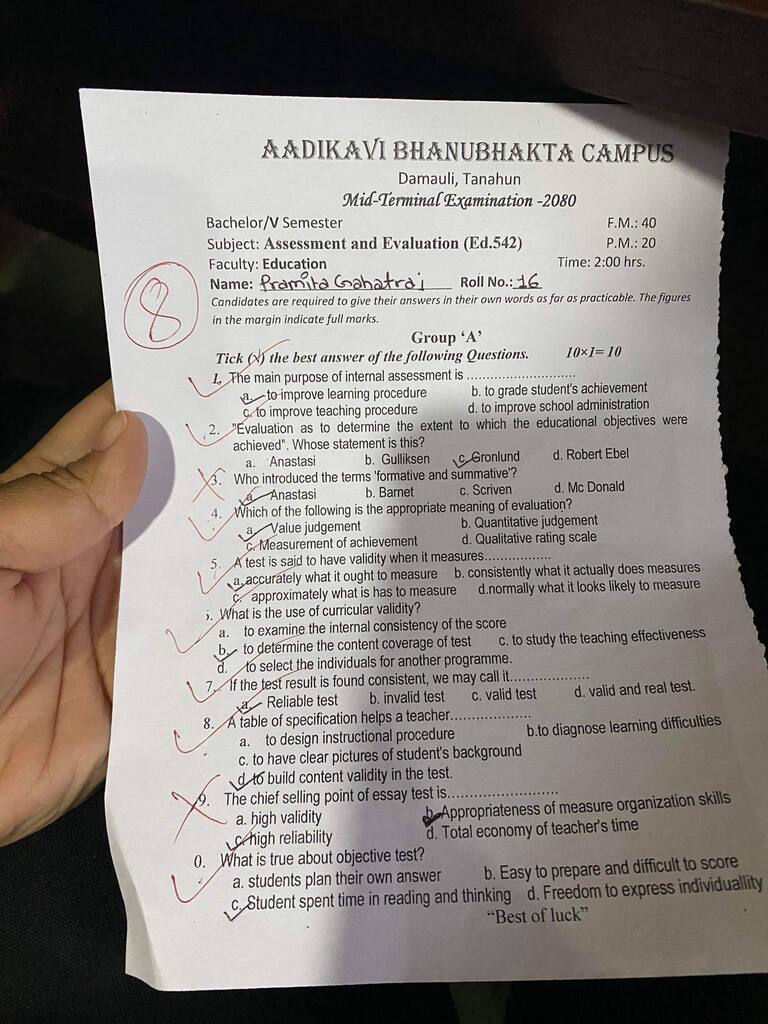
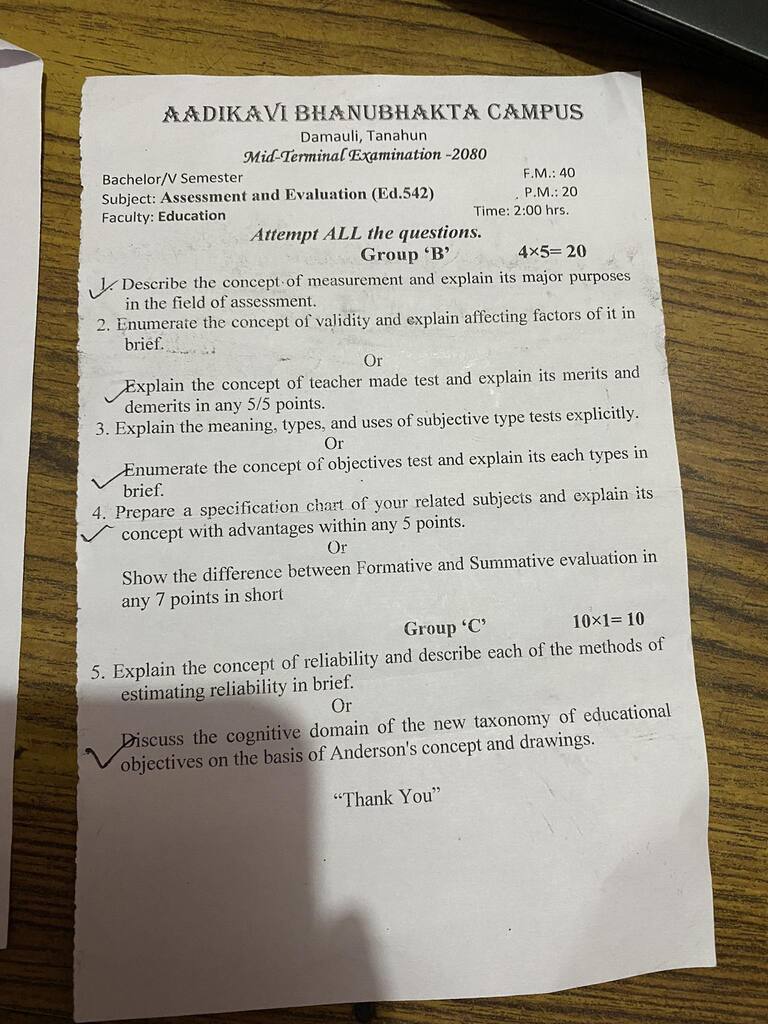
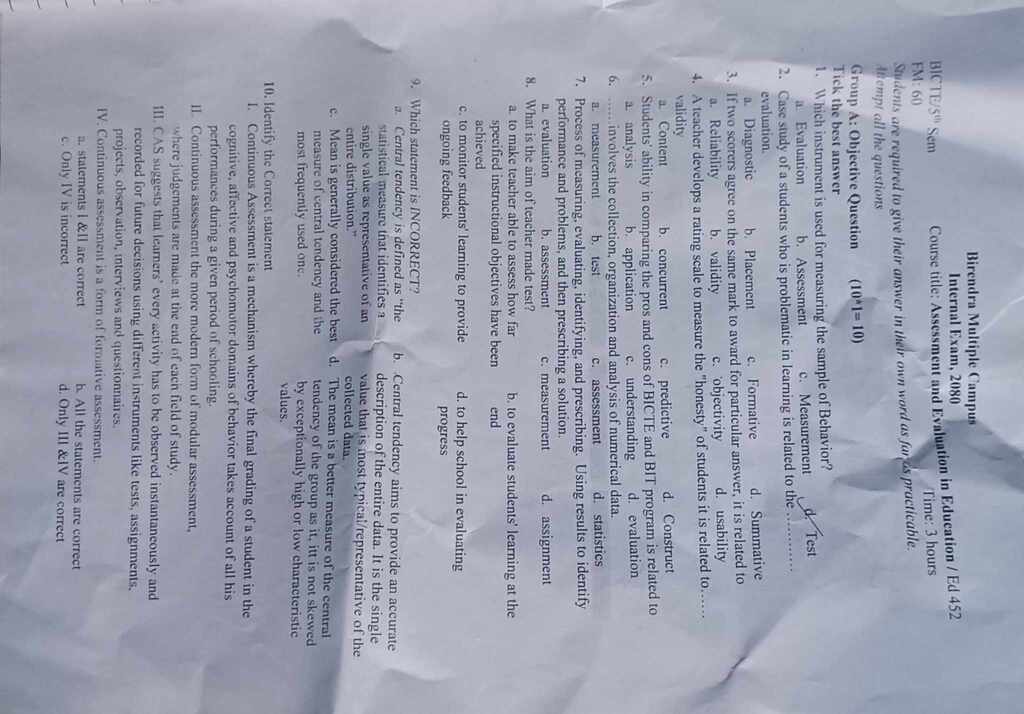
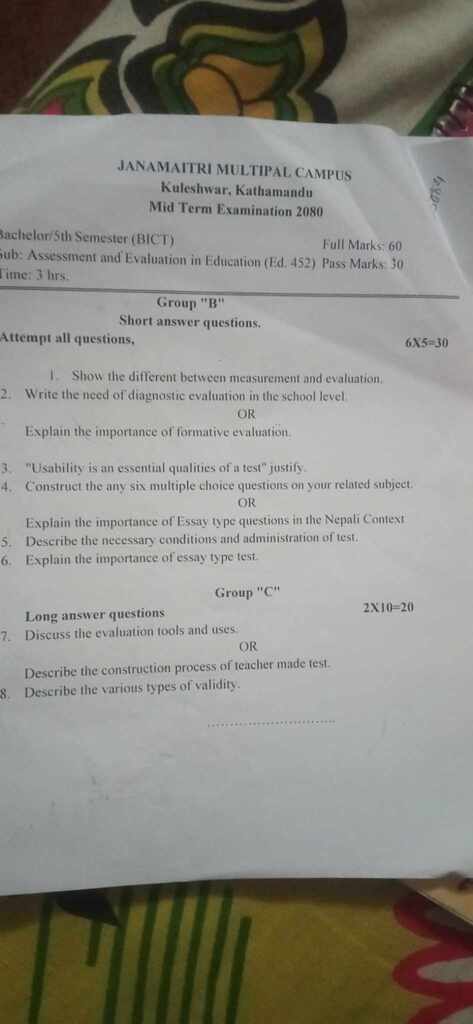
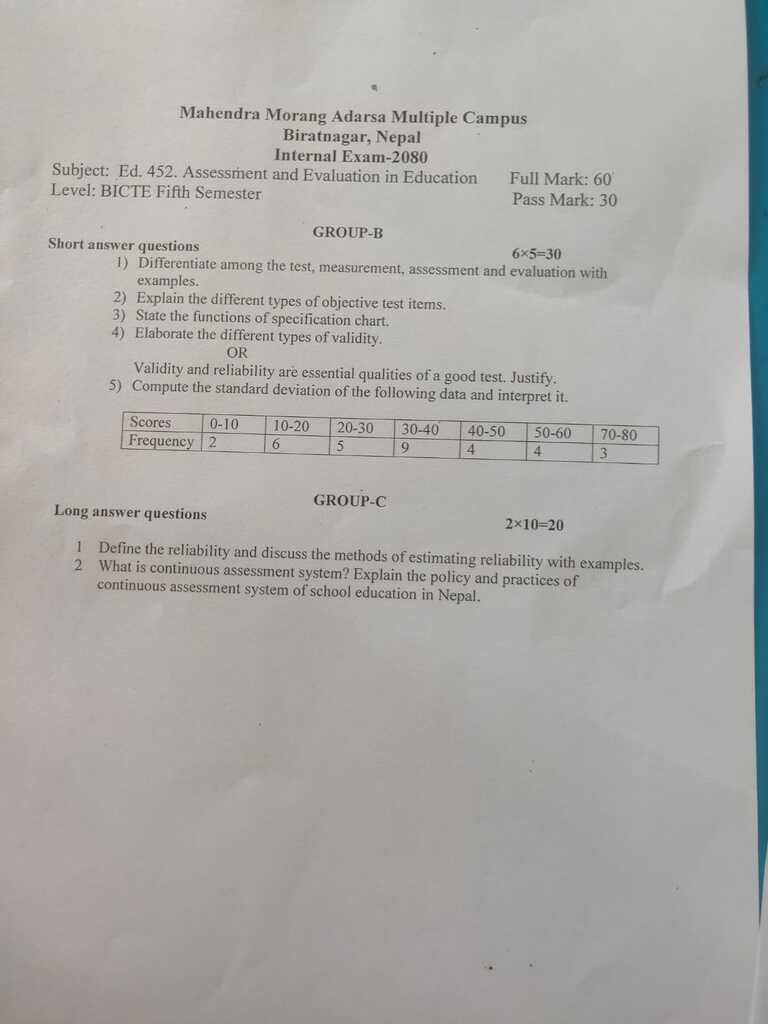
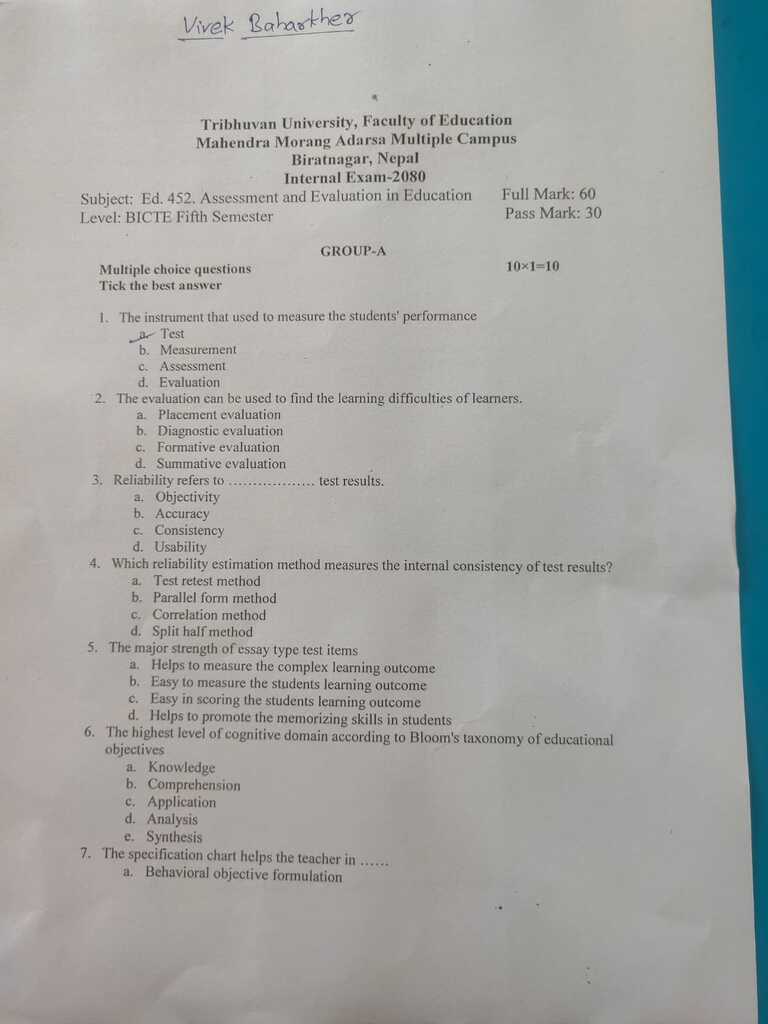
Assessment and Evaluation forms the bedrock of teacher education, bridging classroom instructional objectives with systematic student appraisal. The past question papers concentrate heavily on the distinctions between testing, measurement, assessment, and evaluation, challenging students to explain how each concept operates in formal learning environments.
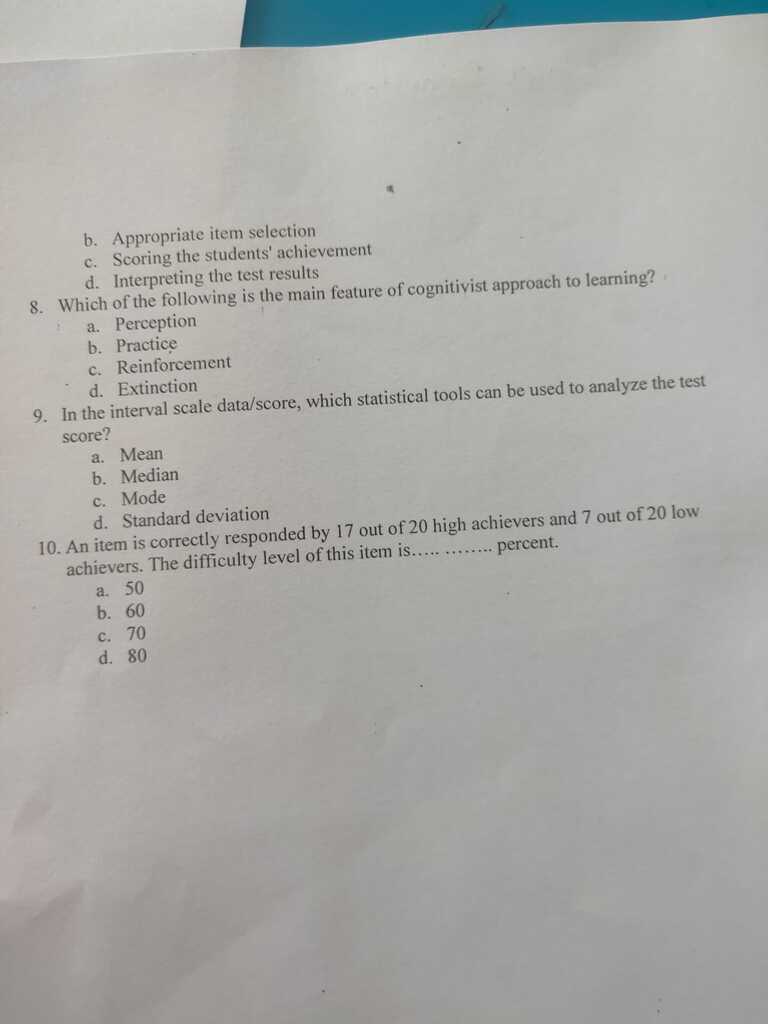
A major focus throughout these university exams is the psychometric quality of assessment tools. Questions regularly investigate test validity—including content, curricular, and construct validity—alongside estimation methods for test reliability such as test-retest and parallel-form approaches. Students are expected to understand how to design dependable teacher-made tests using specification tables and balanced item distribution.
The papers also explore different assessment formats, comparing subjective essay items with objective question types while emphasizing fair scoring guidelines and rubrics to minimize examiner bias. Educational objectives across cognitive, affective, and psychomotor domains appear consistently, requiring examinees to link instructional intentions directly to appropriate testing instruments.
In addition, these exams address real-world educational practices in Nepal, particularly the implementation and challenges of the Continuous Assessment System and student evaluation frameworks at the school level. Quantitative analysis also plays a steady role, requiring students to calculate statistical measures of central tendency from frequency distributions.
Exam Preparation Tips for Assessment and Evaluation
Begin your revision by clearly defining the foundational terms: measurement, assessment, and evaluation. Prepare illustrative examples from school subjects to demonstrate the unique function of each term, as Tribhuvan University examiners look for practical understanding rather than memorized definitions alone.
Pay close attention to Bloom’s taxonomy of educational objectives and practice constructing a specification chart or test blueprint. Being able to explain how cognitive levels correspond to different question types—and how a blueprint ensures balanced curriculum coverage—will help you score well on both short-answer and long-form questions.
Familiarize yourself with the core techniques for determining test reliability and validity. Be ready to explain the procedure and limitations of the test-retest method, the characteristics of objective versus essay tests, and the value of analytic rubrics and scoring keys in eliminating the halo effect during evaluation.
Practice solving grouped and ungrouped mean calculations using standard frequency distribution formulas. These numerical questions offer straightforward marks if your arithmetic and presentation are clean, so keep a designated formula sheet and practice step-by-step solutions alongside your descriptive study.
Frequently asked questions
Which course codes and titles are covered in these question papers?
The papers primarily cover Ed. 461, titled Assessment and Evaluation in Education in earlier sessions and Assessment in Teaching and Learning in subsequent exams. A 2076 exam paper for Fundamental of Curriculum (Ed. 451) is also included in this archive.
Which semesters and programs do these assessment papers belong to?
These papers are designed for Tribhuvan University Faculty of Education students, specifically those enrolled in the BICTE and B.Ed 6th semester programs, with the curriculum paper representing the 5th semester syllabus.
Are statistical calculation problems included in the final examination?
Yes, the exam papers regularly feature basic statistical problems under Group B, usually requiring candidates to calculate the arithmetic mean from given frequency tables or marks distributions.
How should I prepare for questions on continuous assessment in Nepal?
Review the policy background, implementation mechanisms, portfolio grading, and ground-level challenges of the Continuous Assessment System (CAS) within school education in Nepal to answer systemic critique questions effectively.
About Noted Insights
Noted Insights was founded by Ajay Mahato in 2022 to provide university students across Nepal with reliable study materials, past question archives, syllabi, and reference guides. Our mission is to empower learners with the practical knowledge and academic resources necessary to reach their educational goals and thrive in their chosen professions.
We believe that quality education has the power to transform lives and should be freely accessible to every aspiring educator and technologist regardless of their location. Take your exam preparation one topic at a time, practice consistently with these past papers, and enter your board examinations with clarity and confidence.


