
Preparing for your first-semester board exams in BICTE under Tribhuvan University can feel daunting, especially when tackling a compulsory language paper alongside technical computing subjects. Balancing programming logic with formal Nepali grammar and textual analysis requires targeted practice, and working through genuine past exam papers is the most dependable way to build exam confidence.
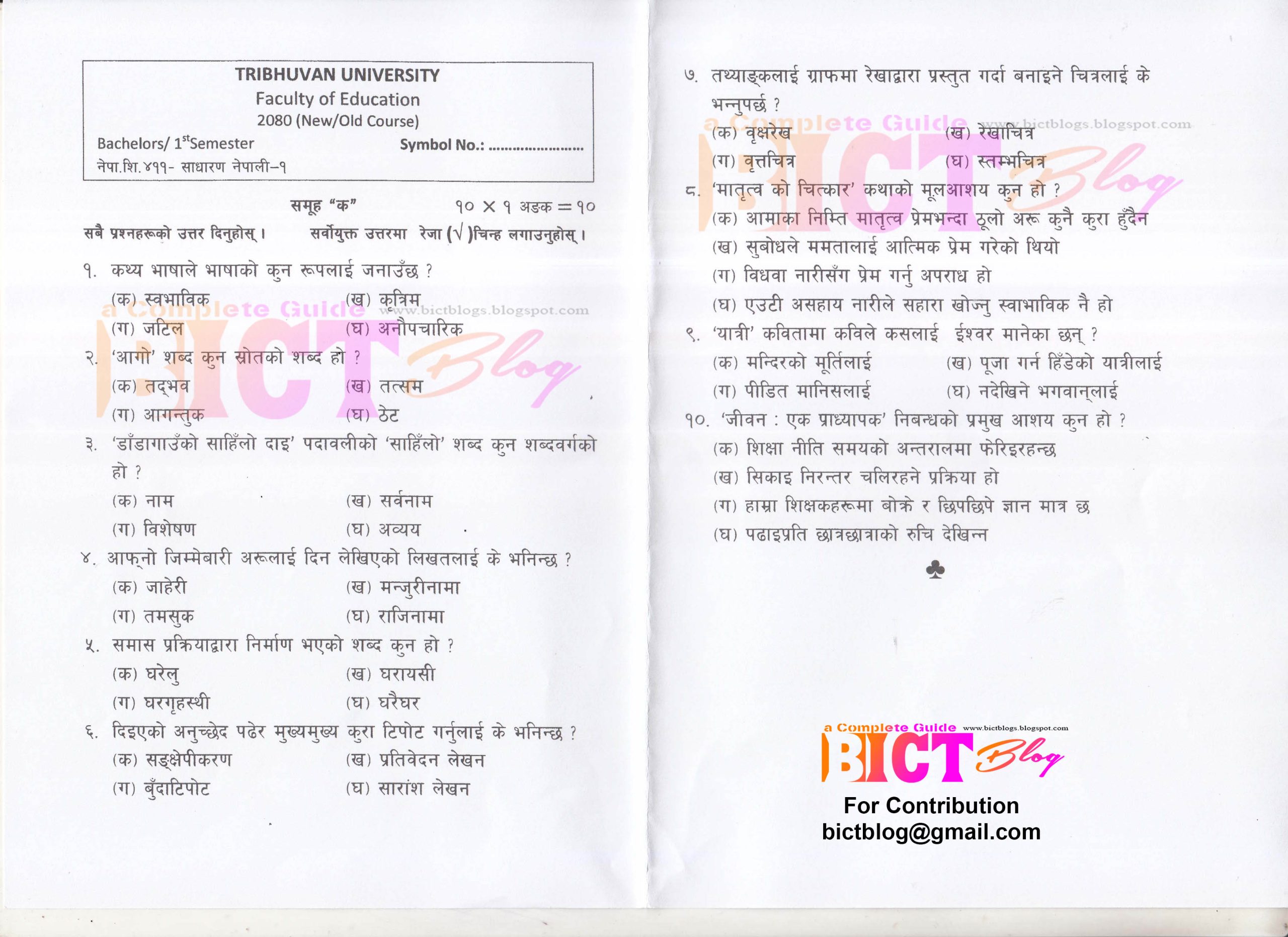
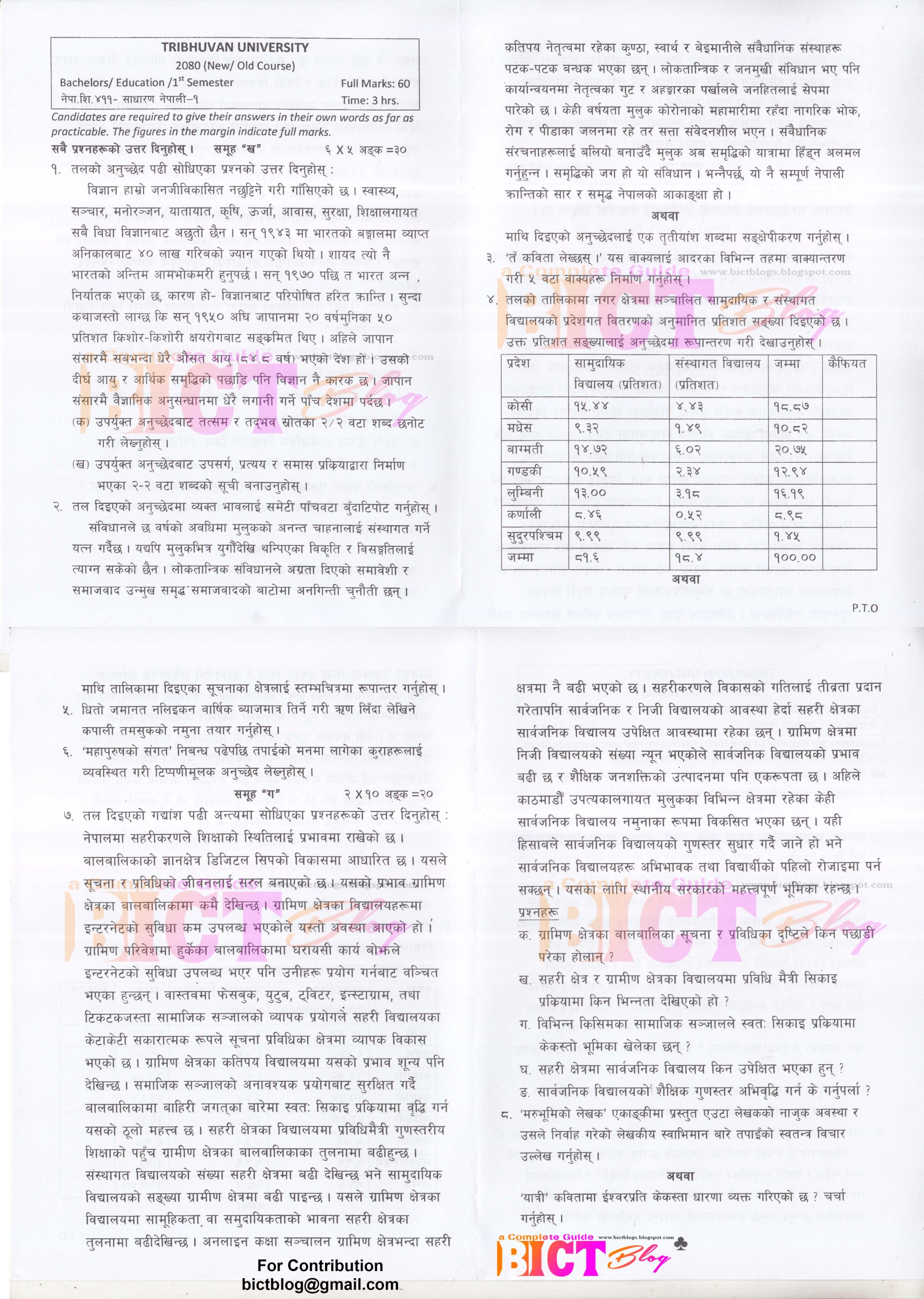
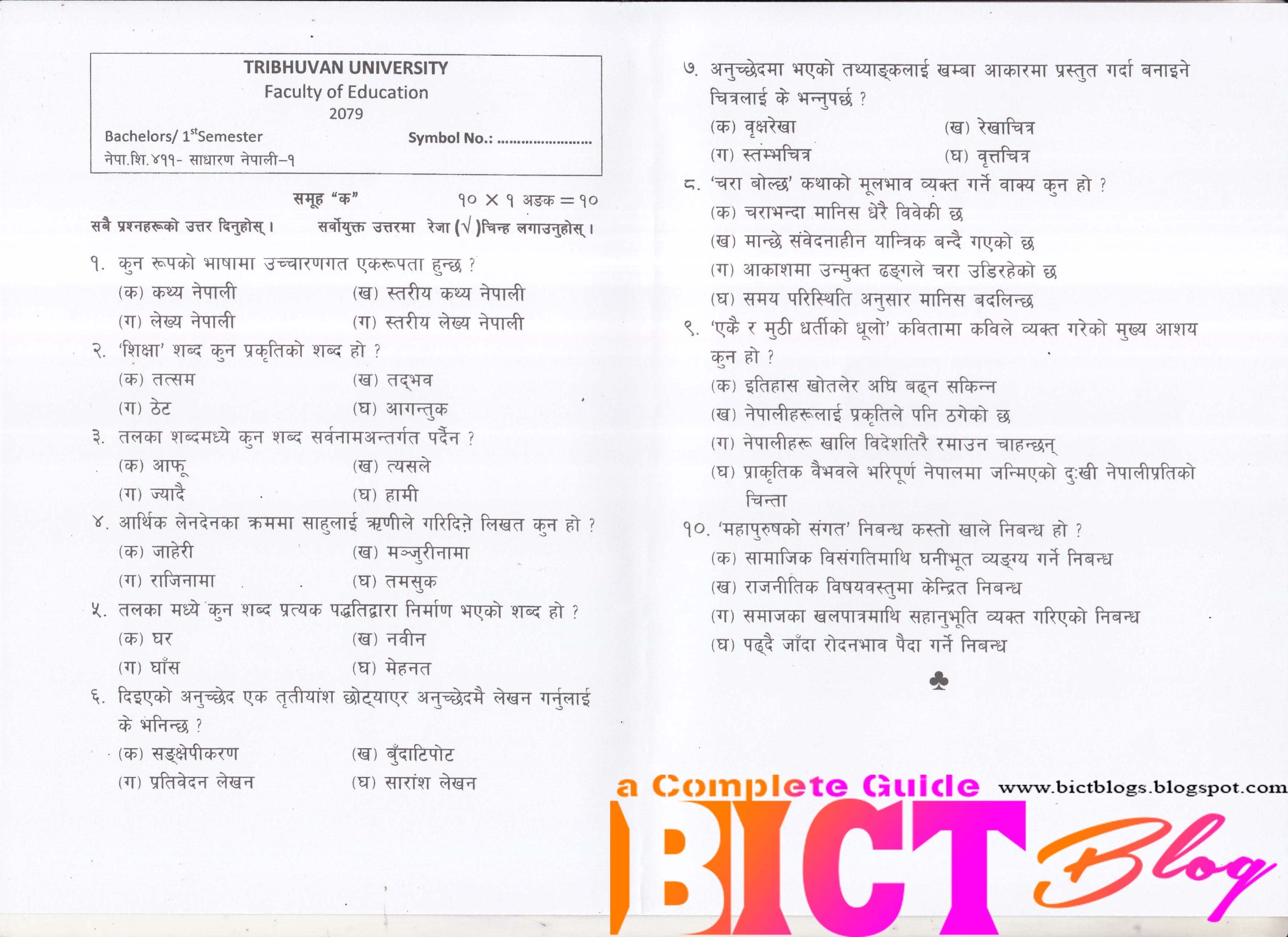
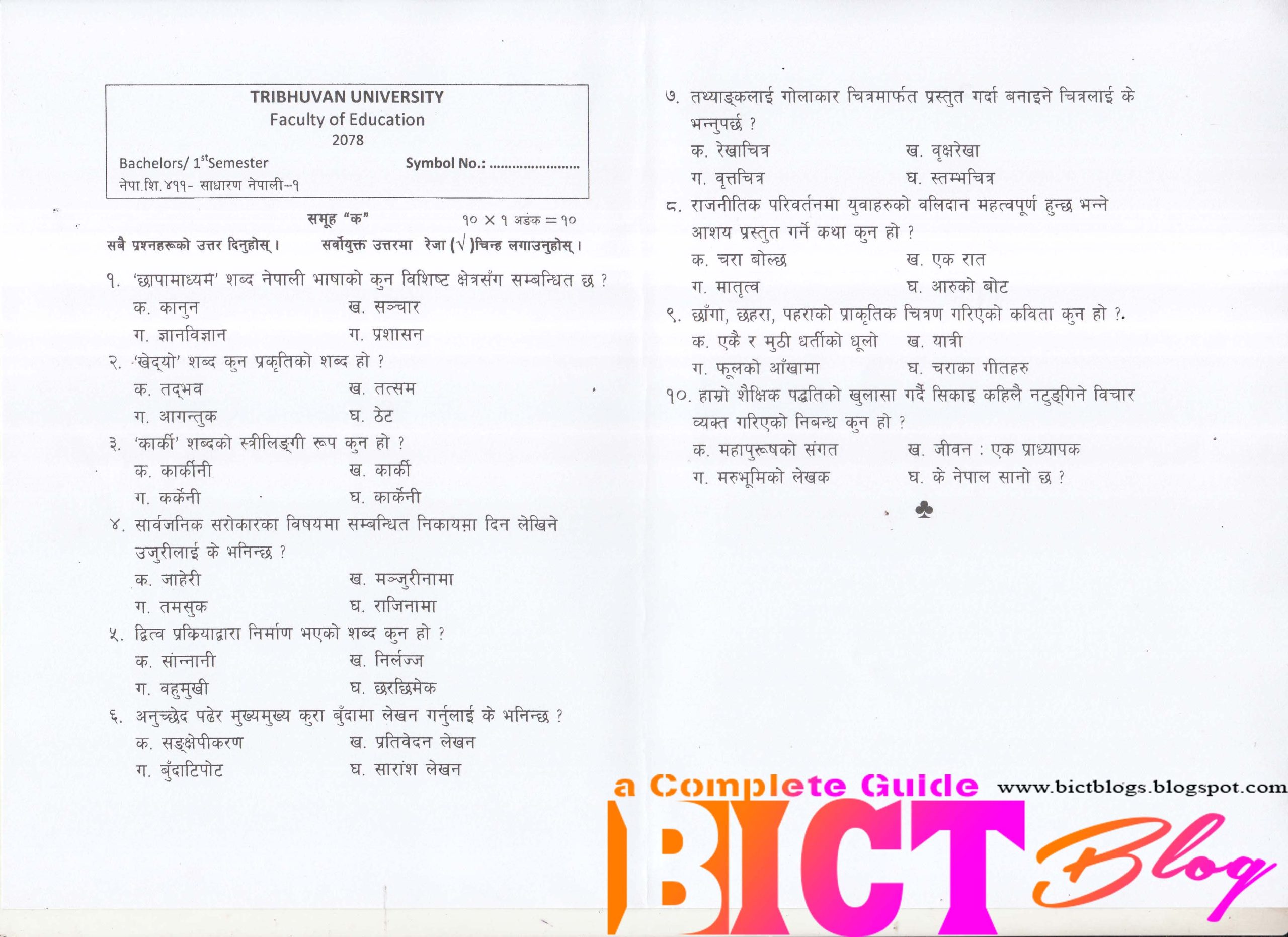
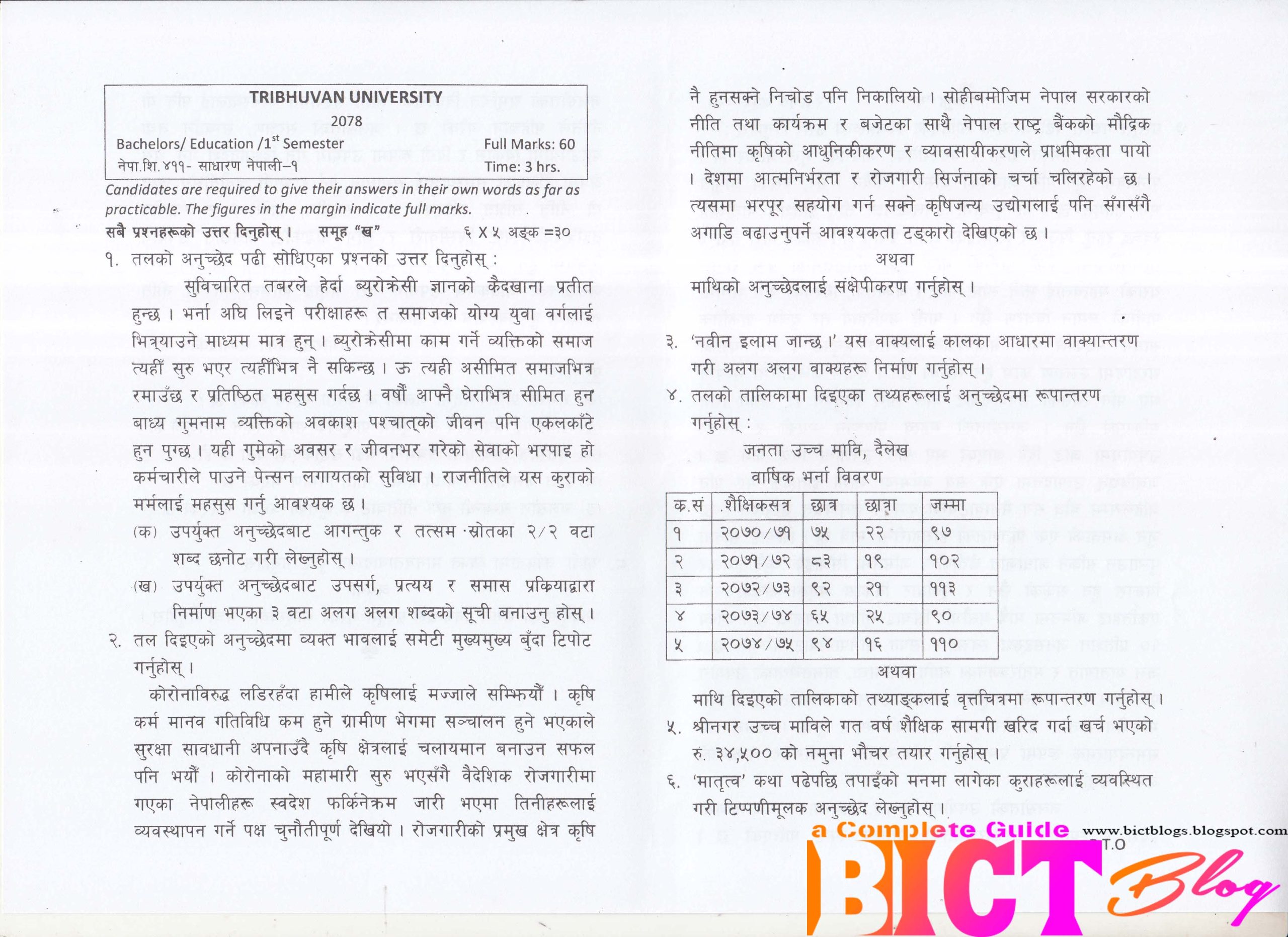
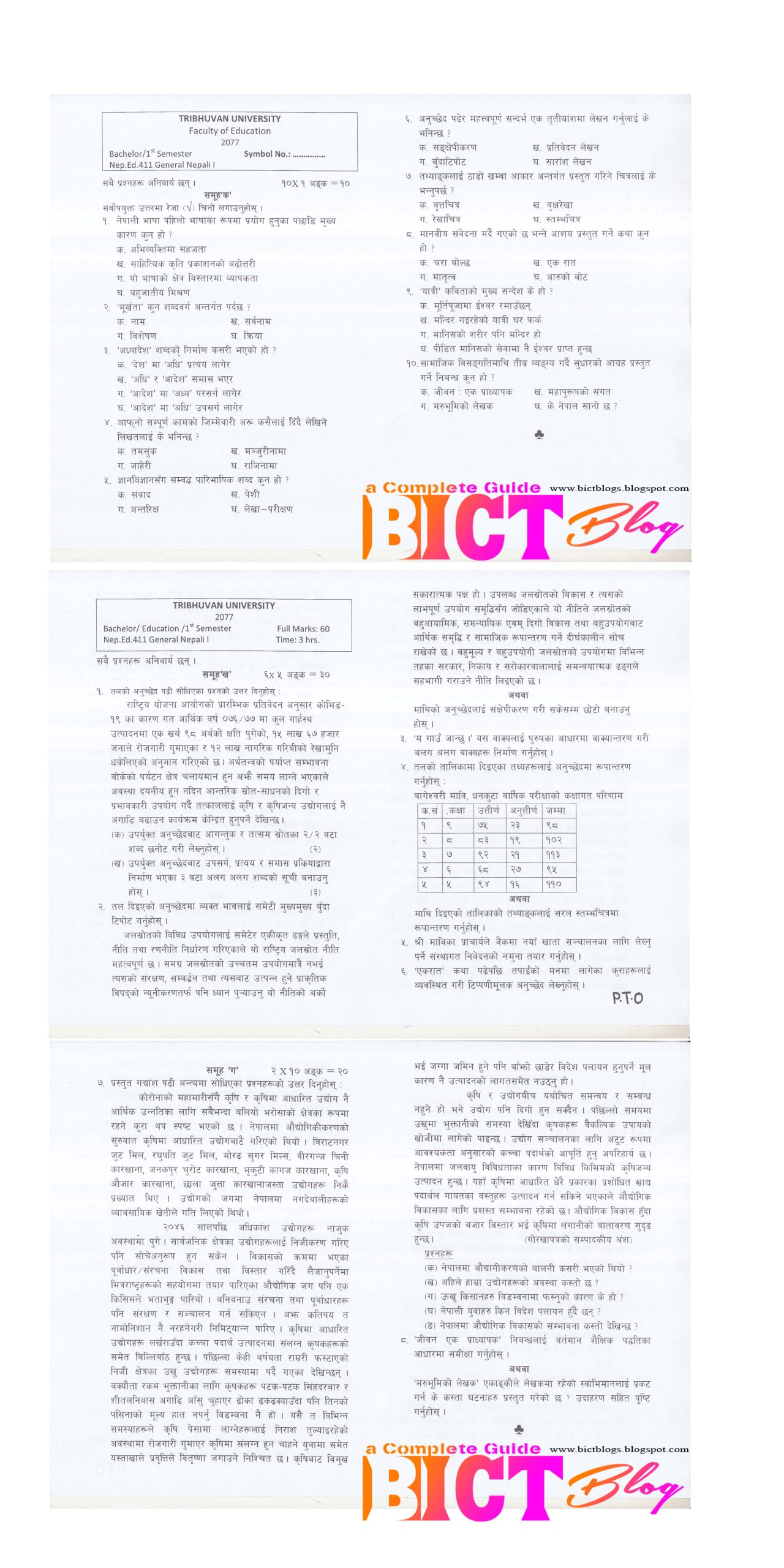
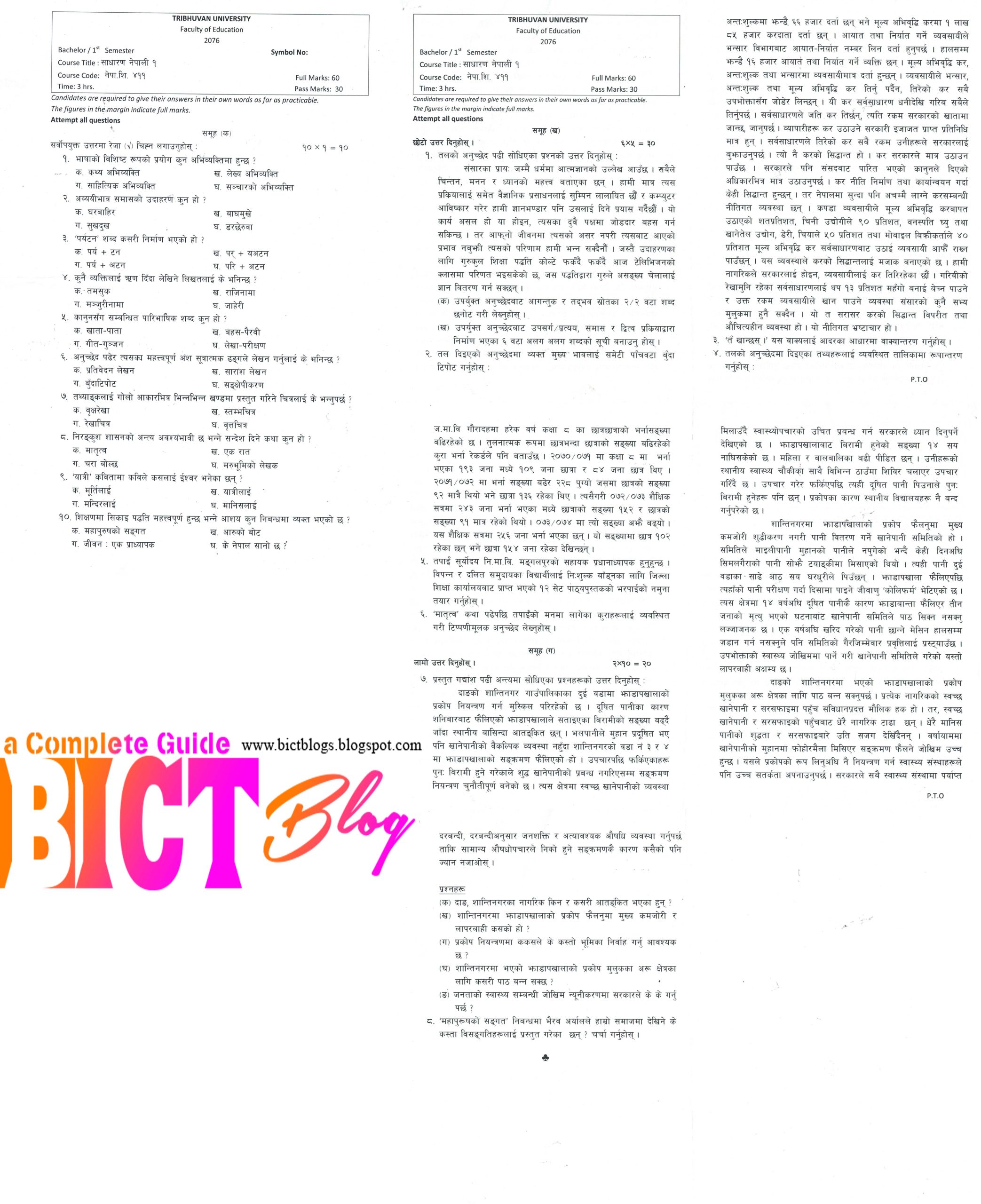
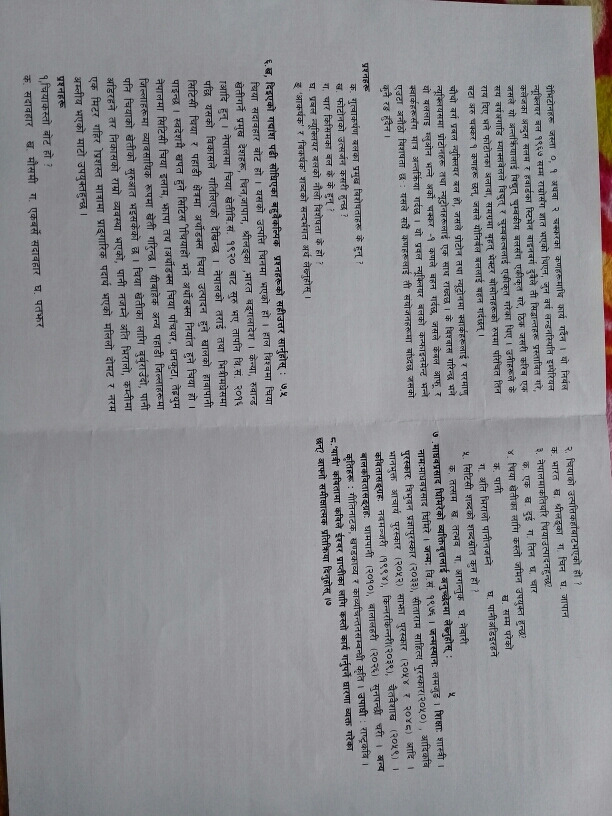
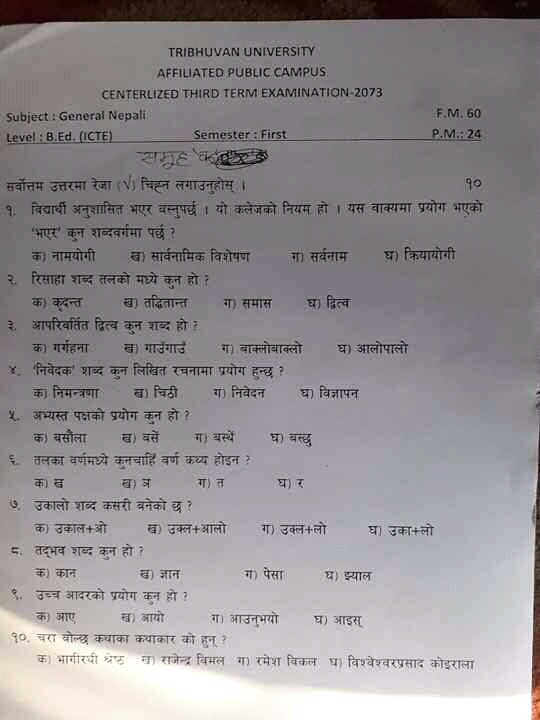
This collection brings together the official Tribhuvan University board examination question papers for General Nepali I (साधारण नेपाली-१, course code Nep.Ed. 411) administered for BICTE and B.Ed. first-semester students across 2078, 2079, and 2080 BS. Each set includes both the objective multiple-choice component and the comprehensive subjective paper, reflecting the current exam layout used by the Faculty of Education.
Reviewing these consecutive sessions helps you identify recurring question patterns, mark allocations, and practical writing tasks. Instead of guessing how questions are distributed across grammar, technical communication, and prescribed literary texts, you can practice directly with the exact formats set by TU examiners.
TU BICTE 1st Semester General Nepali I Board Exam Papers (2078–2080)





What General Nepali I Exam Papers Cover
The General Nepali I curriculum evaluates students across three core areas: objective language awareness, applied linguistic skills, and analytical reading of literary selections. The objective section tests precise foundational knowledge, including spoken versus written registers, word origin classifications such as Tatsam, Tadbhav, and Aagantuk, and correct identification of grammatical word classes. It also assesses familiarity with administrative terms, text condensation concepts, and statistical data visualization techniques.
In the applied language and functional writing segments, students are evaluated on their ability to manipulate grammatical structures and produce authentic real-world documents. Typical exercises require extracting vocabulary by etymology or derivation, transforming sentence structures across different levels of honorifics, tense, and grammatical person, and preparing functional administrative texts such as legal deeds, formal complaints, or vouchers. In addition, students practice synthesizing long passages into concise point-form summaries or standard one-third condensations.
Data interpretation forms another distinctive dimension of the paper, testing your ability to convert tabulated data into descriptive paragraphs or visual charts such as bar graphs and pie charts. This tests both logical interpretation and accurate Nepali technical phrasing, ensuring students in information technology education can communicate structured information clearly in the national language.
The subjective literary section requires critical understanding and thematic appreciation of prescribed stories, poems, plays, and essays. Questions prompt students to examine philosophical themes, social satire, humanitarian messages, and character portrayals. Rather than relying on simple memorization, the questions demand independent critical reflection, requiring well-reasoned commentary written in coherent, standard academic Nepali.
Exam Preparation Tips for General Nepali I
Mastering the objective group demands thorough command of grammatical definitions and language classification rules. Regular drill on differentiating Tatsam, Tadbhav, Deshaj, and Aagantuk words will secure quick marks. Pay close attention to standard grammatical transformations, including honorific shifts and voice or tense conversions, ensuring that subject-verb agreement and spelling rules (varnavinyas) remain flawless throughout your answers.
For the data conversion and administrative drafting questions, memorize standard legal and official formats before entering the exam hall. Whether you are drafting a deed (kapali tamasuk), a police application (jaheri darkhasta), or converting survey tables into bar diagrams, clarity of structure and correct terminology are paramount. Maintain neat presentation with properly labeled axes and concise explanatory sentences.
When answering reading comprehension and summary questions, read the passage attentively before drafting your response. For precis writing (sankshepikaran), accurately calculate the total word count, draft a rough outline capturing the central ideas, and produce a final version close to one-third of the original length with an appropriate title. Avoid copying sentences verbatim from the provided passage.
For the literature questions, structure your answers with a concise introduction introducing the author and core theme, a solid analytical body addressing the prompt directly, and a thoughtful concluding perspective. Practicing full-length essay responses under timed conditions helps you allocate appropriate time between the objective sheet, grammar exercises, and extensive literary analysis.
Frequently asked questions
What is the question pattern for TU BICTE 1st semester General Nepali I?
The examination consists of two main parts: a preliminary objective section covering vocabulary, grammar, and basic literary concepts, followed by a subjective section comprising short-answer grammar exercises, document drafting, data representation, reading comprehension, and long-answer literary analysis.
Which academic programs share the General Nepali I (Nep.Ed. 411) course?
The course Nep.Ed. 411 (साधारण नेपाली-१) is a compulsory first-semester subject under Tribhuvan University’s Faculty of Education, taken by students enrolled in bachelor degree programs including BICTE and B.Ed.
How can I practice data conversion questions effectively?
Review past exam tables and statistical summaries from recent years, practice converting quantitative data into coherent analytical paragraphs, and learn how to construct clear bar charts and pie charts with proper labels and proportional representations.
Are the objective questions collected separately during the board exam?
Yes, in Tribhuvan University board exams, the objective question sheet (Group A) is distributed at the start with a designated time limit, after which students submit the objective answers and proceed with the descriptive subjective answer booklet.
About Noted Insights
Noted Insights was founded in 2022 by Ajay Mahato to provide university students in Nepal with reliable, easily accessible academic resources. By assembling verified question papers, curriculum syllabi, and structured lecture notes, the platform strives to bridge educational gaps and ensure that learners from every campus have the study aids they need to succeed.
Our work is guided by the conviction that education transforms lives and that high-quality learning resources should be available to everyone. As you prepare for your BICTE first-semester examinations, stay consistent with your revision schedule, practice systematically with these past papers, and approach your board exams with steady confidence.