
Stepping into your first semester of BICTE at Tribhuvan University can feel challenging when you face foundational technical concepts alongside university board exam expectations for the very first time. Solving past papers is the most dependable way to understand how theoretical topics turn into actual exam questions.
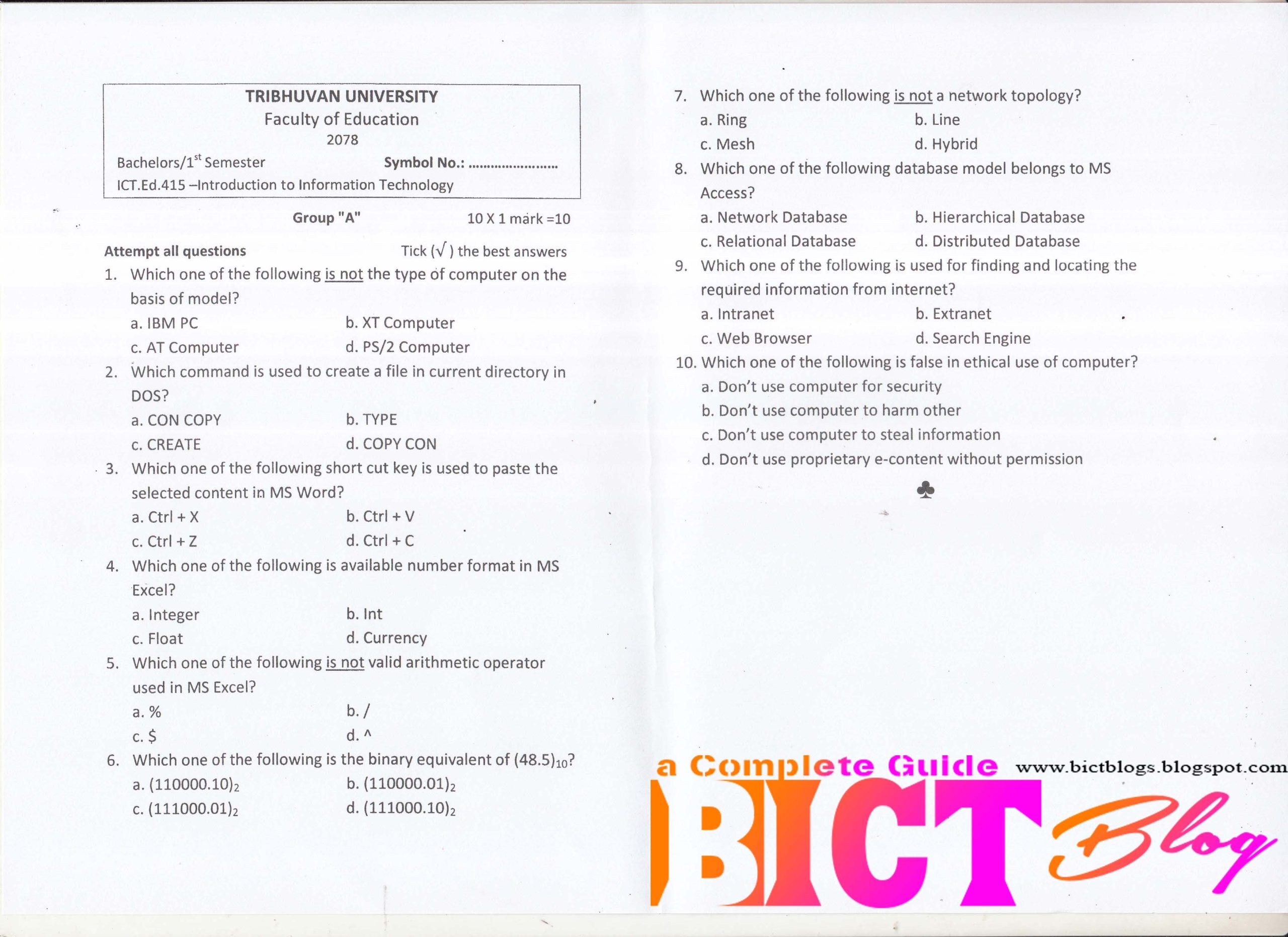
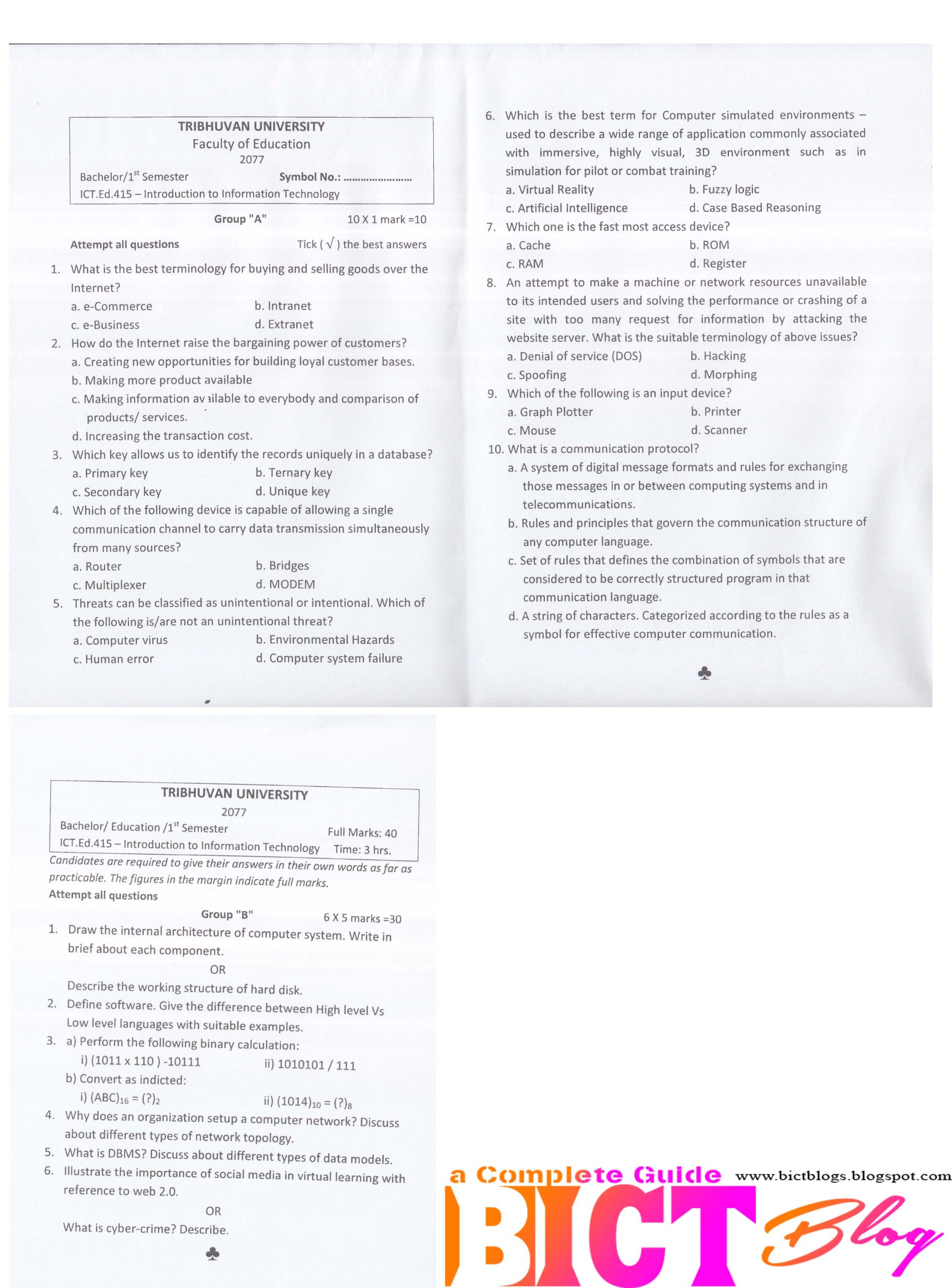
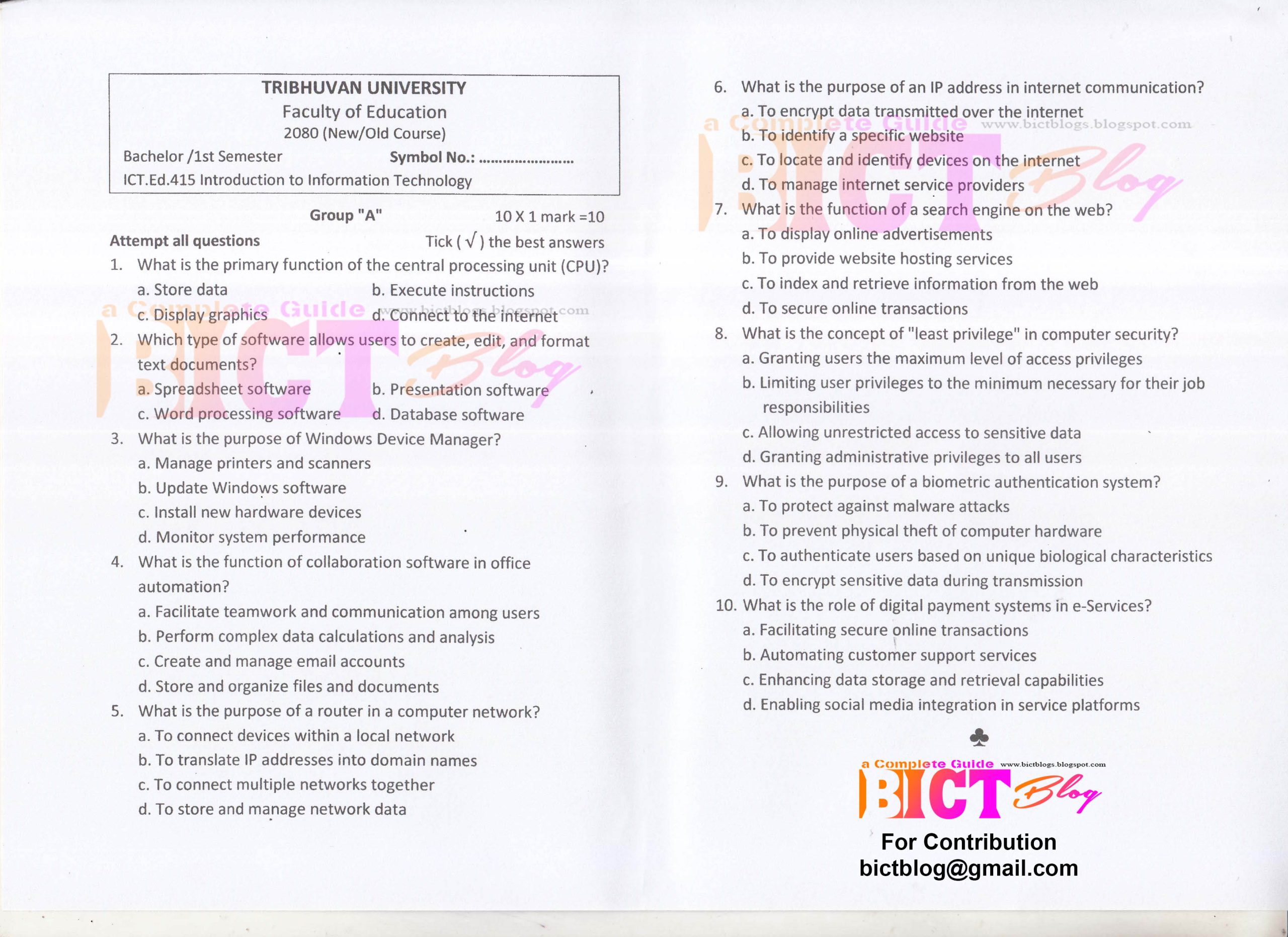
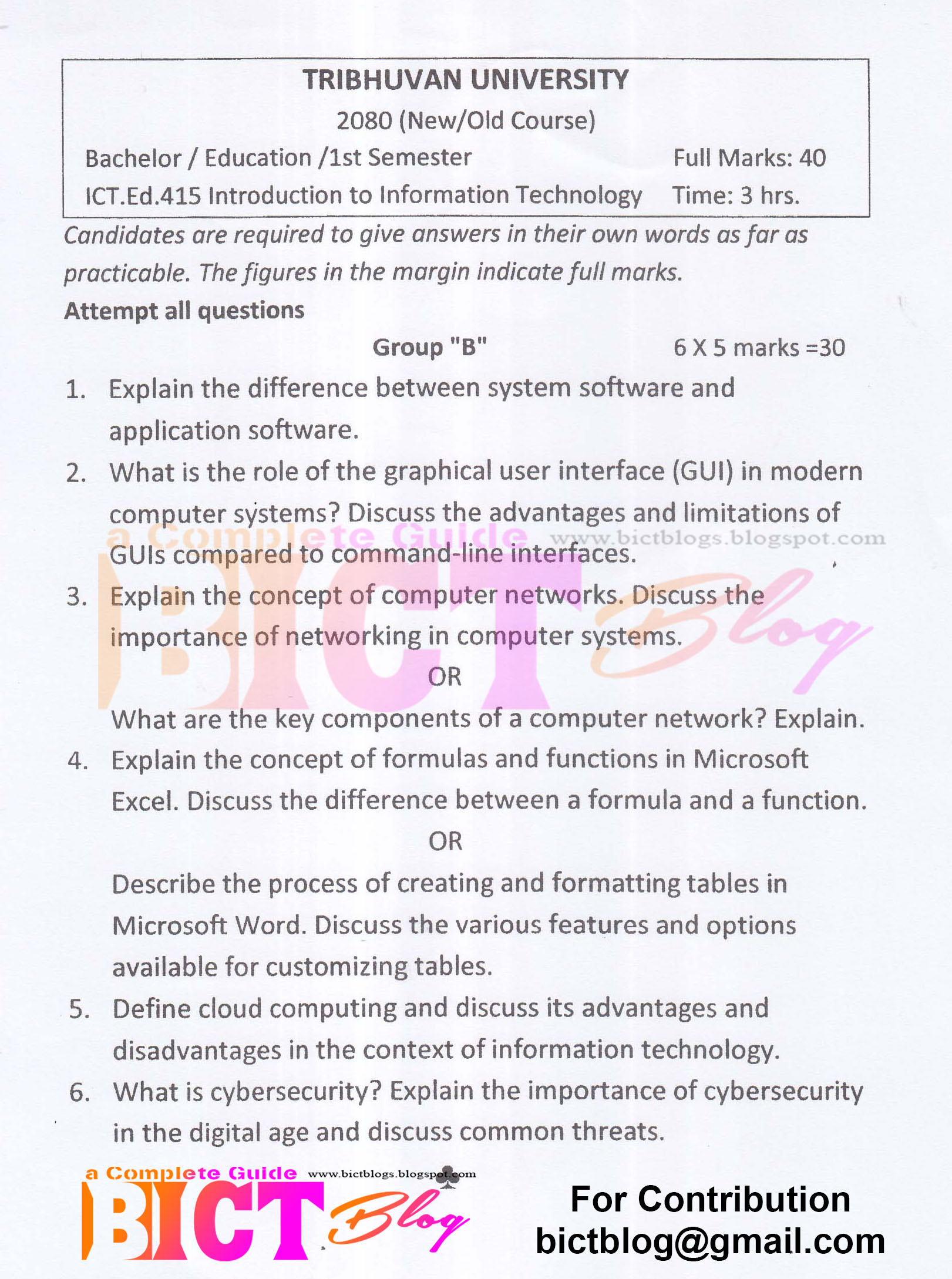
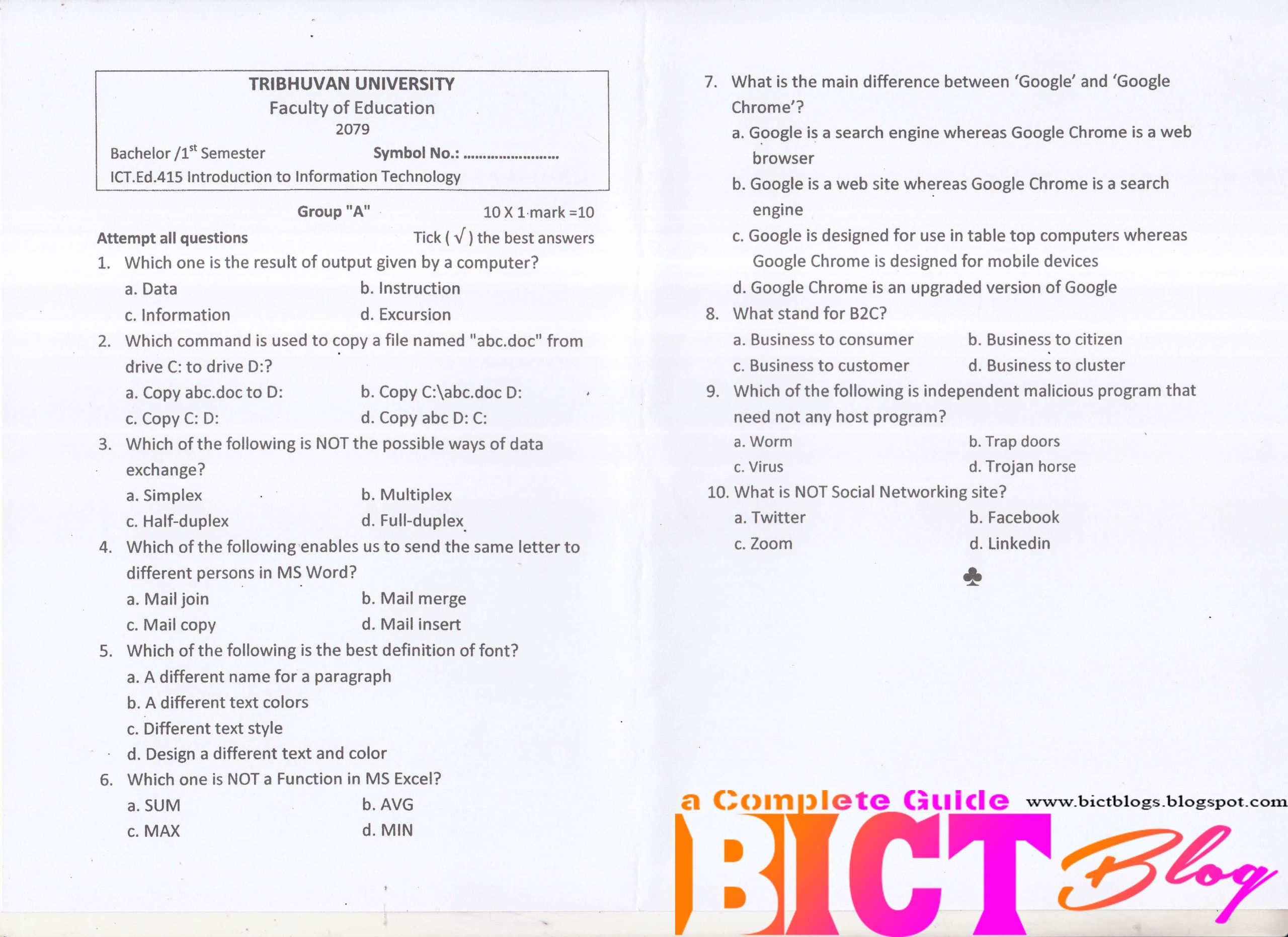
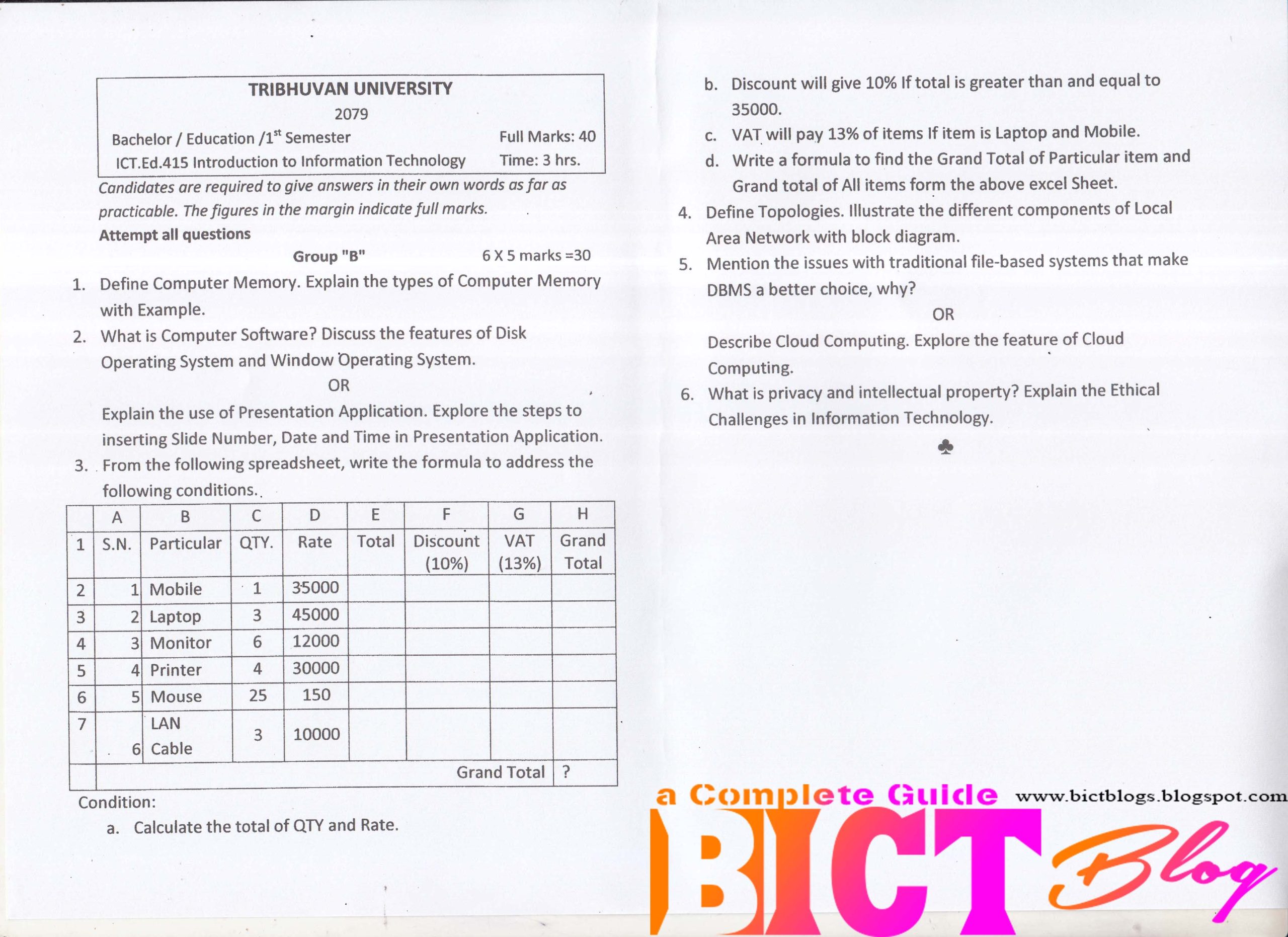
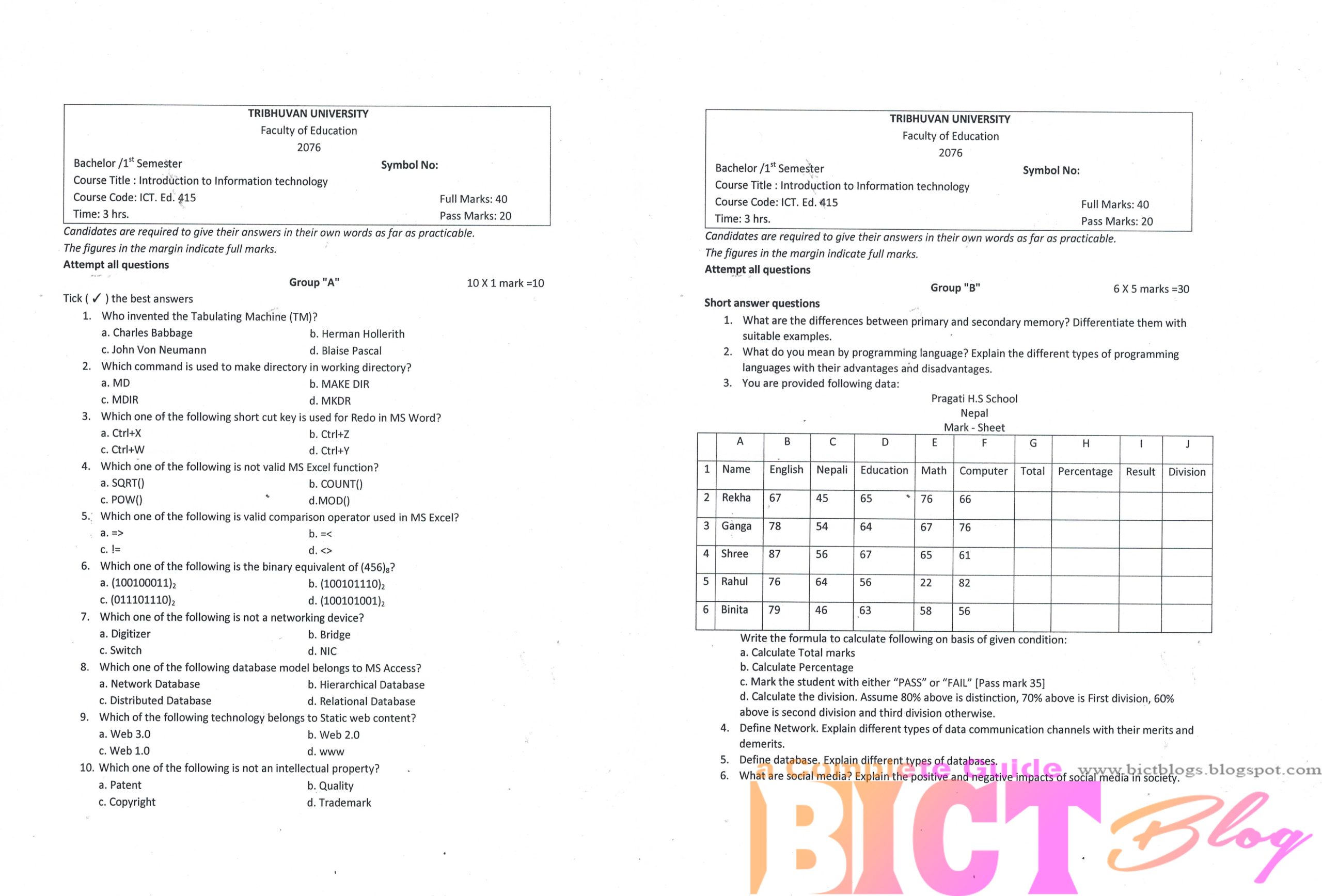
This collection brings together Tribhuvan University BICTE 1st semester IIT old questions for the course Introduction to Information Technology (ICT.Ed.415). Covering board examinations from 2076 BS through 2080 BS, these papers showcase both the multiple-choice objective questions and descriptive short-answer questions set by the Faculty of Education.
Working through these exam papers helps you identify recurring themes across computer hardware, operating software, networking, and data management. Use these authentic papers to benchmark your preparation, refine your time management, and approach your 1st semester board examination with confidence.
BICTE 1st Semester IIT Question Papers Collection 2076–2080



What the Introduction to Information Technology Papers Cover
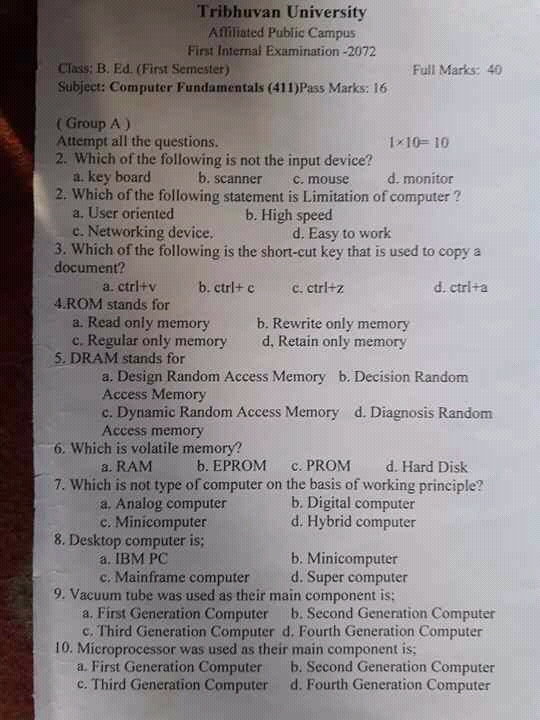
The Introduction to Information Technology curriculum establishes the bedrock of computing literacy for education technology students. Past papers regularly evaluate understanding of computer hardware architecture, central processing unit operations, and memory hierarchies, including the roles of cache, RAM, ROM, and secondary storage devices.
Software fundamentals represent another major area of assessment. Questions frequently explore the differences between system software and application packages, language processors such as compilers and interpreters, and basic command-line utilities alongside modern graphical user interfaces. Students are also regularly tested on number systems, including binary conversions and arithmetic.
Practical office productivity skills receive substantial attention through spreadsheet scenarios. Exam papers often present structured mark ledgers or billing tables requiring candidates to formulate precise calculations for totals, percentages, conditional results, and discounts. Database concepts, including relational models and the advantages of database systems over traditional file systems, are equally prominent.
Finally, the papers examine networking concepts, web communication, and contemporary technology issues. Topics frequently cover local area network topologies, transmission modes, internet protocols, cybersecurity threats, and computer ethics. Understanding these broader concepts helps students connect classroom theory with real-world digital applications.
Exam Preparation Tips for BICTE IIT Students
Master spreadsheet problem solving by writing complete formulas by hand during your study sessions. Exam questions frequently present tabular data where you must formulate calculations for totals, percentages, and conditional pass or fail grading. Writing out formulas manually ensures you do not stumble over syntax during the examination.
Practice number base conversions and binary arithmetic until the steps become second nature. Questions involving conversions between binary, decimal, octal, and hexadecimal systems provide straightforward scoring opportunities if your working steps are neat. Always double-check your arithmetic through reverse conversion.
Incorporate clear, neatly labeled diagrams into your descriptive answers. Sketching block diagrams for computer architecture, memory hierarchies, or network topologies visually demonstrates your technical grasp and helps your answers stand out to examiners.
Pay close attention to technical comparisons and terminology for the multiple-choice section. Distinguishing clearly between related concepts—such as compilers versus interpreters, web browsers versus search engines, or different network topologies—will help you solve objective questions quickly and accurately.
Frequently asked questions
What is the question pattern for the TU BICTE Introduction to Information Technology board exam?
The board examination features both objective and subjective sections. It begins with multiple-choice questions assessing fundamental definitions, command syntax, and computing concepts, followed by short descriptive questions that require explanations, architectural diagrams, spreadsheet formula construction, and numerical calculations.
Are practical spreadsheet calculations frequently asked in the BICTE IIT exam?
Yes, Tribhuvan University regularly includes spreadsheet ledger problems where students must write exact formulas for calculating totals, percentages, pass or fail status, discounts, or tax. Practicing formula writing on paper will help you secure full marks in these questions.
How can I best prepare for the binary arithmetic and conversion questions?
Review conversions between binary, octal, decimal, and hexadecimal number systems along with standard binary arithmetic. Practicing step-by-step calculations and verifying your final values ensures high accuracy in these objective and short-answer problems.
Where can I find additional study resources and syllabi for BICTE semesters?
Noted Insights provides dedicated study materials, syllabi, lecture notes, and past question collections for BICTE and other undergraduate programs across Nepal, organized systematically to support students throughout every semester of their academic journey.
About Noted Insights
Noted Insights was founded by Ajay Mahato in 2022 with the belief that education transforms lives and that high-quality learning materials should be accessible to all students. From your first semester in BICTE to advanced technology courses, our platform provides reliable college notes, syllabi, previous exam papers, and learning resources to help learners build their knowledge and skills.
Our mission is to empower students with the tools they need to achieve their academic goals and excel in their careers. We envision a dynamic learning community where students connect with peers and mentors to pursue their passions. Stay consistent with your preparation, practice regularly with past papers, and approach your exams with confidence!