
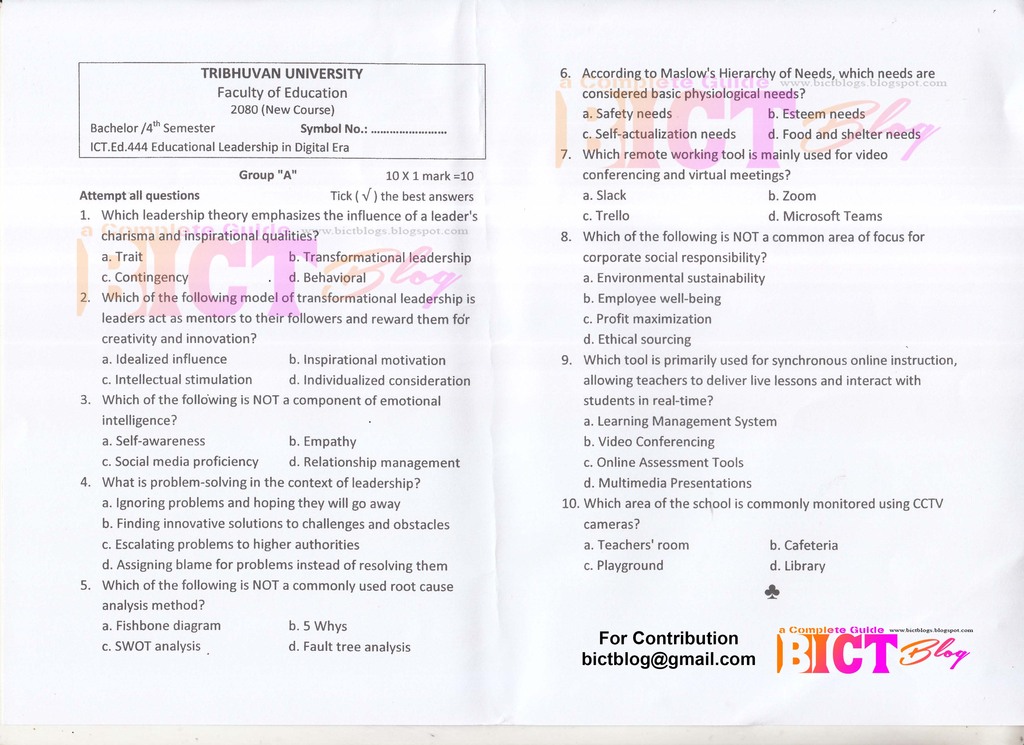
Preparing for your Tribhuvan University semester finals can feel overwhelming when educational theory meets modern educational technology in a single paper. For BICTE fourth semester students, mastering Educational Leadership in Digital Era requires more than memorizing definitions; you need to understand how leadership principles apply inside modern digitized classrooms. Practicing with authentic past exam papers gives you an immediate feel for how theoretical frameworks and practical scenarios are evaluated by university examiners.
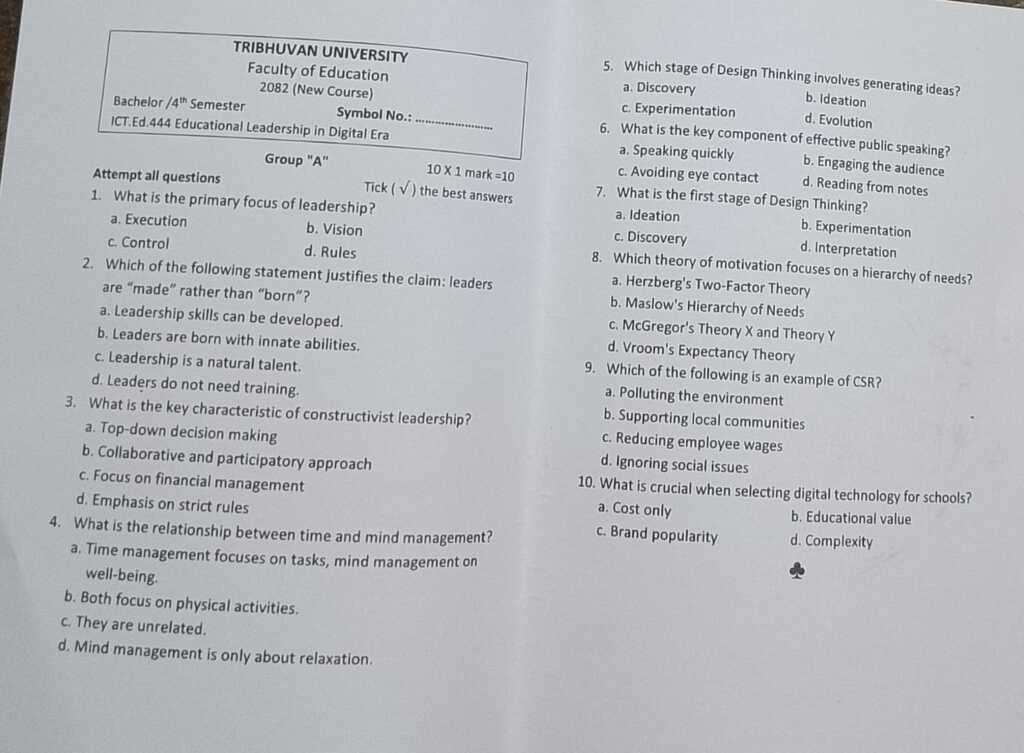
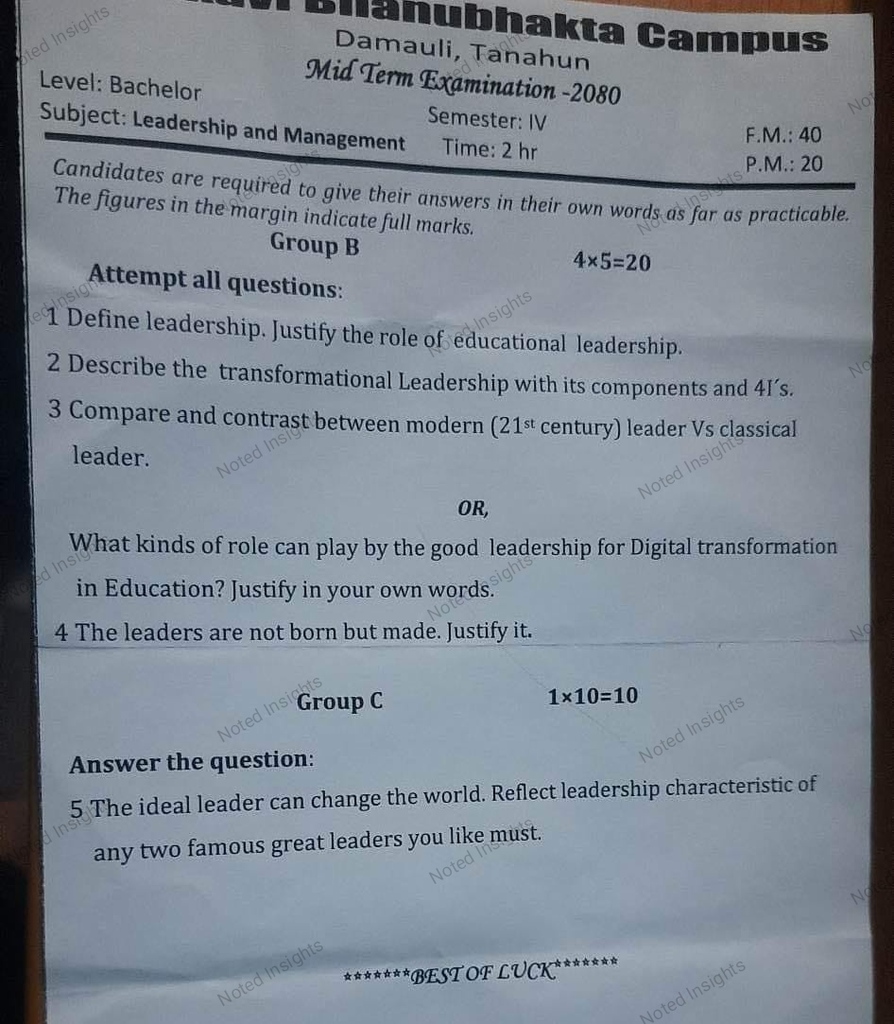
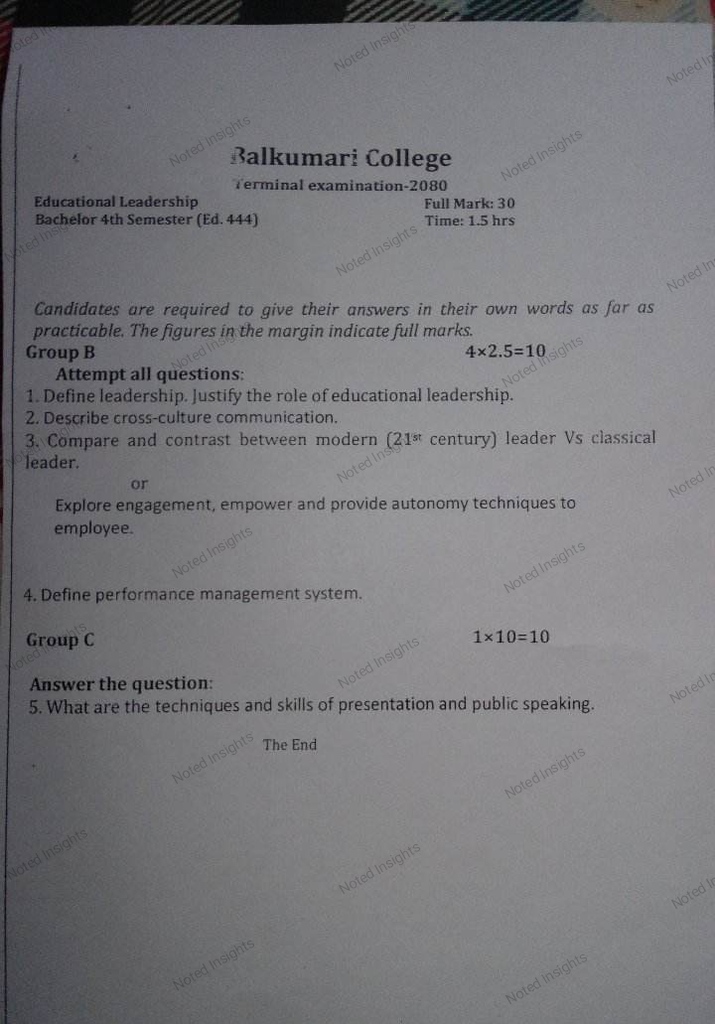
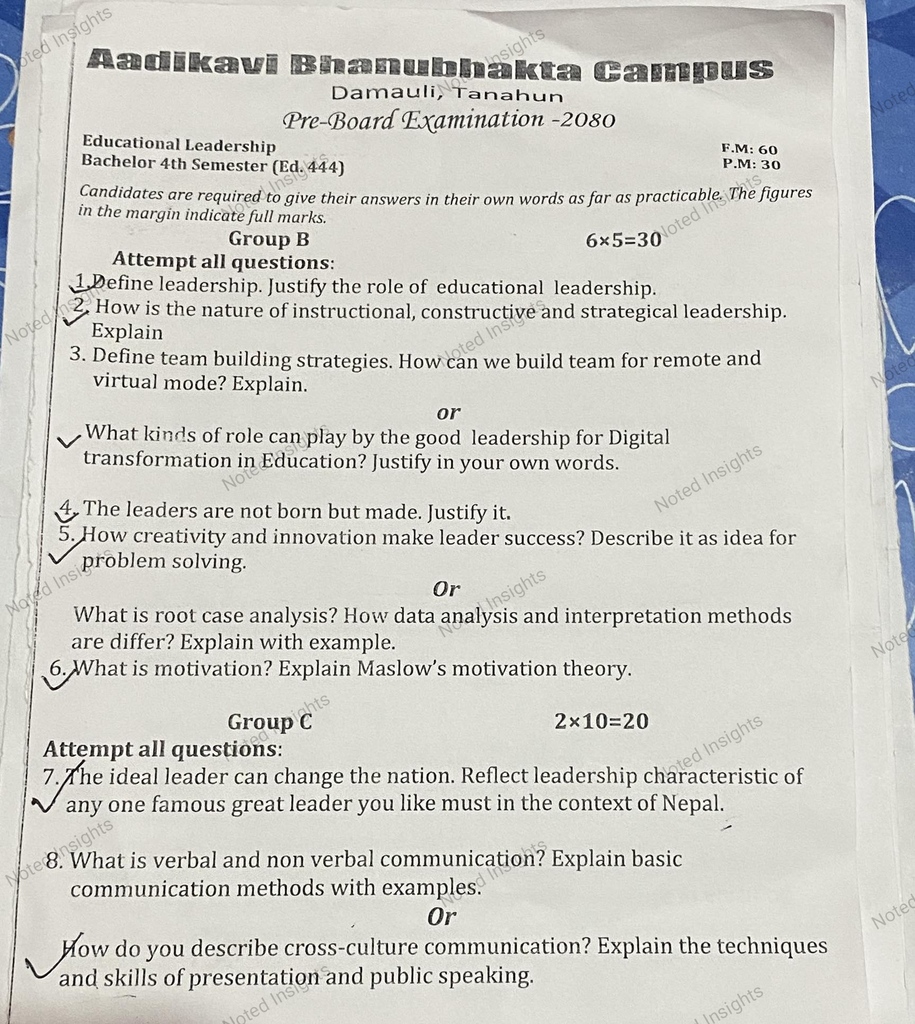
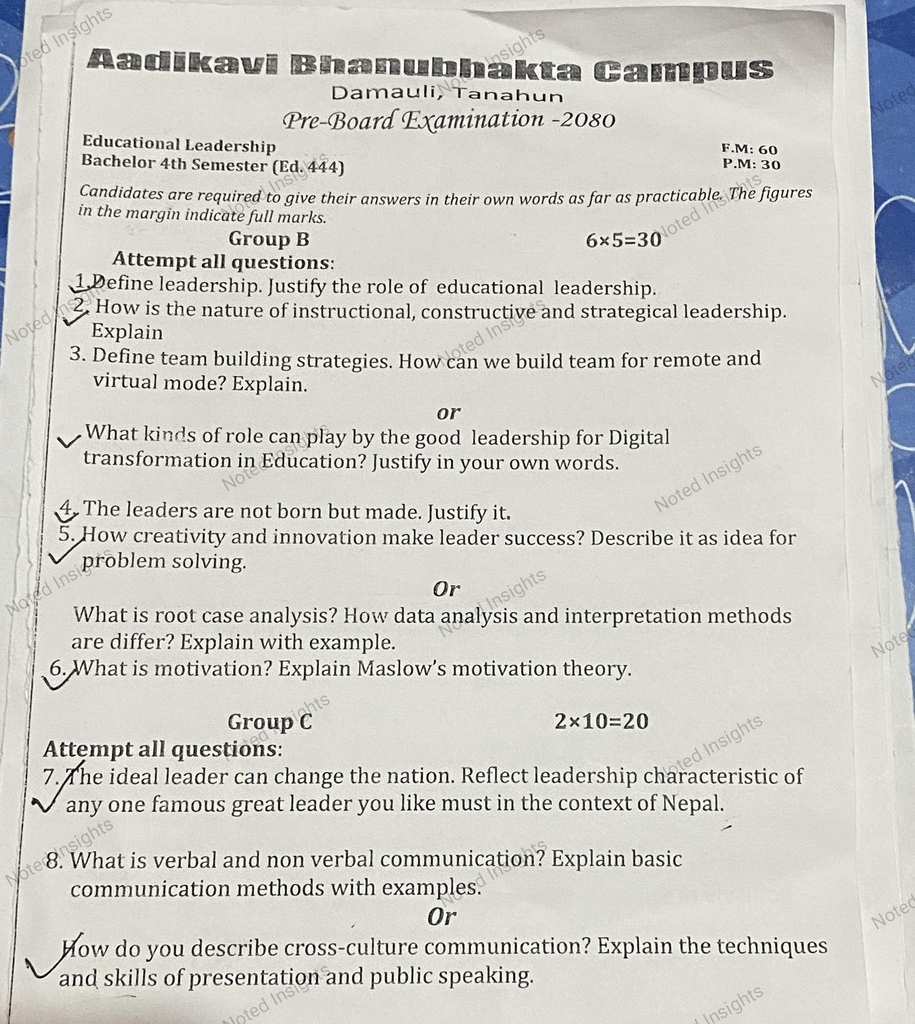
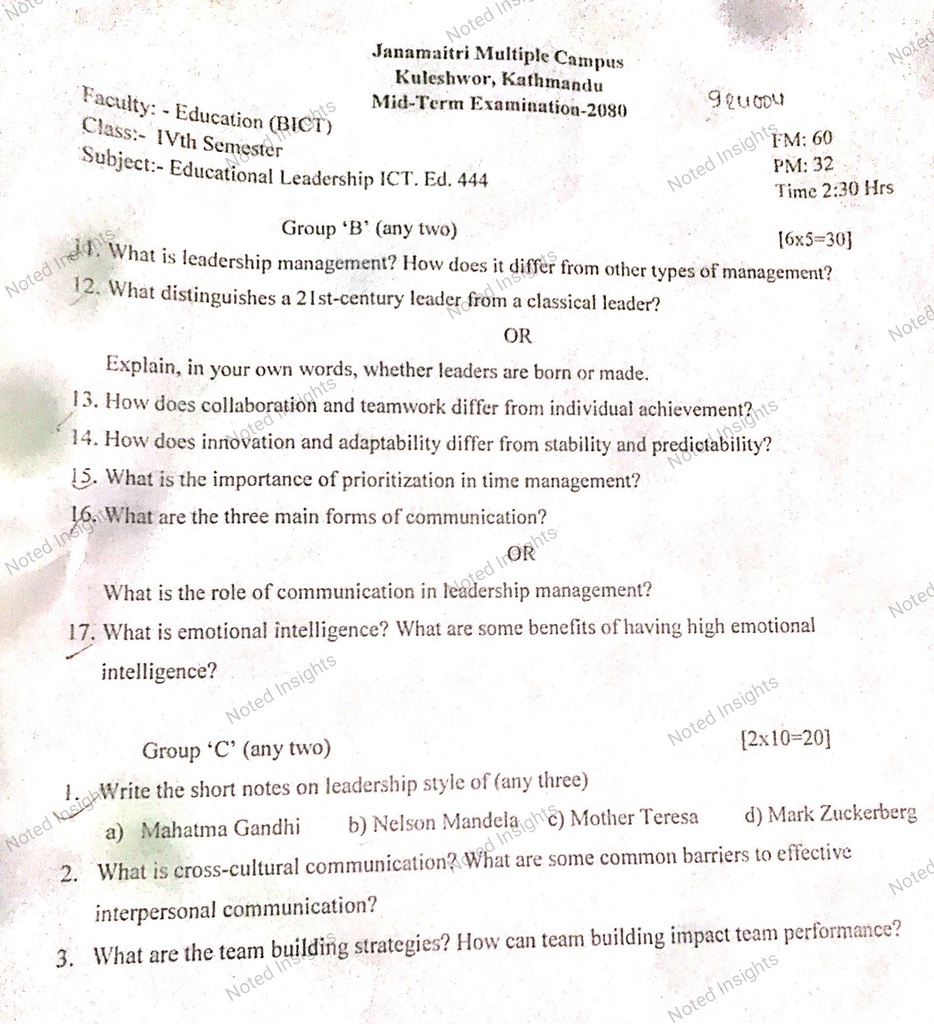
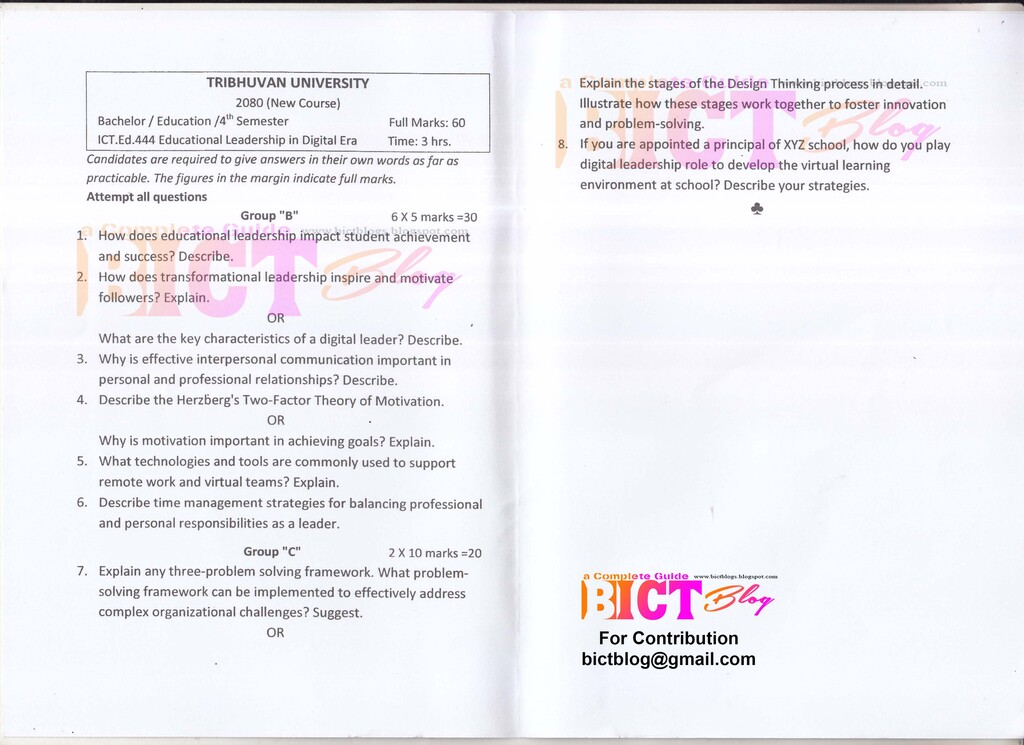
This collection brings together TU BICTE 4th semester Educational Leadership in Digital Era past papers, featuring the recent 2082 board examination under the new course alongside 2080 pre-board and terminal papers from campuses including Sanothimi Campus, Sukuna Multiple Campus, Aadikavi Bhanubhakta Campus, and Balkumari College. Registered under course code ICT.Ed.444 (also referenced as Ed. 444), this foundational subject equips future educators to steer institutions through digital transitions.
Reviewing these past questions allows you to spot recurring conceptual themes, assess your command of leadership frameworks, and refine your exam time management. Whether you are revising transformational leadership models, digital school management, or design thinking methodologies, these authentic papers serve as an essential companion for your semester preparation.
BICTE 4th Semester Educational Leadership Old Questions 2080–2082




What the Educational Leadership Papers Cover
The Educational Leadership in Digital Era curriculum bridges foundational management principles with contemporary technological leadership in education. Across these papers, significant attention is given to distinguishing traditional leadership models from modern, participatory, and agile approaches. Students are frequently asked to examine transformational leadership, constructivist leadership, and the debate surrounding whether effective leaders are born or developed through continuous training and experience.
Digital transformation in educational institutions forms another major pillar of the syllabus. Questions probe your understanding of how digital leaders introduce innovations, evaluate school e-services, and build engaging virtual learning environments. Rather than testing abstract theory alone, examiners focus on how institutional heads and teachers leverage digital tools to enhance teaching, foster collaborative learning, and address organizational inertia.
Interpersonal communication and human resource dynamics also represent a substantial portion of the curriculum. The papers highlight emotional intelligence, cross-cultural communication in globalized educational spaces, and public speaking techniques. Motivation theories such as Maslow’s hierarchy of needs, coaching and mentoring practices, and employee empowerment strategies are regularly tested to ensure future educators can build supportive learning communities.
Analytical problem-solving and institutional responsibility round out the core competencies evaluated in this subject. Questions challenge students to apply root cause analysis to solve school-level dilemmas, utilize design thinking to spur creativity, and understand corporate social responsibility within educational contexts. Mastering these interconnected themes prepares you to answer both objective inquiries and extensive scenario-based essay questions.
Exam Preparation Tips for Educational Leadership
Anchor your theoretical discussions with concrete educational scenarios whenever possible. When discussing leadership styles such as transformational, agile, or constructivist leadership, do not stop at textbook definitions. Illustrate how an educational administrator or ICT coordinator would apply these principles to introduce a learning management system, motivate reluctant faculty members, or encourage participatory decision-making.
Pay close attention to digital education concepts and institutional planning. Topics like virtual learning environments, educational e-services, and digital technology selection criteria appear consistently across both board and pre-board examinations. Structure your answers around user accessibility, pedagogical value, teacher professional development, and technical feasibility to demonstrate a holistic grasp of educational technology.
Practice structuring analytical problem-solving questions before sitting for the exam. When responding to prompts on root cause analysis or design thinking, lay out the methodological phases clearly and accompany them with a realistic school-based example. Showing examiners how structured thinking identifies underlying causes or fosters classroom innovation will earn you stronger marks on comprehensive questions.
Refine your written communication by using clear subheadings, concise bullet points, and comparative tables. For comparative questions—such as classical leaders versus twenty-first-century leaders, or verbal versus non-verbal communication—tabular comparisons help examiners quickly identify key distinctions. Allocate time during your revision to practice drafting brief, impactful introductions and conclusions for long-answer prompts.
Frequently asked questions
What course code is assigned to Educational Leadership in the TU BICTE syllabus?
Under the Tribhuvan University BICTE 4th semester syllabus, Educational Leadership in Digital Era carries course code ICT.Ed.444, though campus internal papers sometimes abbreviate it as Ed. 444.
Which leadership theories appear most frequently in the exam papers?
Key models include transformational leadership with its components, constructivist leadership, agile leadership, and comparisons between classical and modern 21st-century leaders.
How should students prepare for questions on Virtual Learning Environments?
Focus on explaining core components, benefits for schools, and the critical role of digital leadership in teacher training and technology adoption.
Does the BICTE Educational Leadership board exam include objective questions?
Yes, the TU board exam includes an objective multiple-choice section covering key terms and concepts alongside descriptive short and long-answer sections.
About Noted Insights
Noted Insights was founded by Ajay Mahato in 2022 with the vision of establishing a leading educational repository and dynamic learning space for university students across Nepal. Guided by the fundamental belief that quality educational resources should be openly accessible to every learner regardless of geography, the platform provides updated notes, syllabi, and past question archives to empower students in building career-ready skills.
As you advance through your BICTE studies, mastering both leadership principles and educational technology will serve as the cornerstone of your journey as an educator and technologist. Stay consistent with your revision, analyze authentic exam patterns thoroughly, and approach your fourth-semester board examinations with determination and confidence.


