
Mastering educational psychology requires moving beyond abstract definitions to understanding how real students think, retain information, and learn in the classroom. When semester board examinations approach, reviewing past university question papers is the most reliable way to understand how theoretical principles are framed into exam questions.
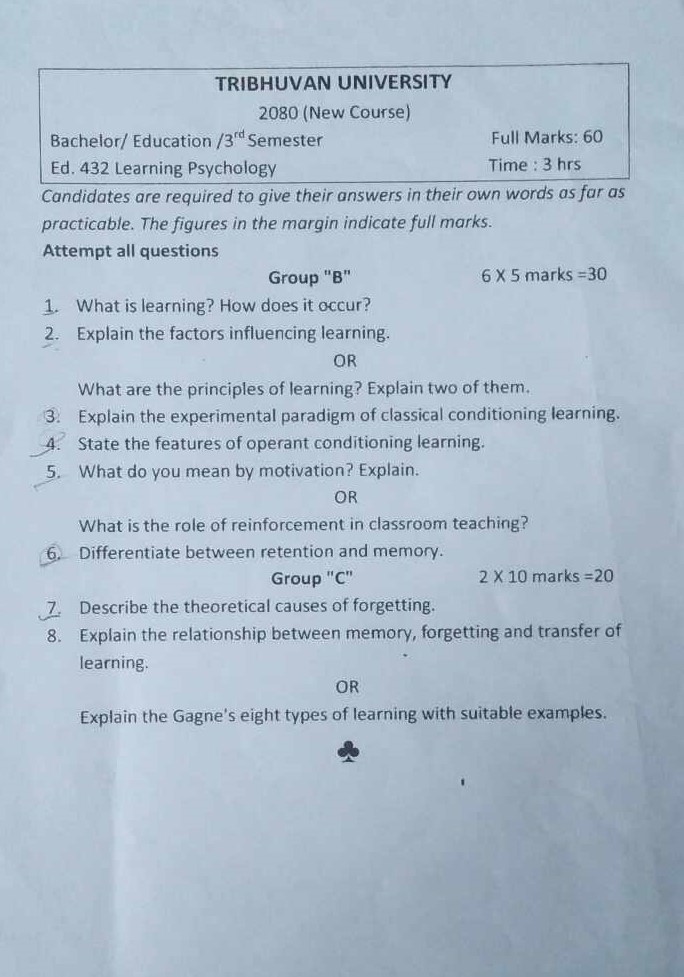
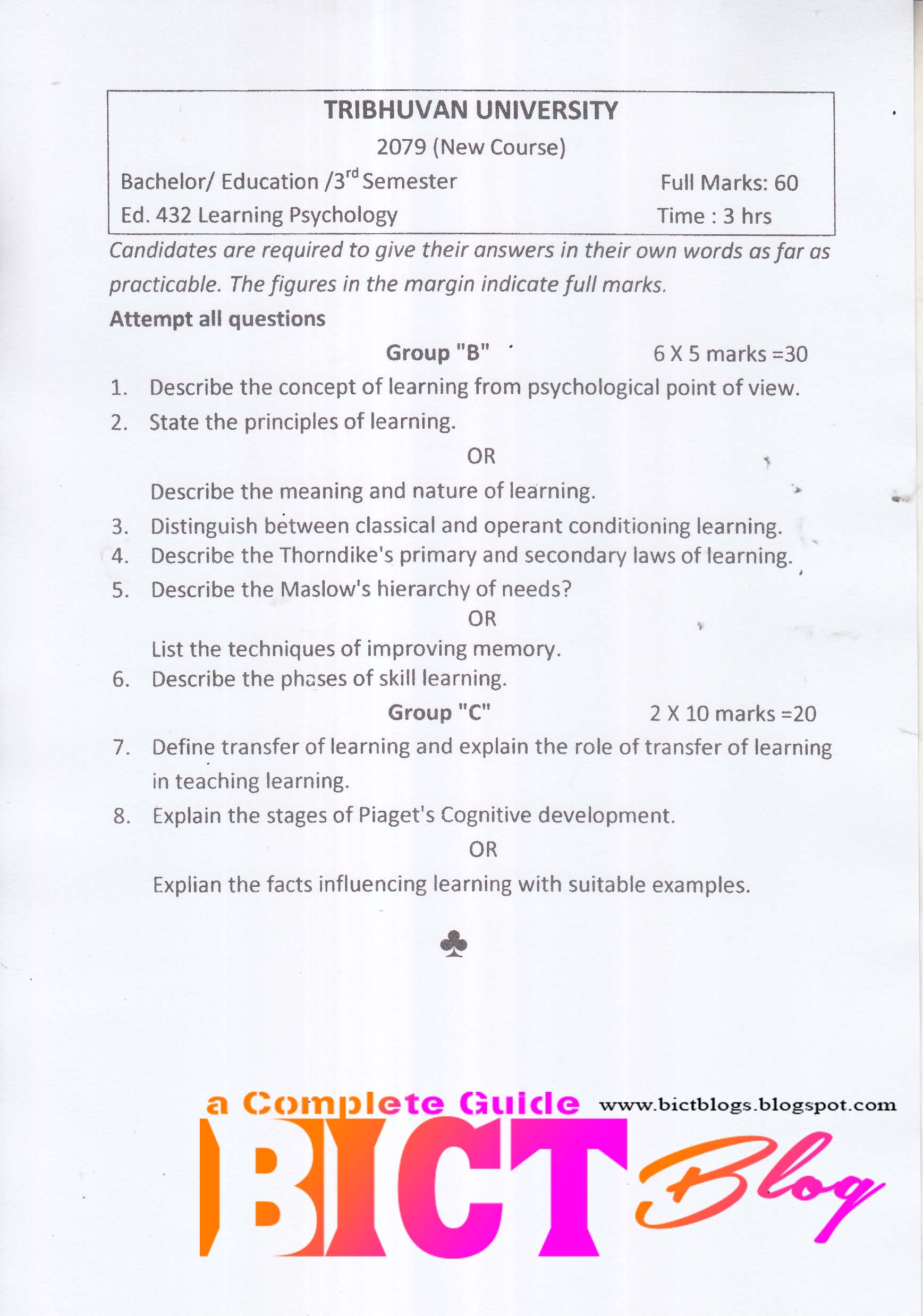
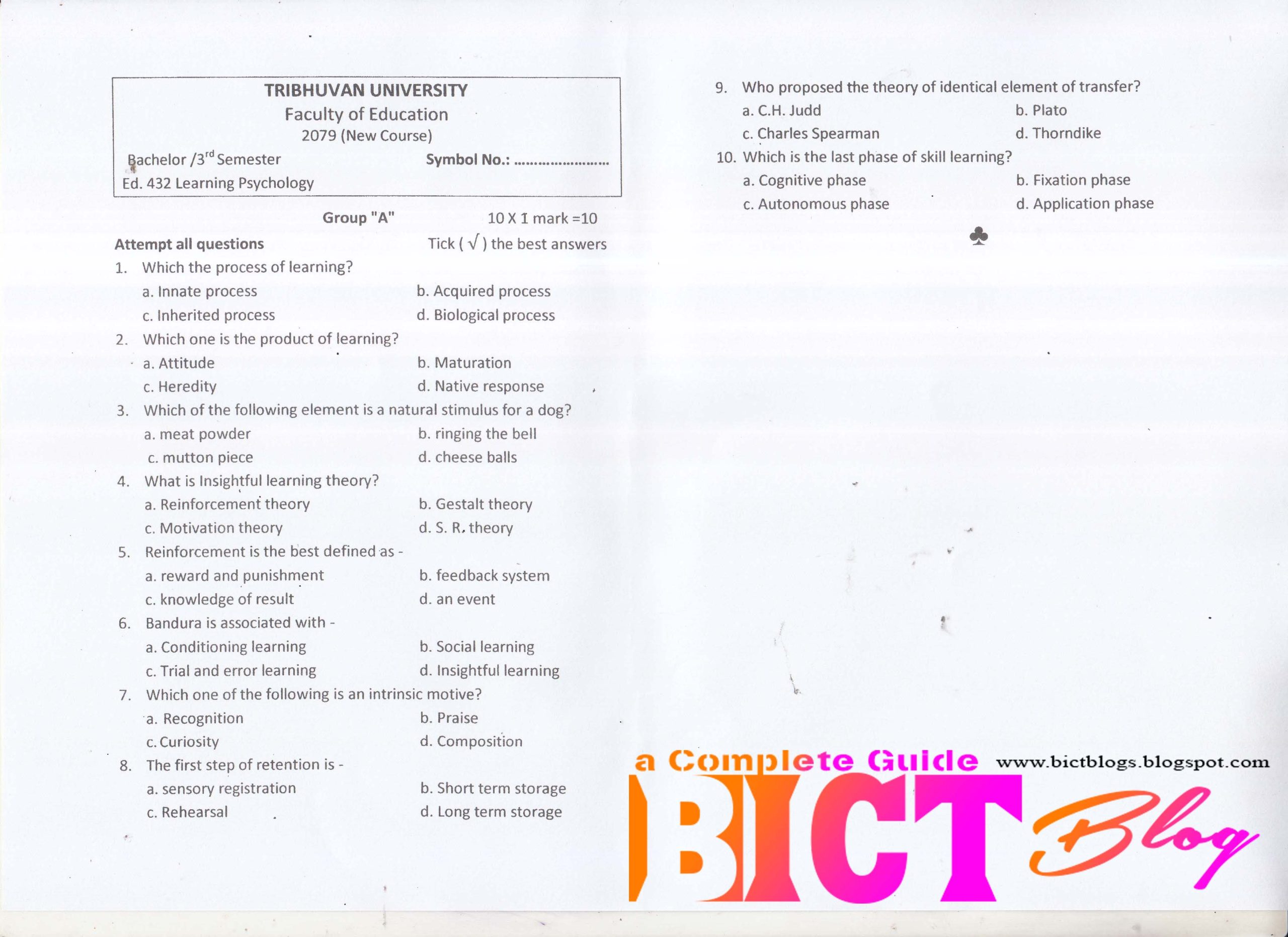
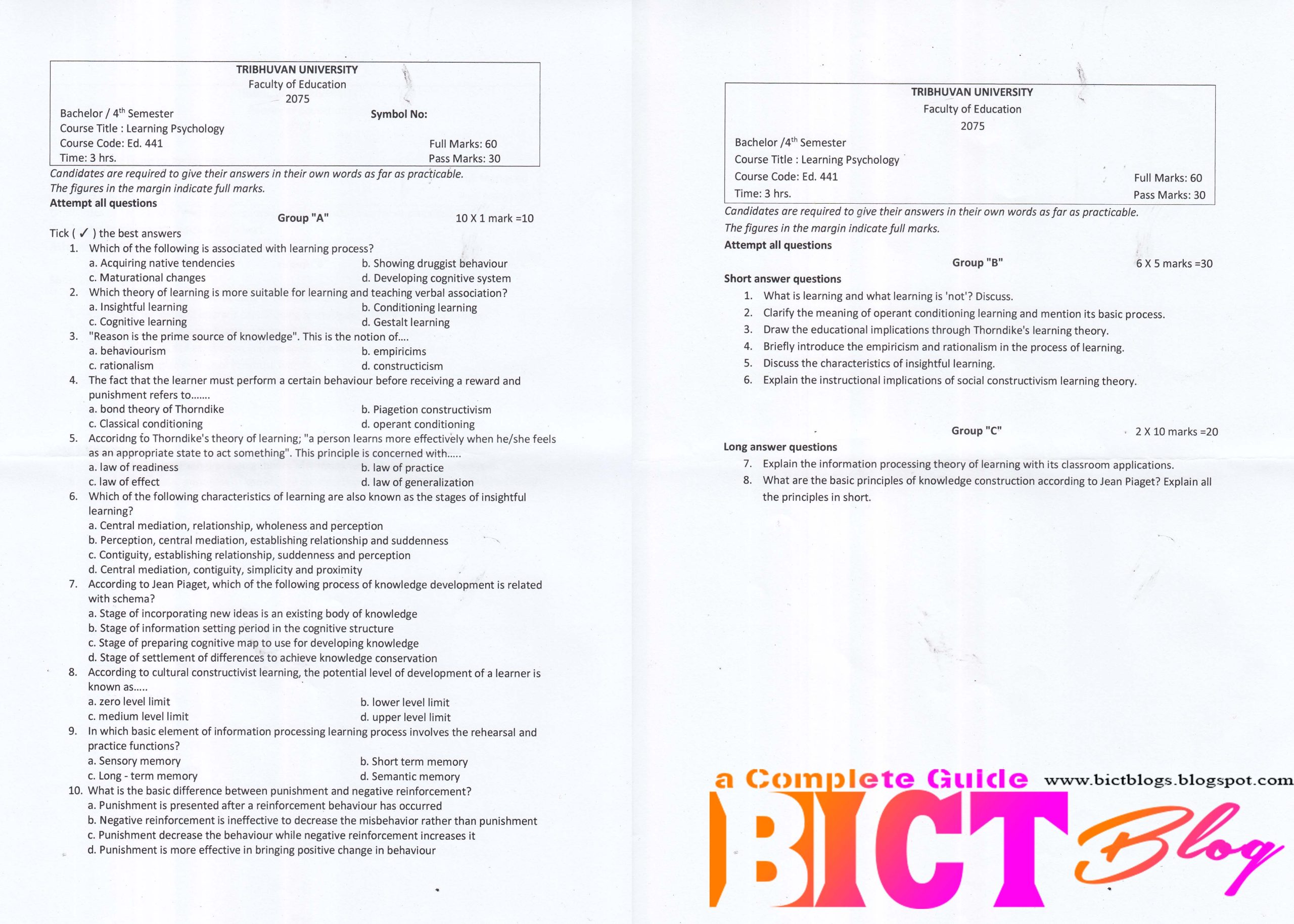
This archive compiles official Tribhuvan University (TU) Learning Psychology past question papers from 2075 BS through 2080 BS. The collection serves students enrolled in the Bachelor of Information and Communication Technology in Education (BICTE) and Bachelor of Education (BEd) programs under the Faculty of Education.
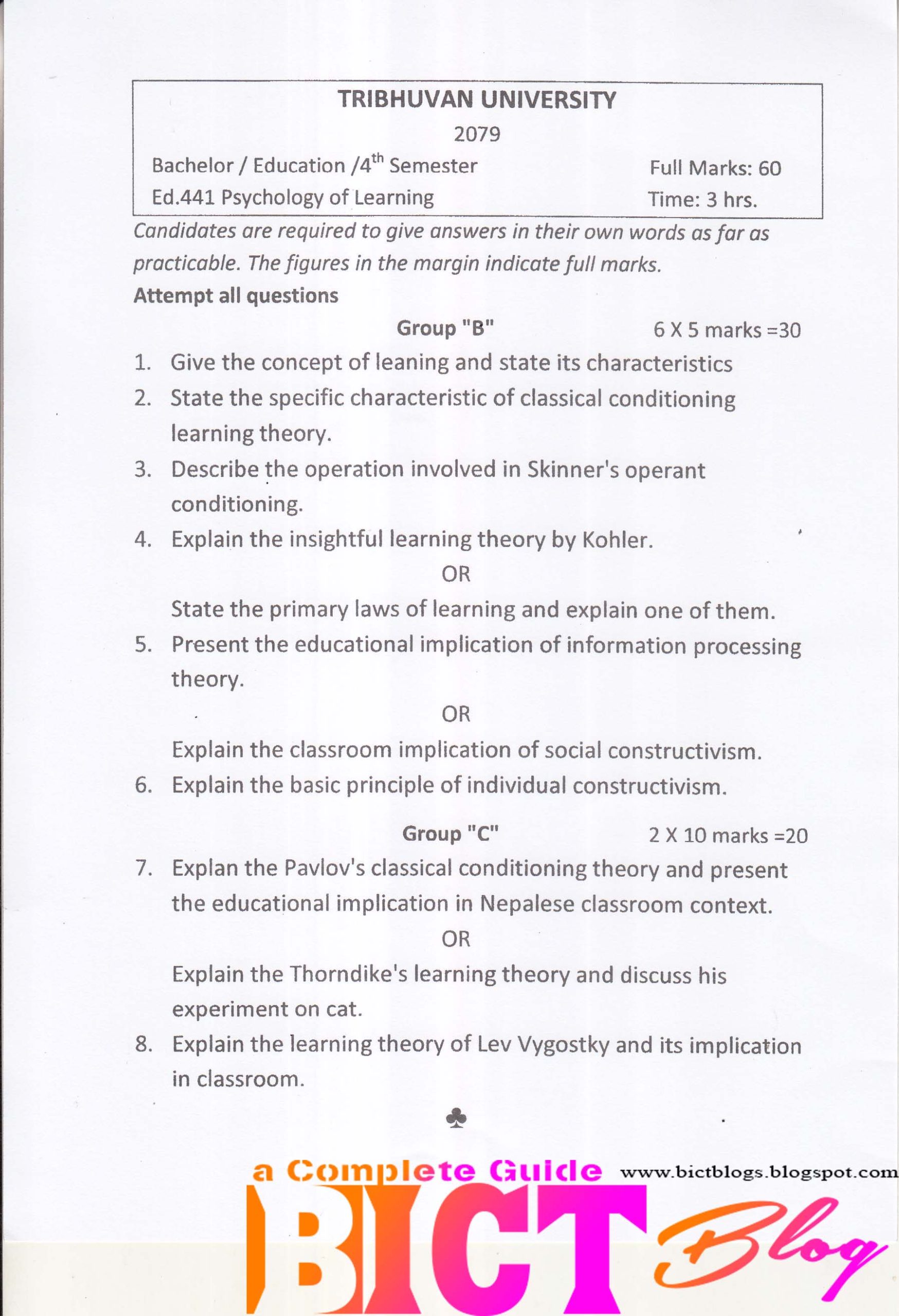
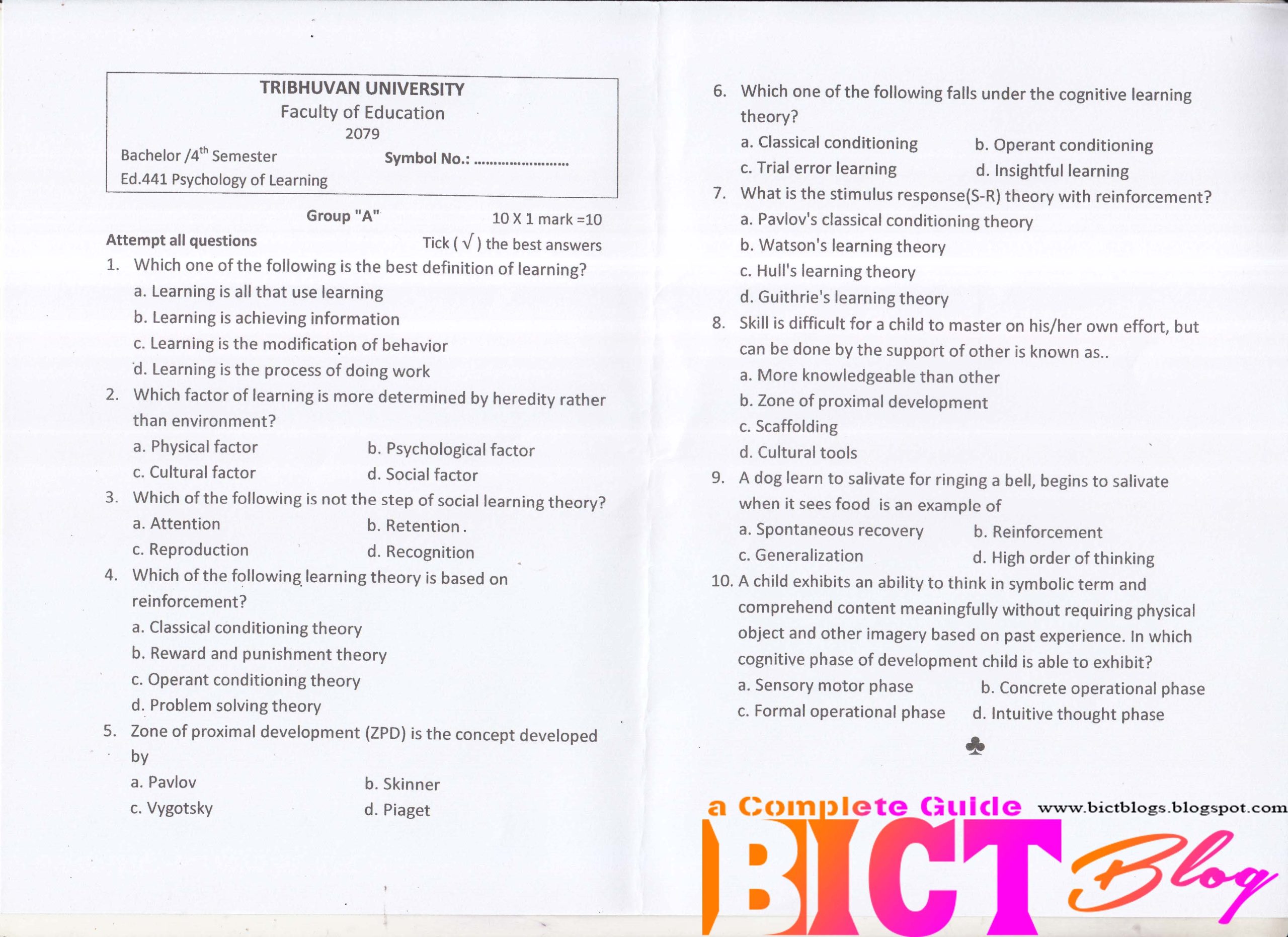
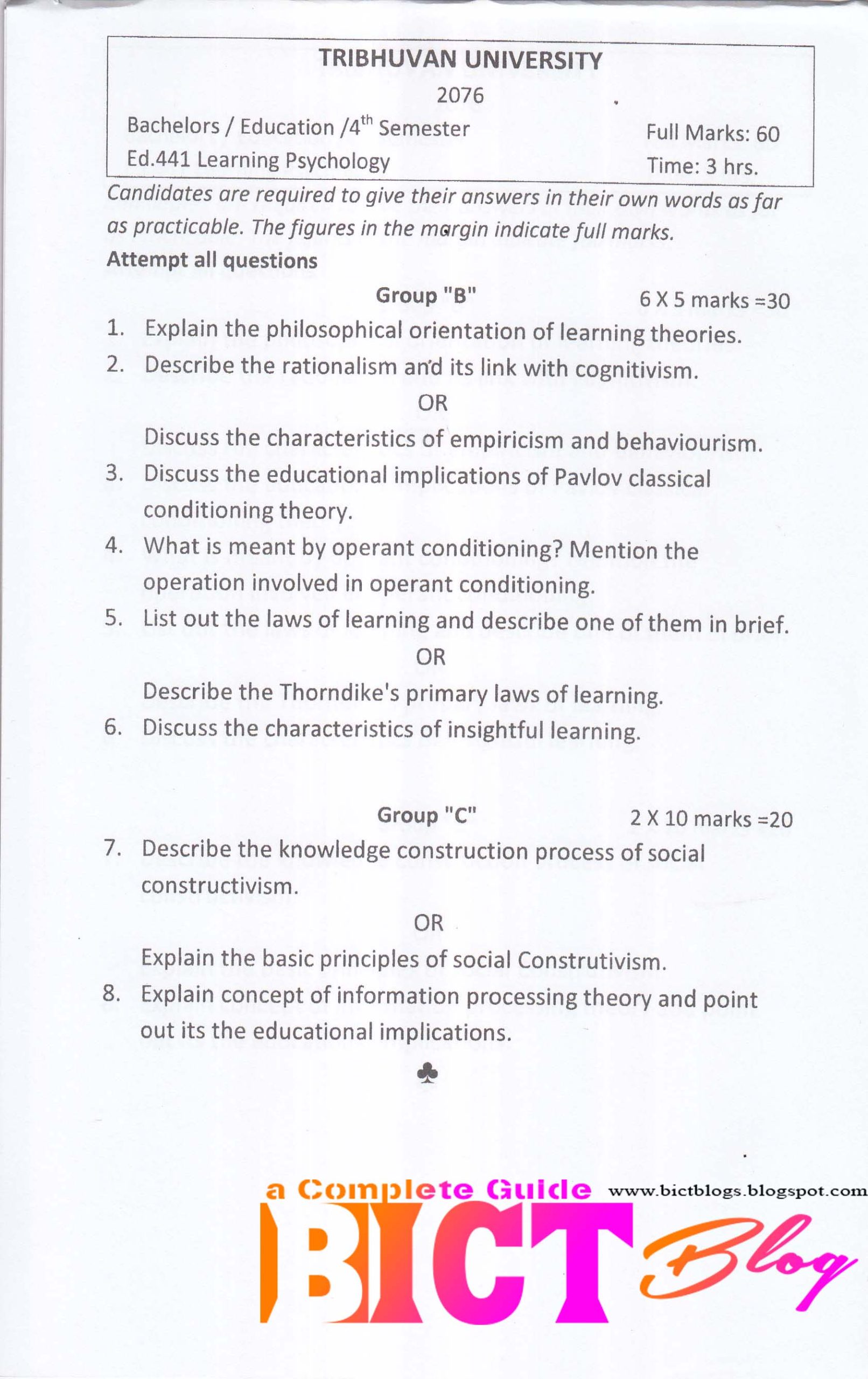
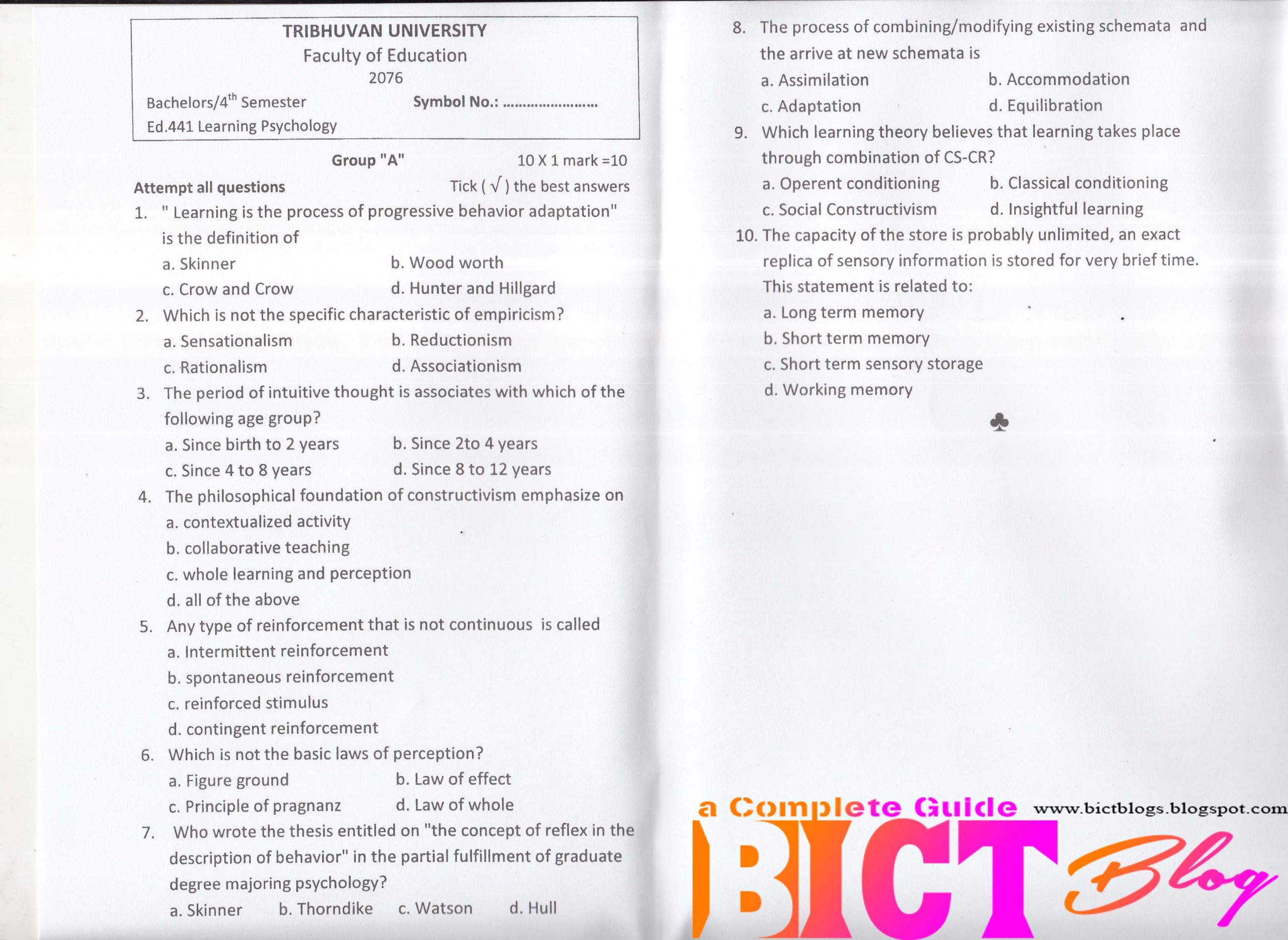
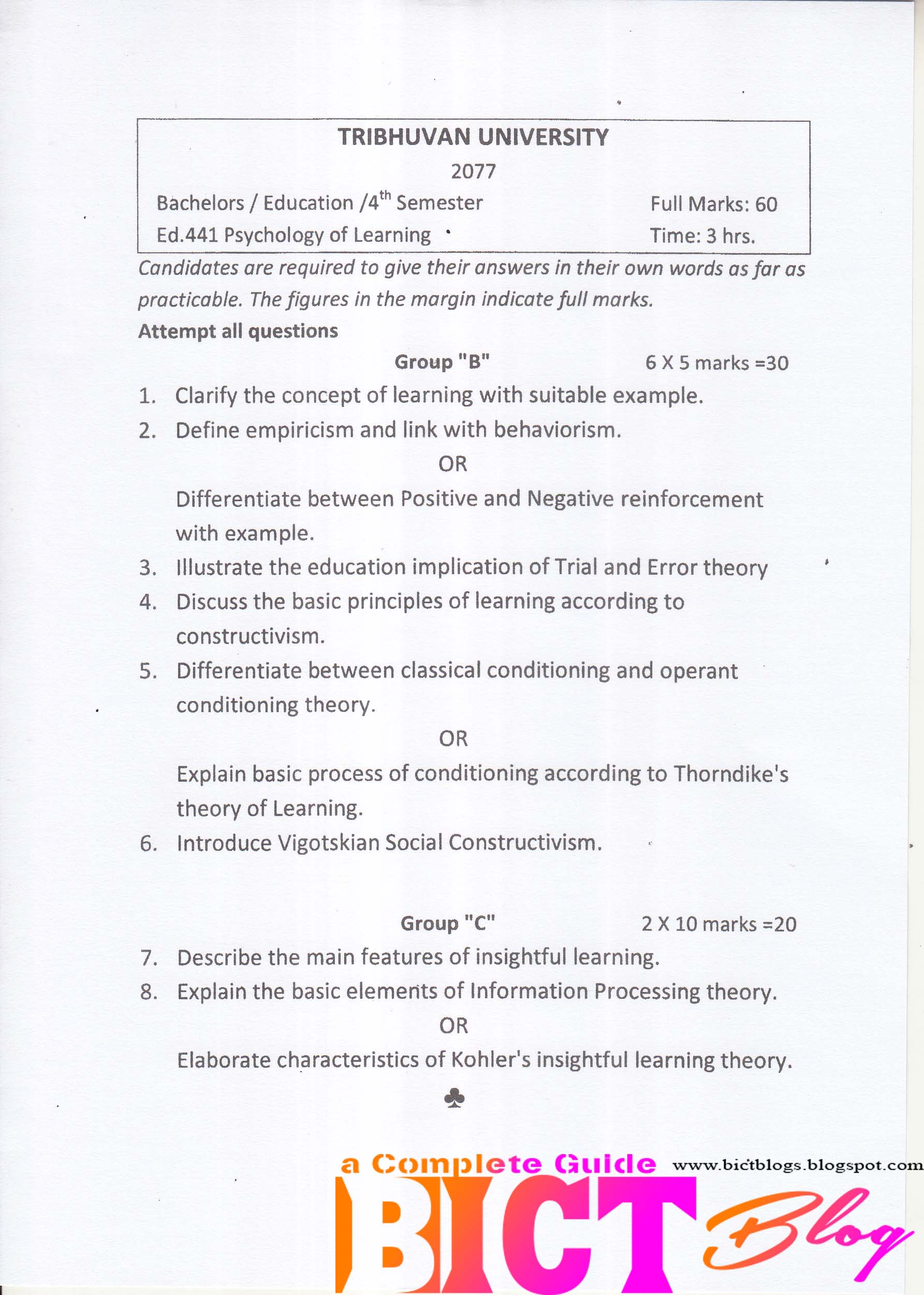
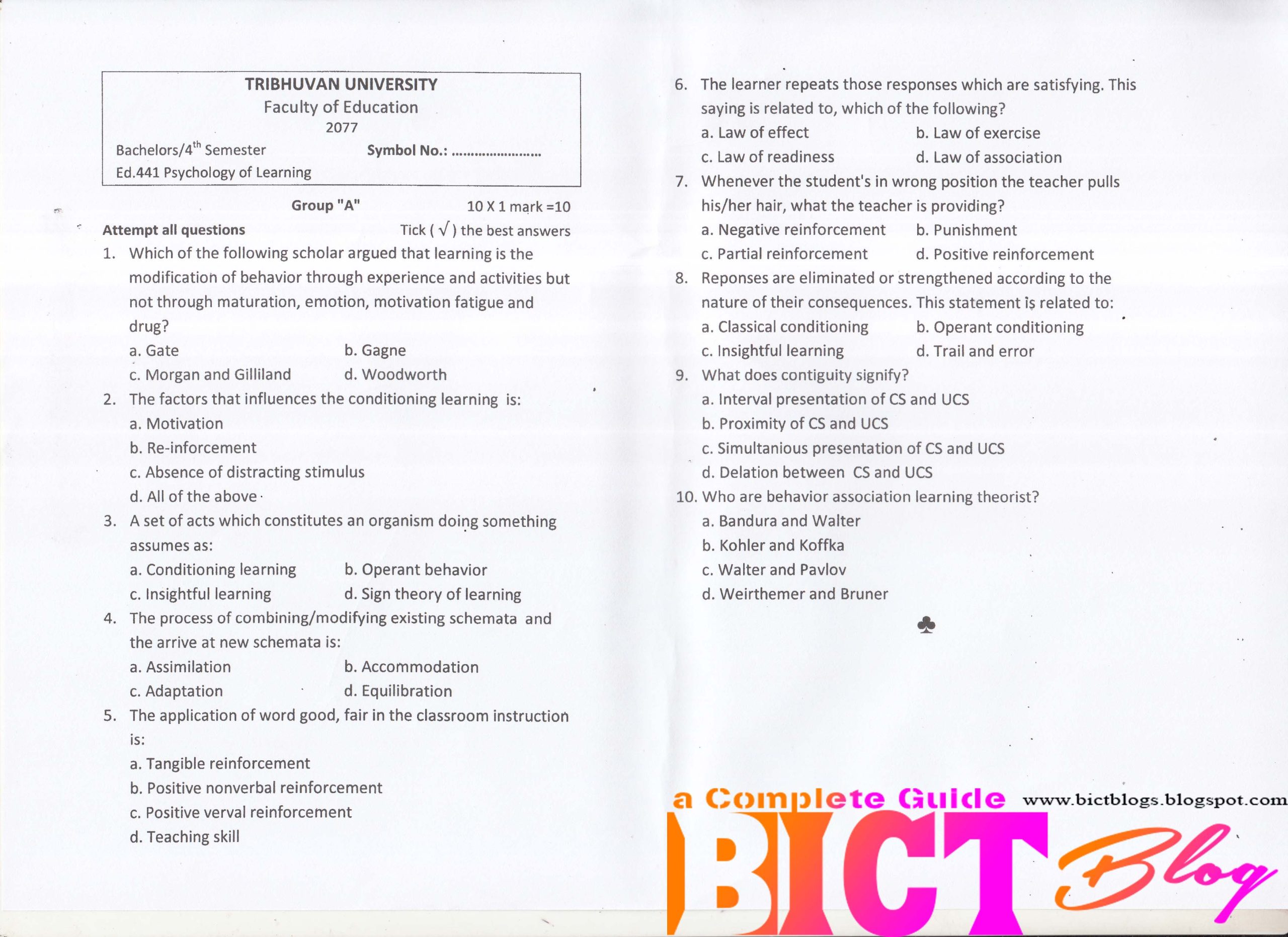
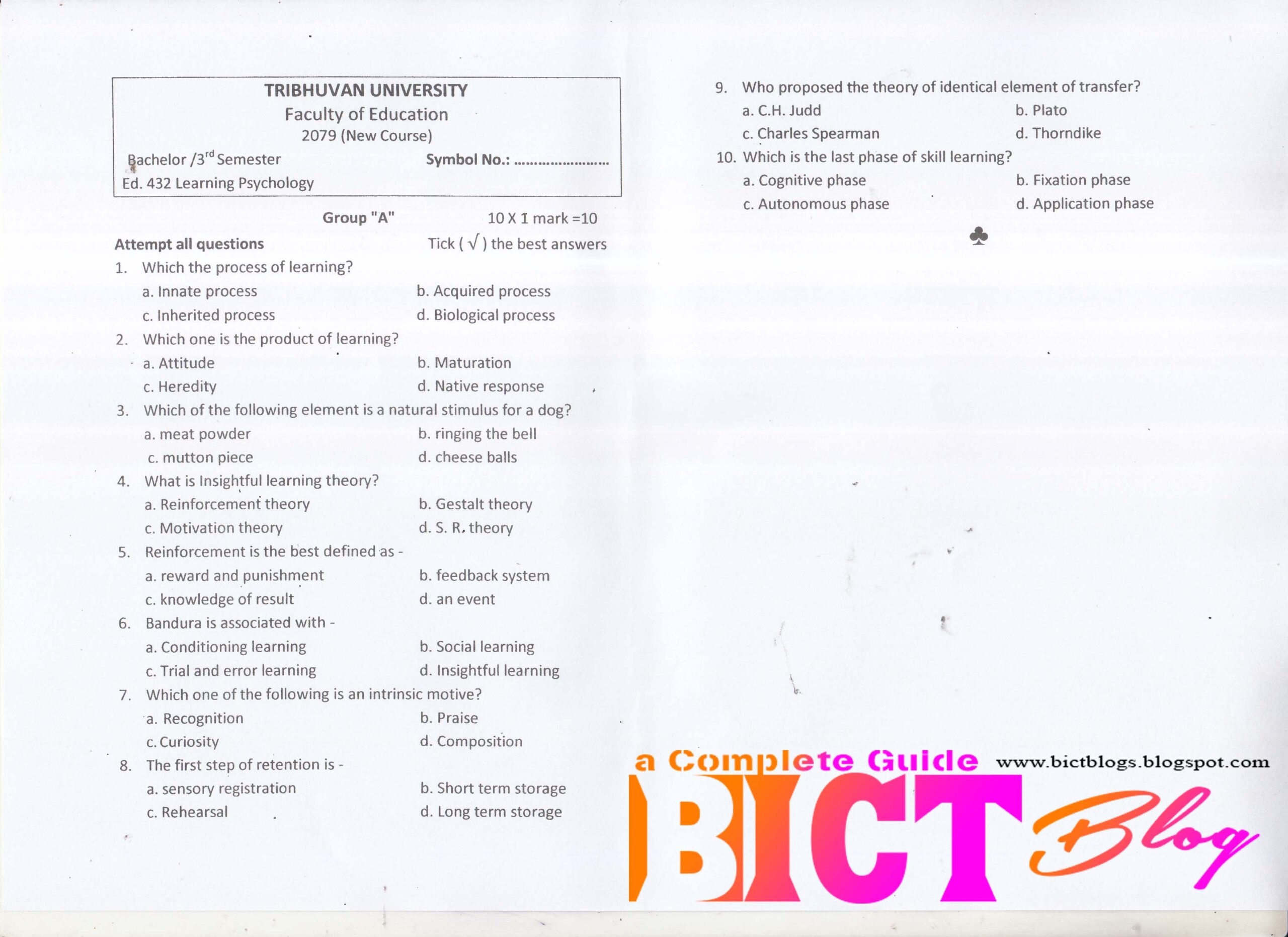
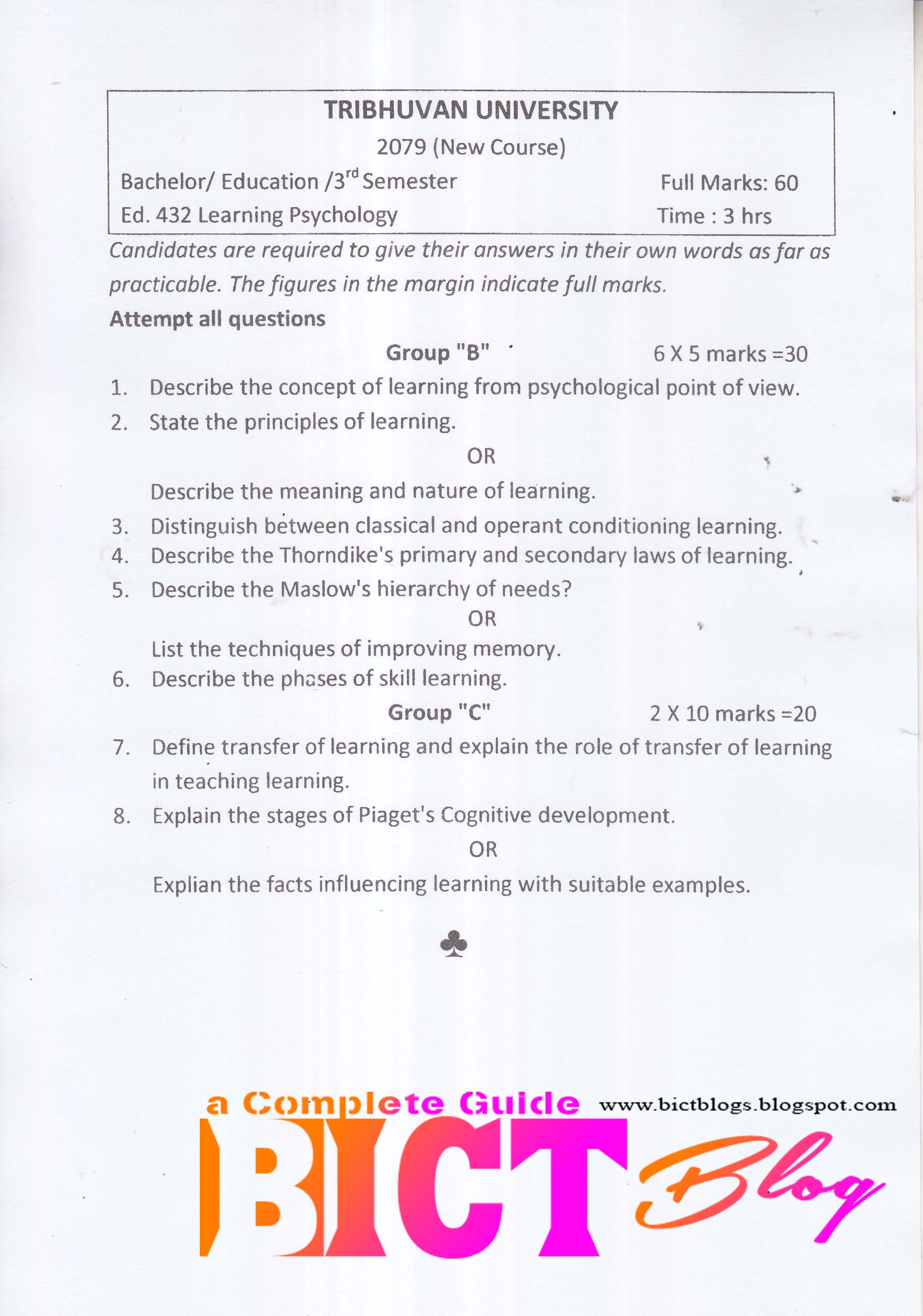
Because Tribhuvan University updated its curriculum, students will find papers categorized under both course code Ed. 441 (4th Semester) and course code Ed. 432 (3rd Semester under the new course). Practicing these papers helps learners observe how learning theories, memory models, and pedagogical applications are assessed across examination cycles.
TU Learning Psychology Past Question Papers 2075–2080 (Ed. 432 / Ed. 441)
Curriculum Overview and Core Themes in Learning Psychology
Learning Psychology bridges psychological theories with classroom pedagogy. The coursework explores how human behavior is acquired, modified, and sustained through educational experiences. Candidates are examined on behavioral perspectives, including classical conditioning, operant conditioning, and connectionism, requiring a clear grasp of how conditioning, reinforcement schedules, and stimulus associations shape learner habits.
Cognitive and developmental dimensions form another major pillar of the curriculum. Students explore cognitive development frameworks, such as Jean Piaget’s stages of cognitive growth, alongside Lev Vygotsky’s socio-cultural constructivism and the Zone of Proximal Development. Questions regularly challenge students to compare behavioral viewpoints with cognitive approaches like insightful learning and information processing theory.
The subject places significant emphasis on human cognitive architecture, especially memory, retention, and forgetting. University assessments test concepts of sensory storage, short-term working memory, and long-term encoding, while asking future educators to evaluate why students forget academic content. Related topics such as the transfer of learning and skill acquisition phases require learners to demonstrate how prior knowledge impacts subsequent problem-solving.
Beyond theoretical definitions, the examination papers frequently demand practical contextualization within school classrooms. Examinees are expected to discuss motivation techniques, hierarchical human needs, and reinforcement strategies suitable for school environments in Nepal. Demonstrating how these psychological insights improve instructional design and student engagement is crucial for scoring well.
Targeted Study and Exam Strategies for Learning Psychology
When studying behavioral and cognitive theorists, build comparative summary charts rather than memorizing each theory in isolation. Group thinkers like Pavlov, Skinner, and Thorndike under behavioral mechanisms, and contrast them with cognitive figures such as Kohler, Piaget, and Vygotsky. Clearly outline their core experiments, key terminology, and distinguishing assumptions to tackle comparative questions quickly.
Pay close attention to objective distinctions in foundational terminology. In the objective sections, questions test differences between concepts like negative reinforcement and punishment, intrinsic versus extrinsic motivation, and assimilation versus accommodation. Reviewing exact psychological definitions prevents second-guessing during multiple-choice questions.
Whenever an exam question asks you to explain a learning theory, connect the psychological premise directly to classroom instruction. Examiners look for practical application—such as utilizing scaffolding in teaching complex tasks, applying the law of readiness before introducing new material, or using reinforcement to sustain student participation. Supporting your answers with realistic teaching examples earns top marks.
Practice structuring descriptive answers on memory systems and the transfer of learning. For questions on forgetting, explain theoretical causes such as decay, interference, and retrieval failure, paired with concrete retention techniques like spaced practice and meaningful rehearsal. This structured method ensures thorough coverage of theoretical arguments.
Frequently asked questions
Why are Learning Psychology papers listed under both 3rd and 4th semester?
Tribhuvan University restructured the BEd and BICTE syllabus. In earlier years (2075–2079 BS), Learning Psychology was designated as Ed. 441 in the 4th Semester. In the updated syllabus (2079–2080 BS), it was repositioned to the 3rd Semester as Ed. 432. The core concepts remain consistent across both.
What is the examination pattern for TU Learning Psychology?
The external board examination carries 60 marks with a duration of three hours. The paper consists of objective multiple-choice questions in Group A, short-answer questions in Group B, and analytical long-answer questions with internal choices in Group C.
Which topics appear most frequently in these board exams?
Examinations consistently assess classical conditioning, Skinner’s operant conditioning, Thorndike’s laws of learning, Piaget’s cognitive development stages, Vygotsky’s social constructivism, memory retention, theoretical causes of forgetting, and the transfer of learning.
How does solving past question papers help exam preparation?
Working through past papers familiarizes you with the phrasing of objective questions and the depth expected for 5-mark and 10-mark answers. It builds time-management skills and helps you apply psychological theories to classroom scenarios with confidence.
About Noted Insights
Founded in 2022 by Ajay Mahato, Noted Insights provides university students and future educators across Nepal with open study materials, past question papers, syllabi, and lecture notes. Rooted in the belief that education transforms lives, the platform is dedicated to making quality academic resources accessible to all learners, regardless of location.
Our vision is to build a vibrant learning community where students connect with peers, explore innovative ideas, and develop the skills needed to succeed. As you prepare for your Learning Psychology examinations, stay dedicated to your studies and approach your board exams with complete confidence.

