
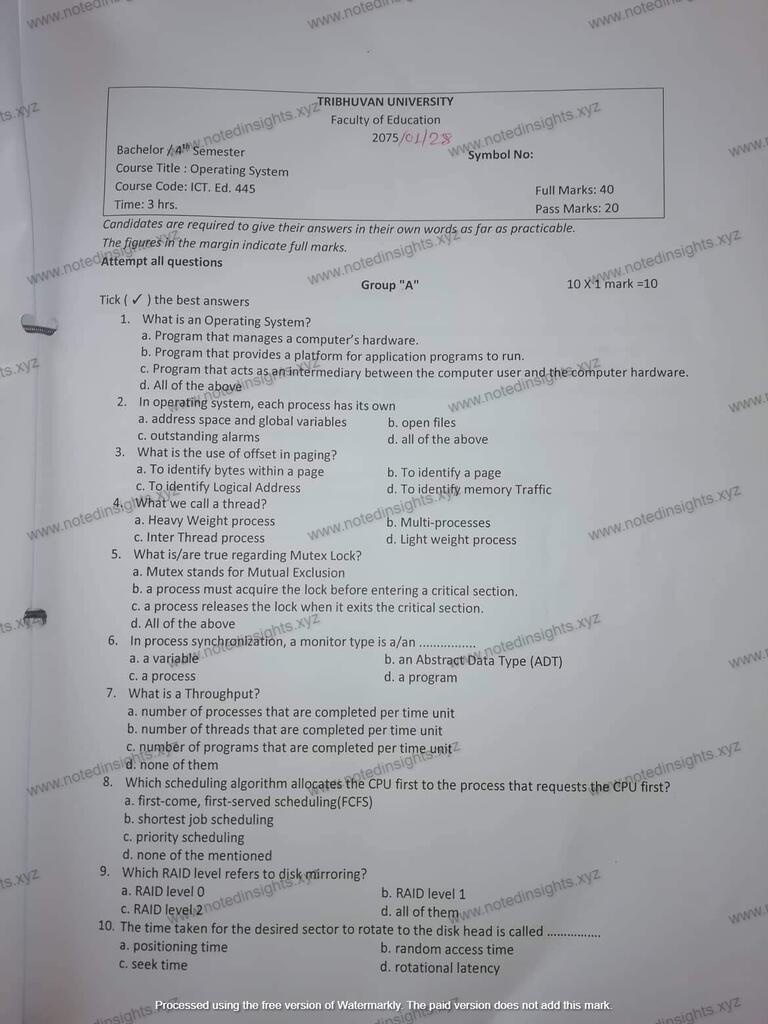
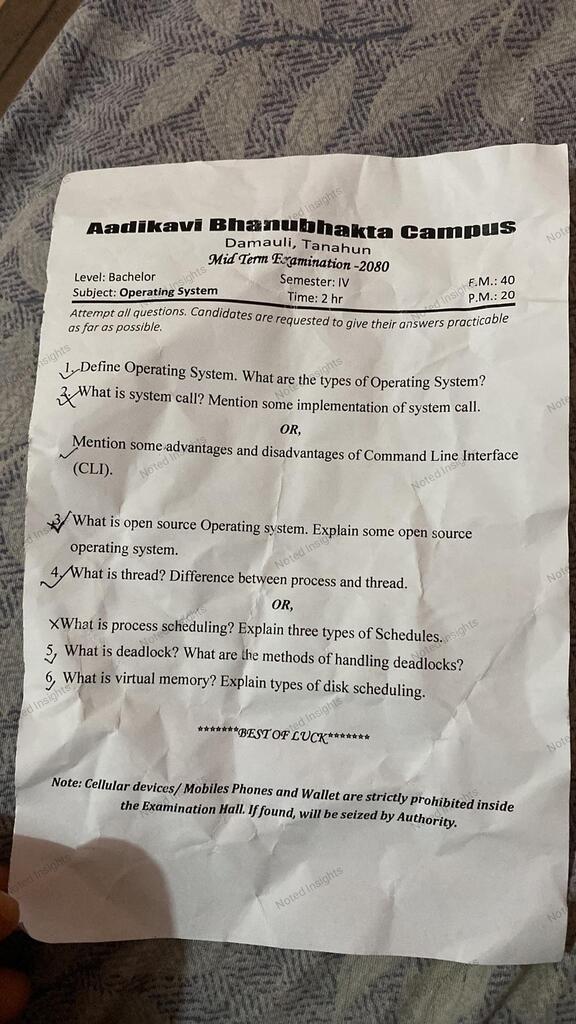
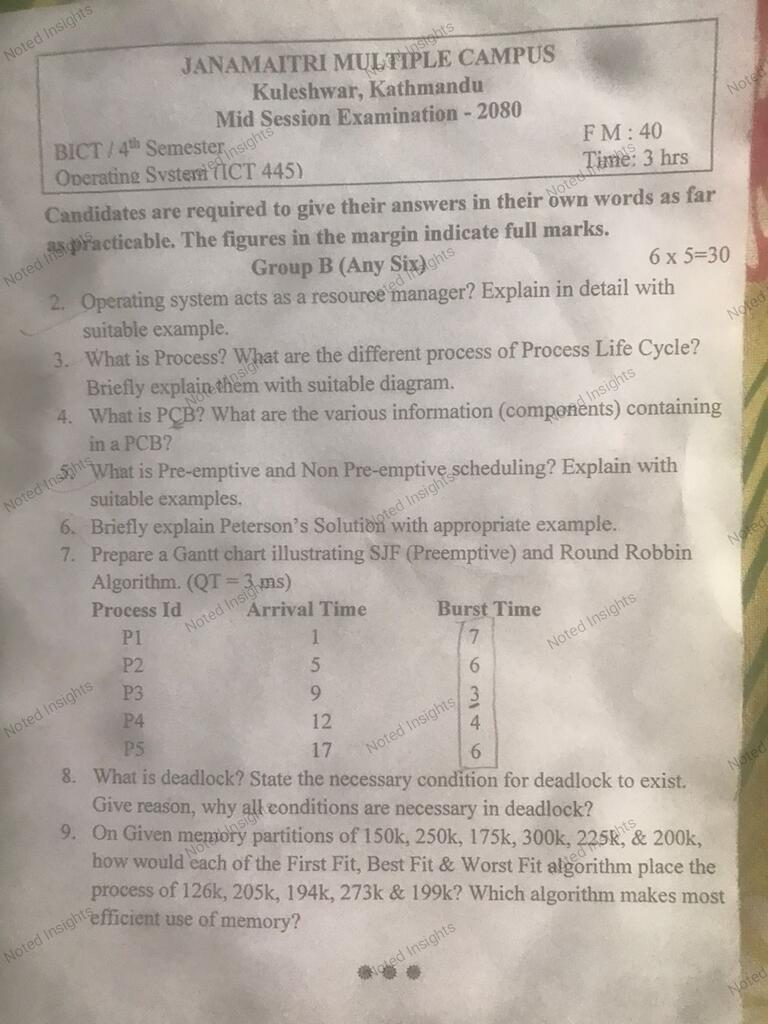
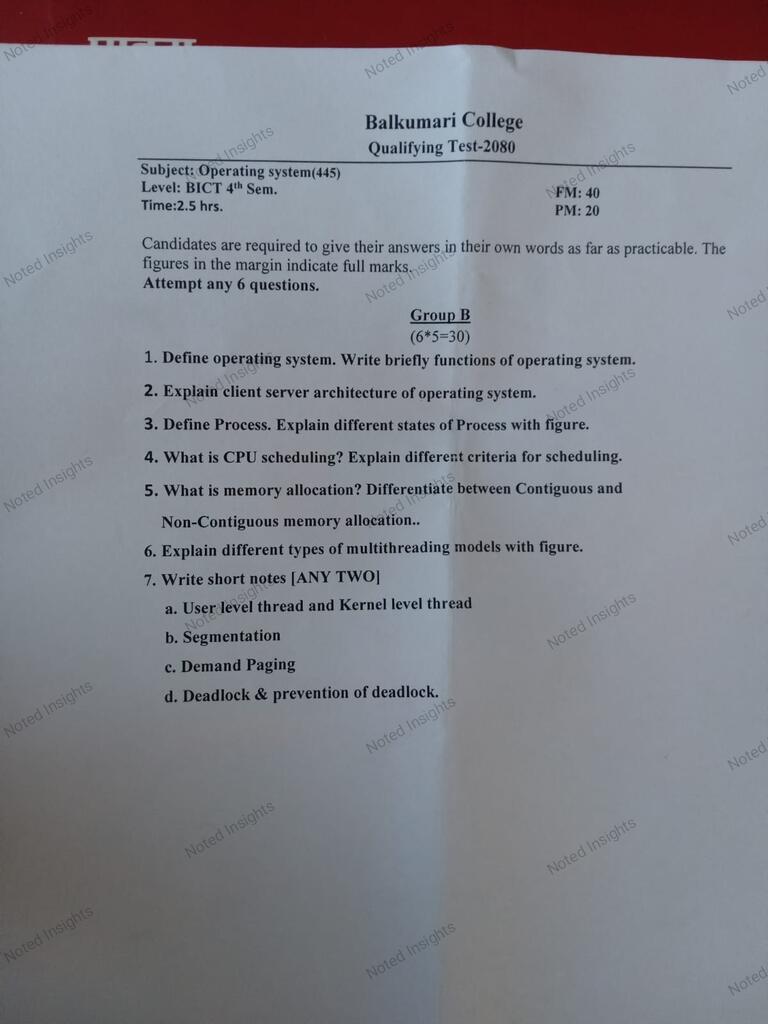
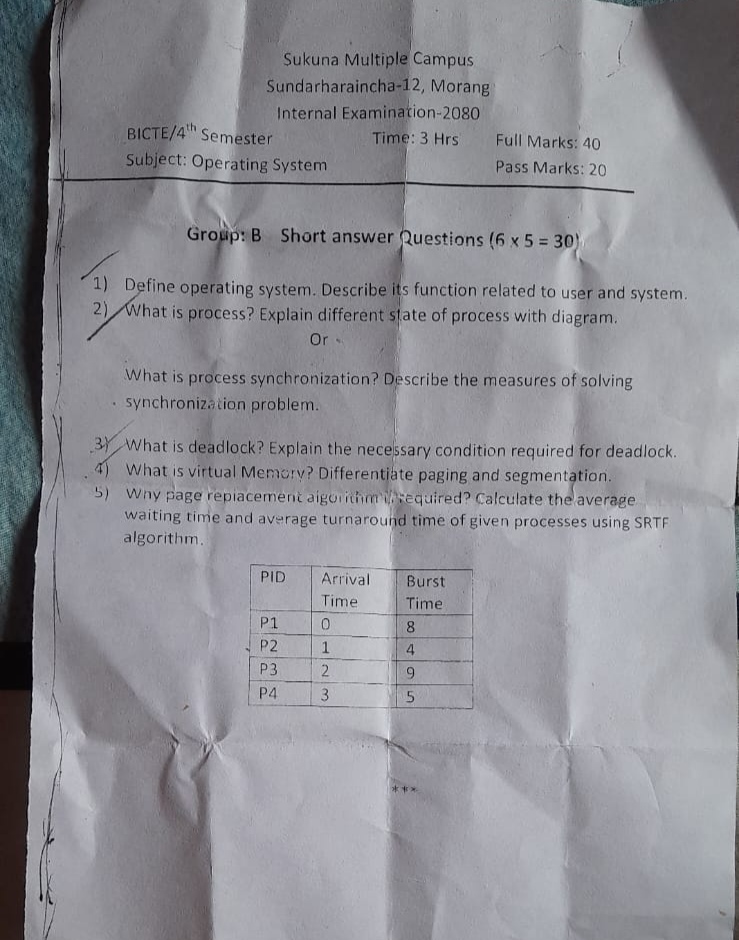
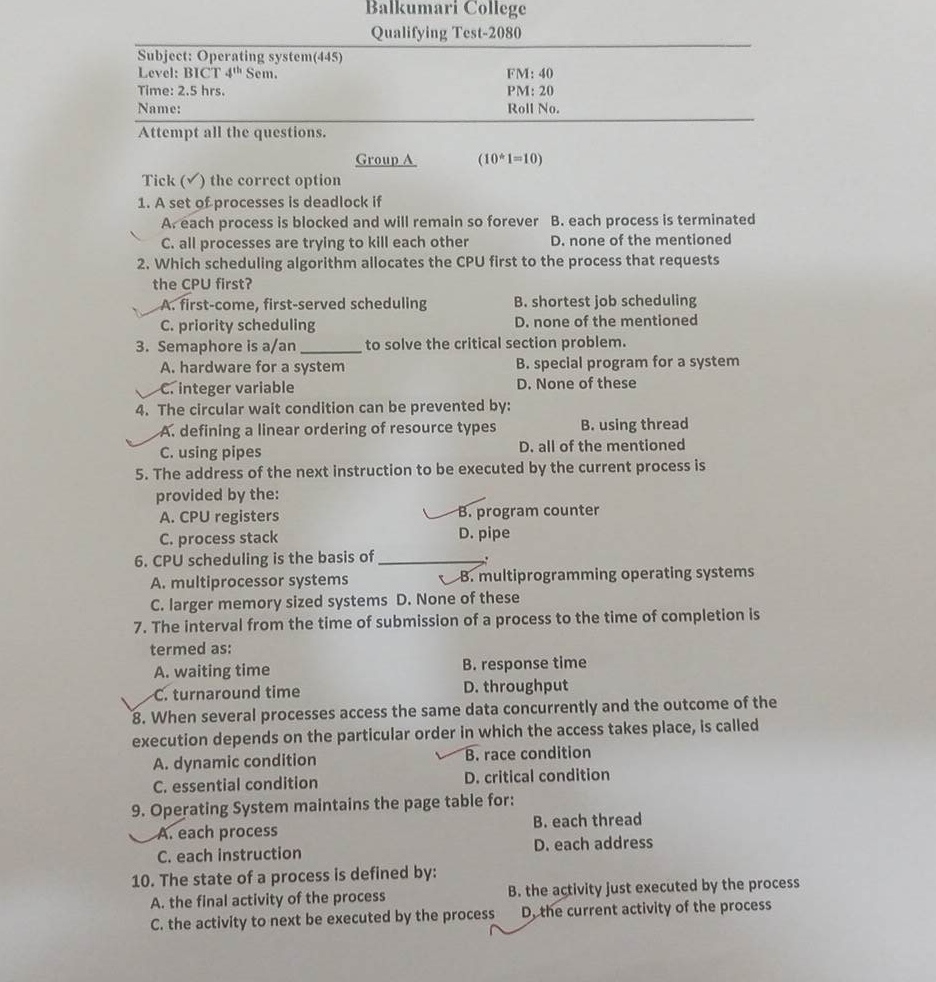
Balancing technical theory with problem-solving can feel daunting when university board exams approach, especially for core computing subjects. Revisiting past exam papers remains one of the most effective ways to understand how examiners frame questions and allocate marks. These Tribhuvan University BICTE 4th semester Operating System old questions compile authentic board exams from the Faculty of Education alongside campus pre-board papers spanning 2075 BS to 2080 BS.
Students pursuing the Bachelor of Information Communication Technology in Education (BICTE) as well as the Bachelor of Computer Applications (BCA) will find relevant material here. The collection covers TU course code ICT. Ed. 445 for BICTE and CACS 445 for BCA, reflecting shared core computing concepts across undergraduate technical degrees.
Practicing with genuine previous papers helps you transition from passive reading to active exam readiness. By working through objective multiple-choice items and detailed subjective prompts, you develop the timing and analytical depth necessary to perform confidently on examination day.
TU BICTE & BCA 4th Semester Operating System Past Questions







Overview of the Operating System Exam Syllabus and Topics
The Operating System curriculum explores how system software coordinates computer hardware and provides execution environments for user applications. Examination questions consistently emphasize foundational architecture, including dual-mode operations, system calls, kernel structures, and the distinct user and system views of modern platforms.
Process management and concurrency represent major assessment themes across past exam sittings. Students are frequently evaluated on process lifecycle transitions, process control blocks, inter-process communication models, and critical section synchronization using semaphores and mutex locks. Deadlock characterization, deadlock prevention techniques, and avoidance using Banker’s algorithm also appear regularly.
Memory management topics focus on balancing storage hierarchy constraints with program isolation. Questions regularly address contiguous allocation policies, dynamic partitioning strategies, paging mechanisms, and virtual memory implementations featuring page replacement algorithms. File organization, directory structures, and disk scheduling traversal methods further complete the core subjective syllabus.
Objective question sets target rapid conceptual recall and precise technical distinctions. These cover processor scheduling criteria, turnaround time and throughput definitions, caching hierarchies, rotational latency, and various RAID storage configurations, testing a student’s holistic grasp of systems engineering.
Exam Preparation Tips for Operating System
Mastering CPU scheduling requires regular numerical practice under timed conditions. Draw neat Gantt charts for First-Come First-Served, Shortest Job First, and Round Robin algorithms, carefully tracking arrival times and remaining burst durations to ensure accurate waiting and turnaround calculations.
When solving memory placement questions involving First Fit, Best Fit, and Worst Fit, write out each partition search step clearly. For page replacement problems like FIFO, LRU, and Optimal Replacement, present reference string evaluations in tidy columns and clearly state your total page fault count.
Synchronization and concurrency questions demand structured theoretical answers accompanied by clear diagrams. When discussing mutex locks, semaphores, or monitors, include concise pseudocode to illustrate mutual exclusion. For Banker’s algorithm calculations, clearly document your allocation, maximum, available, and need matrices.
Strengthen your preparation for objective questions by reviewing fundamental terminology and hardware relationships. Distinguish clearly between concepts such as paging versus segmentation, internal versus external fragmentation, and seek time versus rotational latency to maximize easy marks in early sections.
Frequently asked questions
What are the high-yield topics in the TU BICTE Operating System exam?
High-yield areas consistently include CPU scheduling algorithms, process synchronization with semaphores, Banker’s algorithm for deadlock avoidance, virtual memory page replacement, and disk scheduling techniques.
How should I prepare for numerical algorithm questions?
Practice solving scheduling Gantt charts, memory partition assignments, and page fault reference strings by hand. Presenting your calculations in structured tables helps examiners follow your logic and award maximum marks.
Does this resource help BCA students as well as BICTE students?
Yes, although course codes differ (ICT. Ed. 445 for BICTE and CACS 445 for BCA), both Tribhuvan University programs follow essentially identical syllabi for core Operating System topics.
Where can I find additional BICTE 4th semester materials?
You can browse comprehensive lecture notes, complete course syllabi, and past question archives for all BICTE 4th semester subjects directly on Noted Insights.
About Noted Insights
Noted Insights (notedinsights.com) was founded by Ajay Mahato in 2022 to deliver high-quality study materials, college notes, old questions, syllabi, references, and IT courses to learners across Nepal. Rooted in the belief that education transforms lives and that top-tier resources should be accessible to everyone regardless of location, the platform is committed to supporting students through challenging technical subjects like Operating System.
With a mission to empower learners with the practical knowledge and skills needed to achieve their academic and career goals, Noted Insights strives to build an active community where learners connect with peers, mentors, and essential study tools. Practice these questions consistently, master your core algorithms, and step into your university examinations with complete confidence.


