
Preparing for your Tribhuvan University fourth semester finals can feel overwhelming when technical theory meets real-world software architecture diagrams. Reviewing actual exam questions is the single best way to understand how evaluators test both foundational software engineering concepts and practical system modeling.
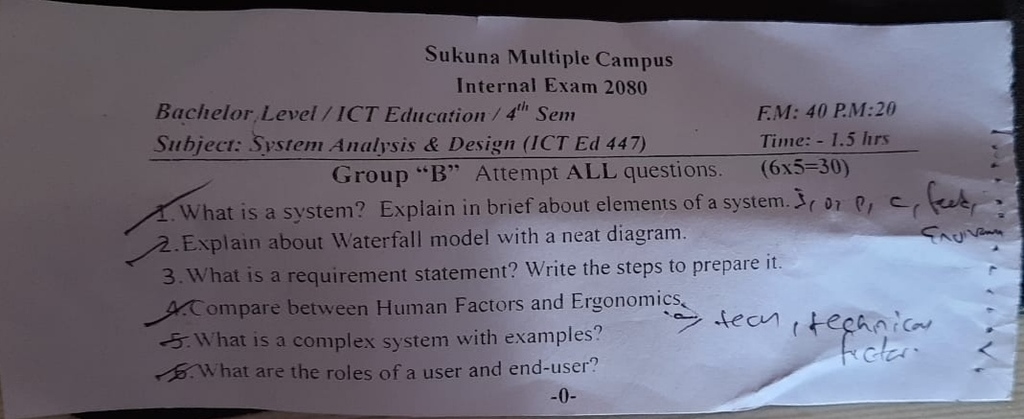
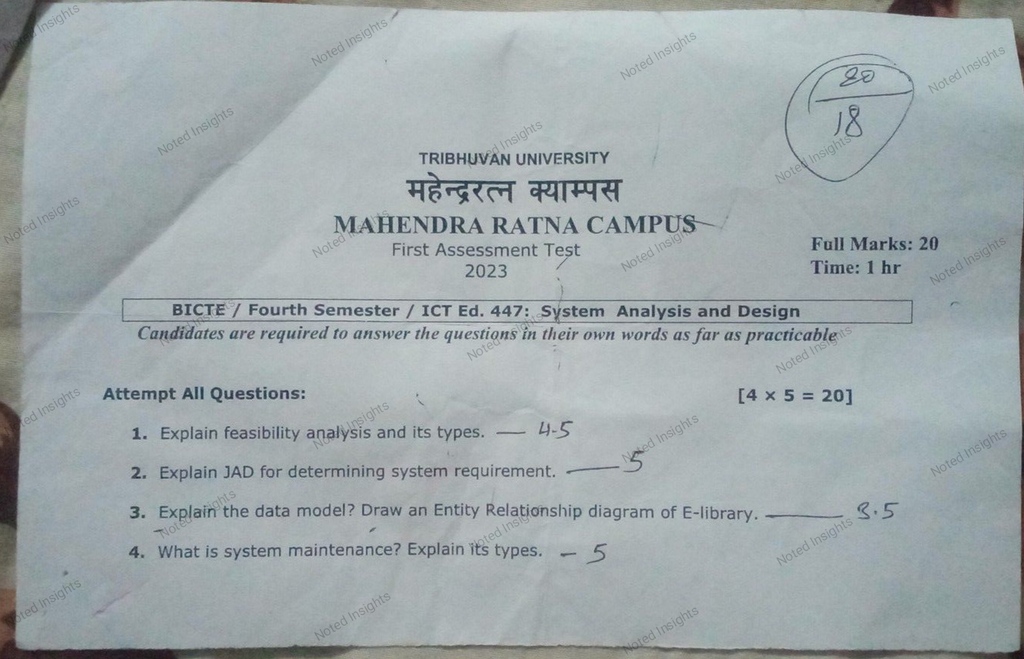
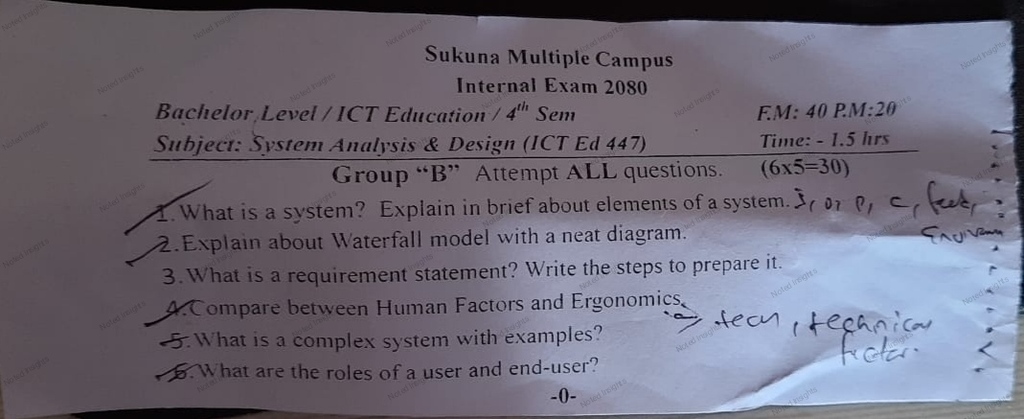
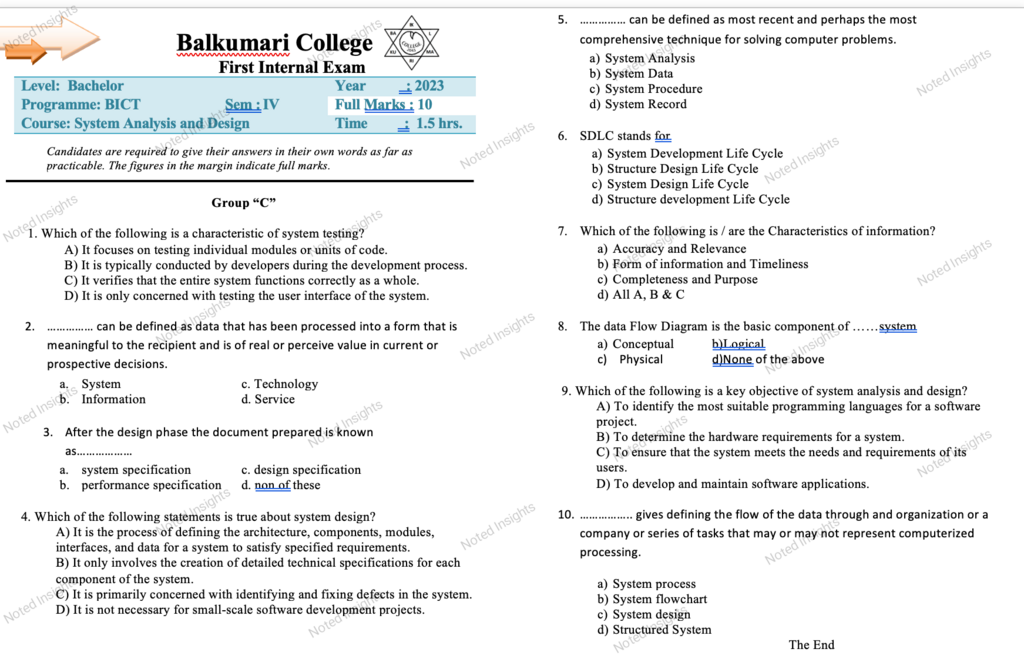
This collection gathers Tribhuvan University BICTE 4th semester System Analysis and Design old questions, covering official TU board exams and college-level pre-board assessments from 2075 BS through 2080 BS. Registered under course code ICT. Ed. 447 under the Faculty of Education, the subject bridges core computer science methodologies with structured information systems pedagogy.
Practicing with these papers helps you see how questions recur across academic sessions, ranging from objective multiple-choice items to detailed analytical problems. By working through them under timed conditions, you can assess your readiness and build confidence for the upcoming board examinations.
BICTE 4th Semester System Analysis and Design Question Papers


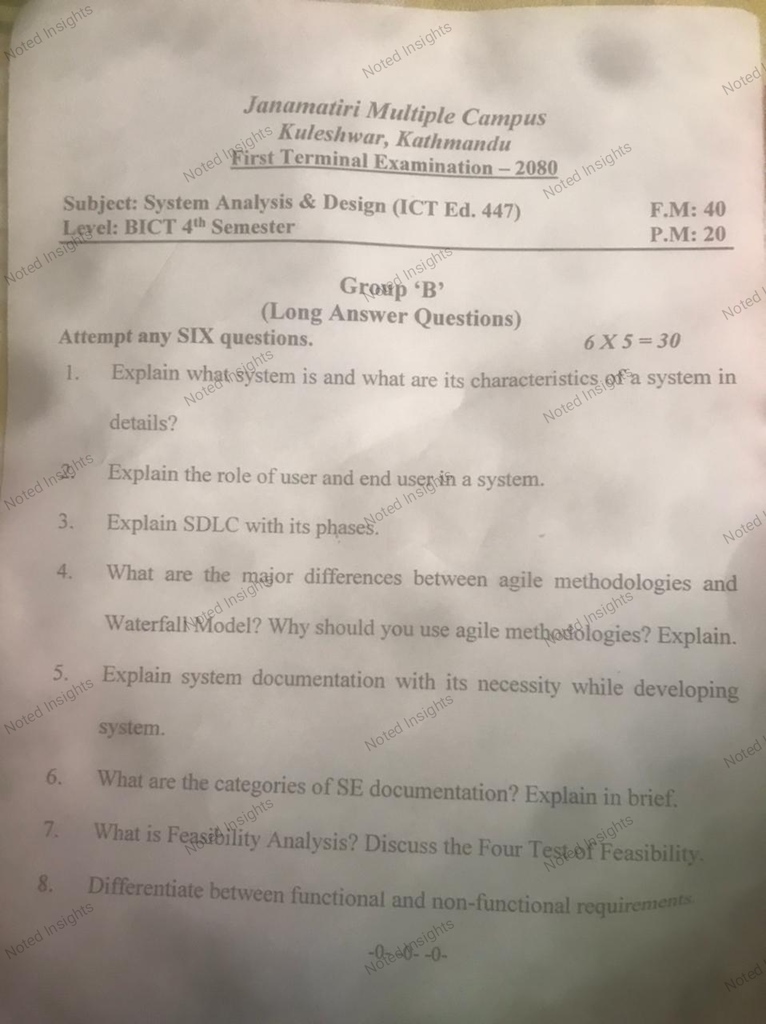
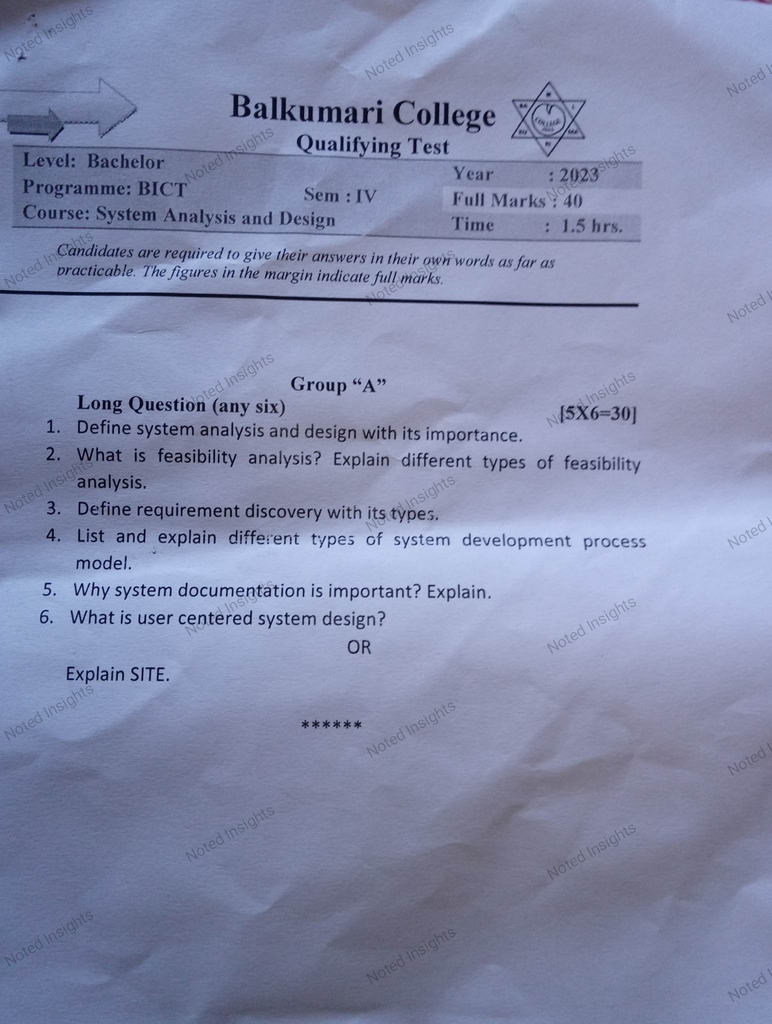
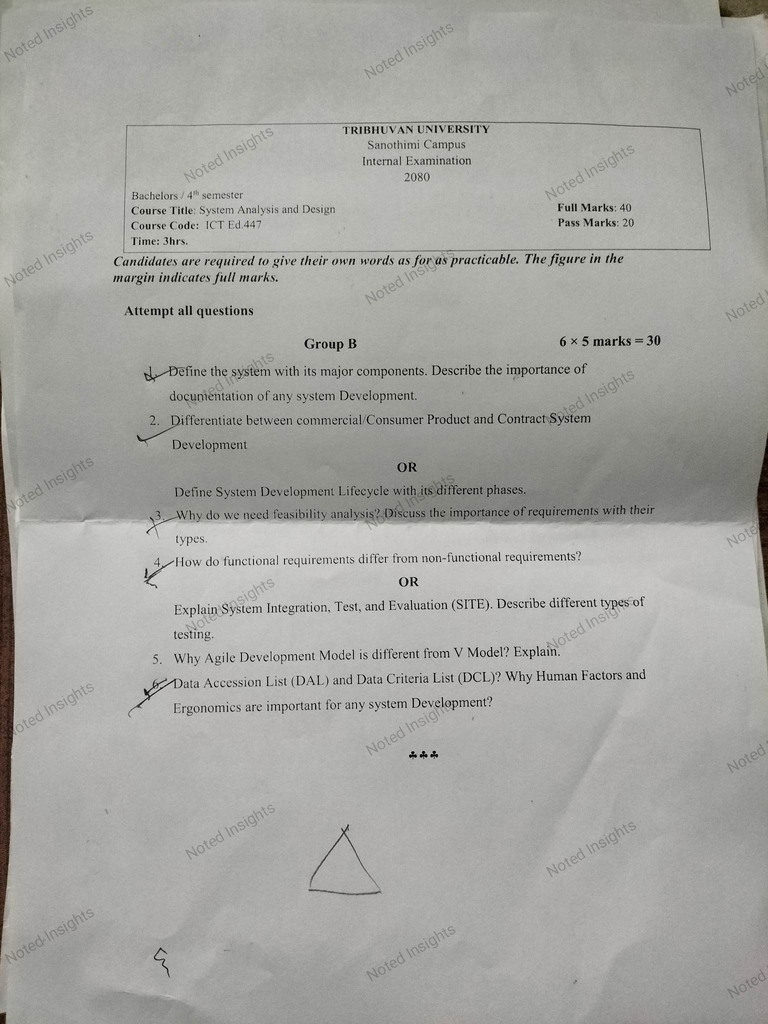

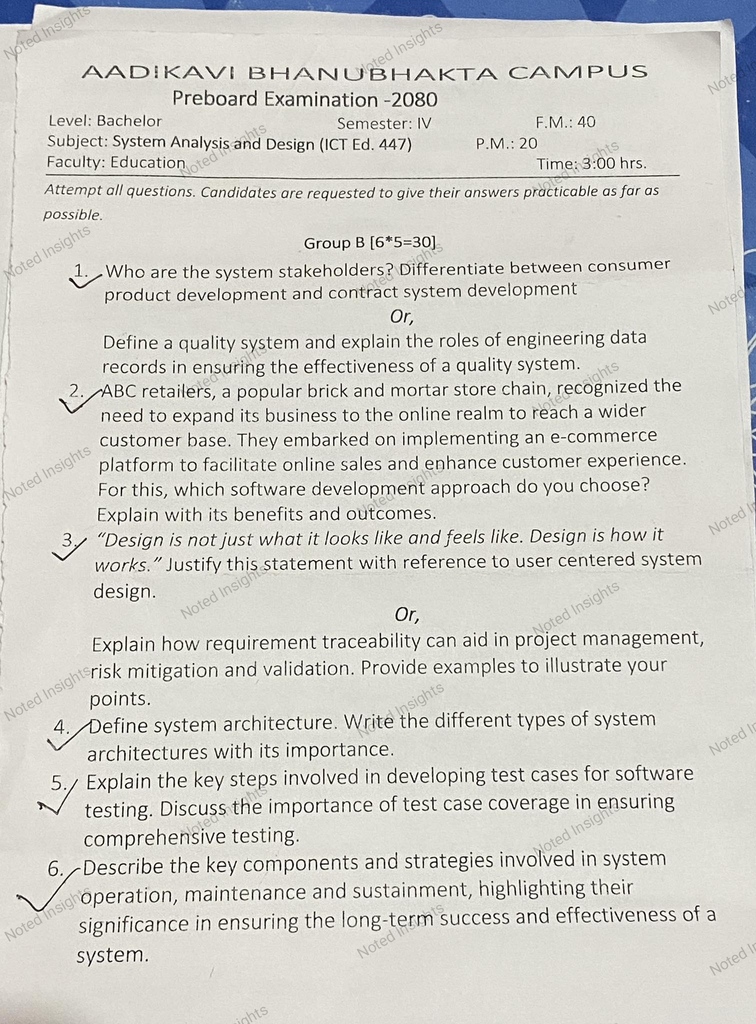


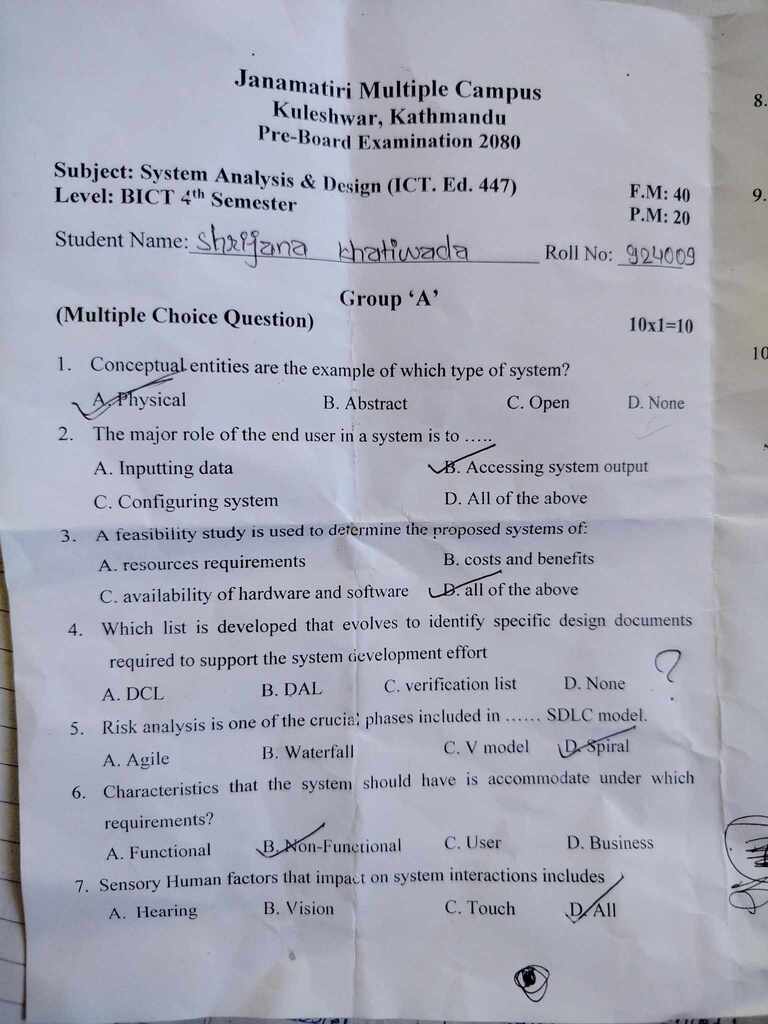


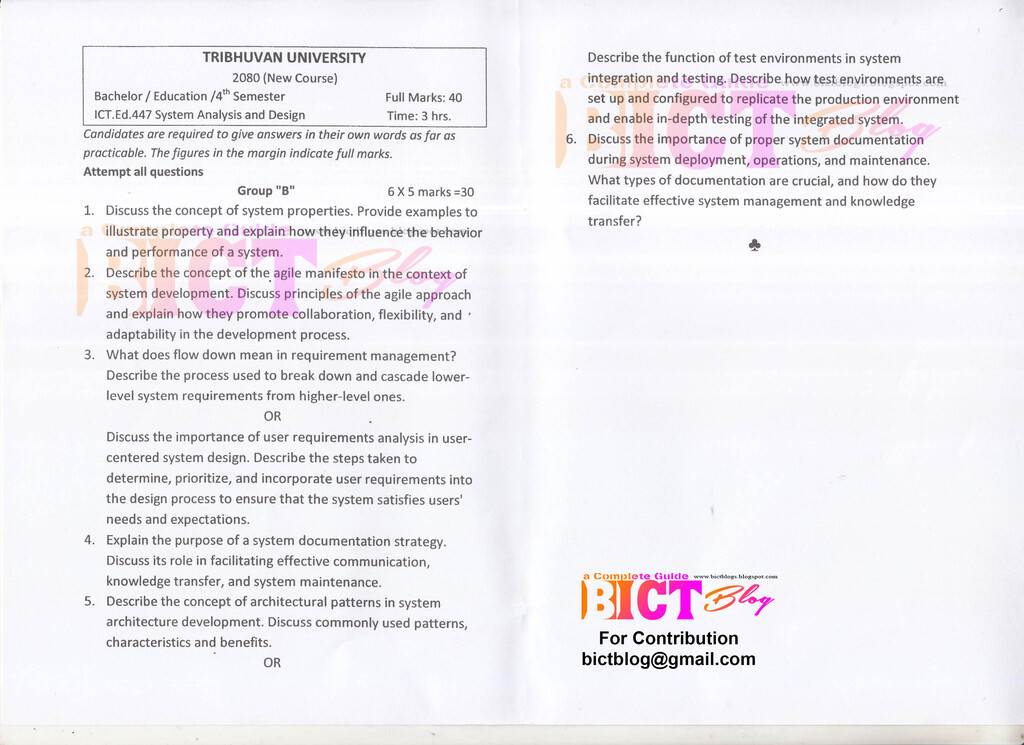
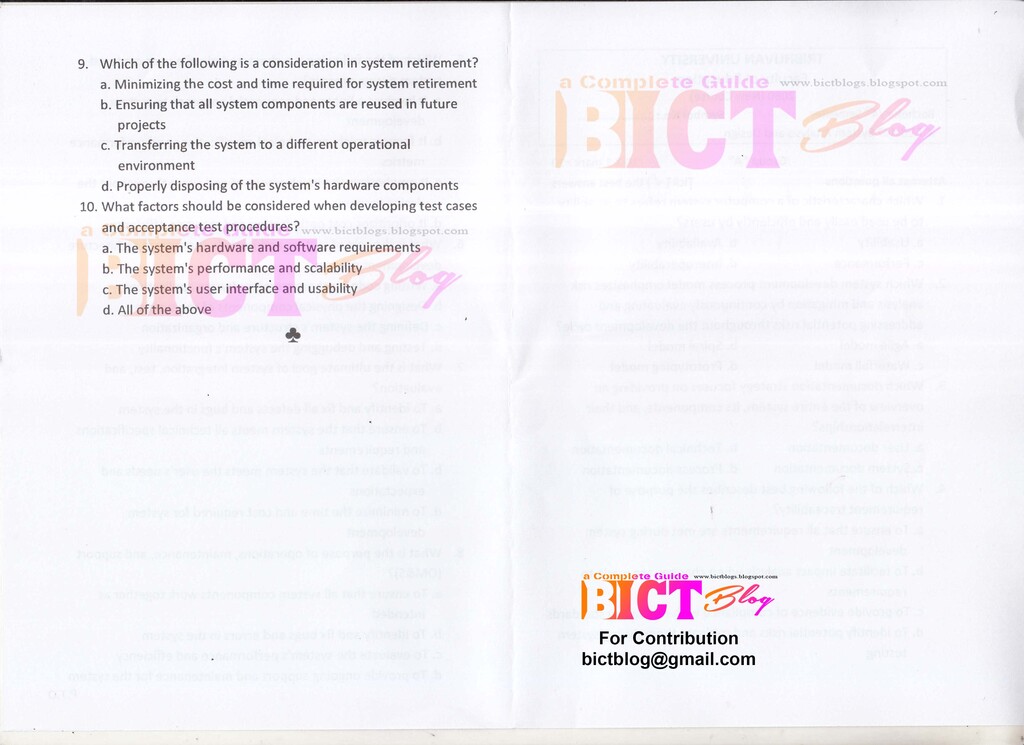
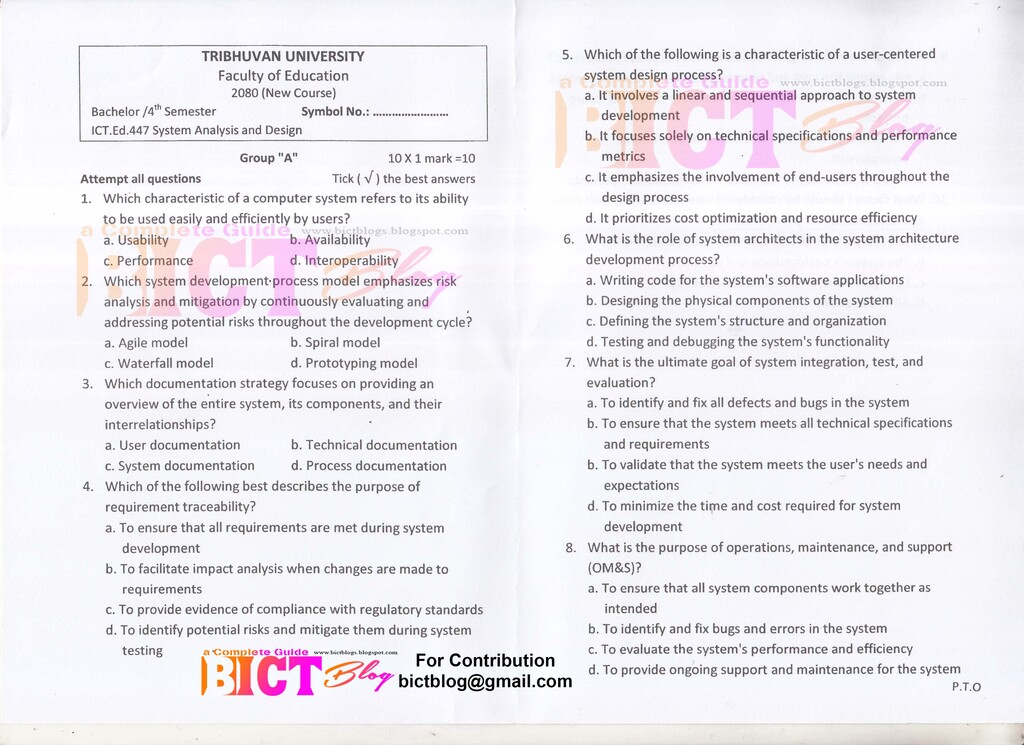
What the System Analysis and Design Papers Cover
The examination papers focus heavily on the fundamental principles of information systems and software engineering lifecycles. Students encounter questions testing their understanding of traditional waterfall sequences compared against modern agile methodologies, prototyping strategies, and the Capability Maturity Model (CMM). These questions demand a clear grasp of project workflows and the rationale for selecting appropriate development life cycles.
Requirement engineering and feasibility analysis form another core pillar of the assessments. The questions routinely examine functional versus non-functional requirements, elicitation techniques, traceability, and the standard tests of economic, technical, operational, and schedule feasibility. Evaluators frequently ask students to illustrate these concepts using realistic scenarios, such as university administration systems or retail operations.
System modeling and design tools appear consistently throughout the papers. You will find prompts requiring the formulation of data flow diagrams, context diagrams, decision tables, decision trees, and unified modeling language artifacts like use case and class diagrams. Mastering the formal notations and logical relationships within these diagrams is essential for scoring well on scenario-based design questions.
Finally, the papers emphasize post-development phases including software verification, maintenance types, and human factors. Questions test your knowledge of test case design, system integration and evaluation, user-centered design principles, and ergonomics. Understanding how long-term system sustainment operates ensures you can answer both architectural and maintenance-focused questions effectively.
Exam Preparation Tips for BICTE System Analysis and Design
When preparing for System Analysis and Design, treat diagrammatic representations as high-scoring opportunities rather than mere illustrations. Practice sketching clean Data Flow Diagrams, context diagrams, and UML use case diagrams using standard notations for processes, data stores, external entities, and actors. Clear labeling and proper boundary definitions demonstrate your practical mastery to the examiner.
Do not simply memorize definitions of lifecycle models; ensure you can compare and contrast them using structured comparative tables. Examiners frequently ask for distinctions between Agile and Waterfall models, or between V-models and iterative prototyping. Highlighting trade-offs regarding flexibility, client involvement, risk management, and documentation requirements will set your answers apart.
Pay close attention to requirement categorization and scenario-based logic problems like decision trees. When given a narrative such as a payroll calculation or admission workflow, clearly identify conditions and resulting actions before drawing your decision tree or table. Stating explicit assumptions where requirements seem open-ended shows analytical depth.
Allocate regular revision time for software testing, quality systems, and user-centered system design. Practice writing sample test cases with explicit inputs, expected outputs, and preconditions, while reviewing the four primary types of software maintenance: corrective, adaptive, perfective, and preventive. Grounding your theoretical answers with brief everyday examples makes your responses thorough and convincing.
Frequently asked questions
What is the course code and credit weighting for BICTE System Analysis and Design?
Under the Tribhuvan University Faculty of Education curriculum, System Analysis and Design carries the course code ICT. Ed. 447 in the 4th semester. The board examination assesses both objective concepts and analytical problem-solving skills.
What types of questions are asked in the TU BICTE SAD board exam?
The examination typically includes objective multiple-choice questions assessing foundational definitions and notations, followed by descriptive short-answer and scenario-based questions. Students are required to explain theoretical concepts, compare development lifecycles, and draw architectural diagrams like DFDs and UML charts.
How should I practice scenario-based questions for this subject?
The best way to prepare is to practice drawing decision tables, decision trees, context diagrams, and use case diagrams for common systems such as ATM banking, retail billing, and student admissions. Focus on extracting actors, boundary conditions, and transaction flows directly from the problem narrative.
Where can I find more BICTE 4th semester study resources?
Noted Insights provides syllabus outlines, lecture notes, and question banks across all BICTE semesters. You can navigate through the 4th semester section on the site to access resources for related subjects including Operating Systems and Database Management Systems.
About Noted Insights
Noted Insights was founded by Ajay Mahato in 2022 with the belief that education transforms lives and that high-quality learning materials should be accessible to every student, regardless of background or location. By providing free college notes, syllabus guides, curated old questions, and IT resources, the platform works to empower learners with the knowledge and skills needed to achieve their academic goals and excel in their future careers.
Our vision is to build a vibrant learning community where students can connect with mentors and peers, explore emerging technological concepts, and unlock their full potential in computing and education. Take your time working through each question paper, refine your system design techniques, and walk into your BICTE examination hall with confidence.


