
Balancing front-end design techniques with back-end scripting can make the BICTE 3rd semester board examination feel daunting, particularly when writing code snippets by hand under strict examination conditions. Practicing with authentic past papers is the most dependable way to build speed, verify syntax accuracy, and anticipate the distribution of marks across key modules.
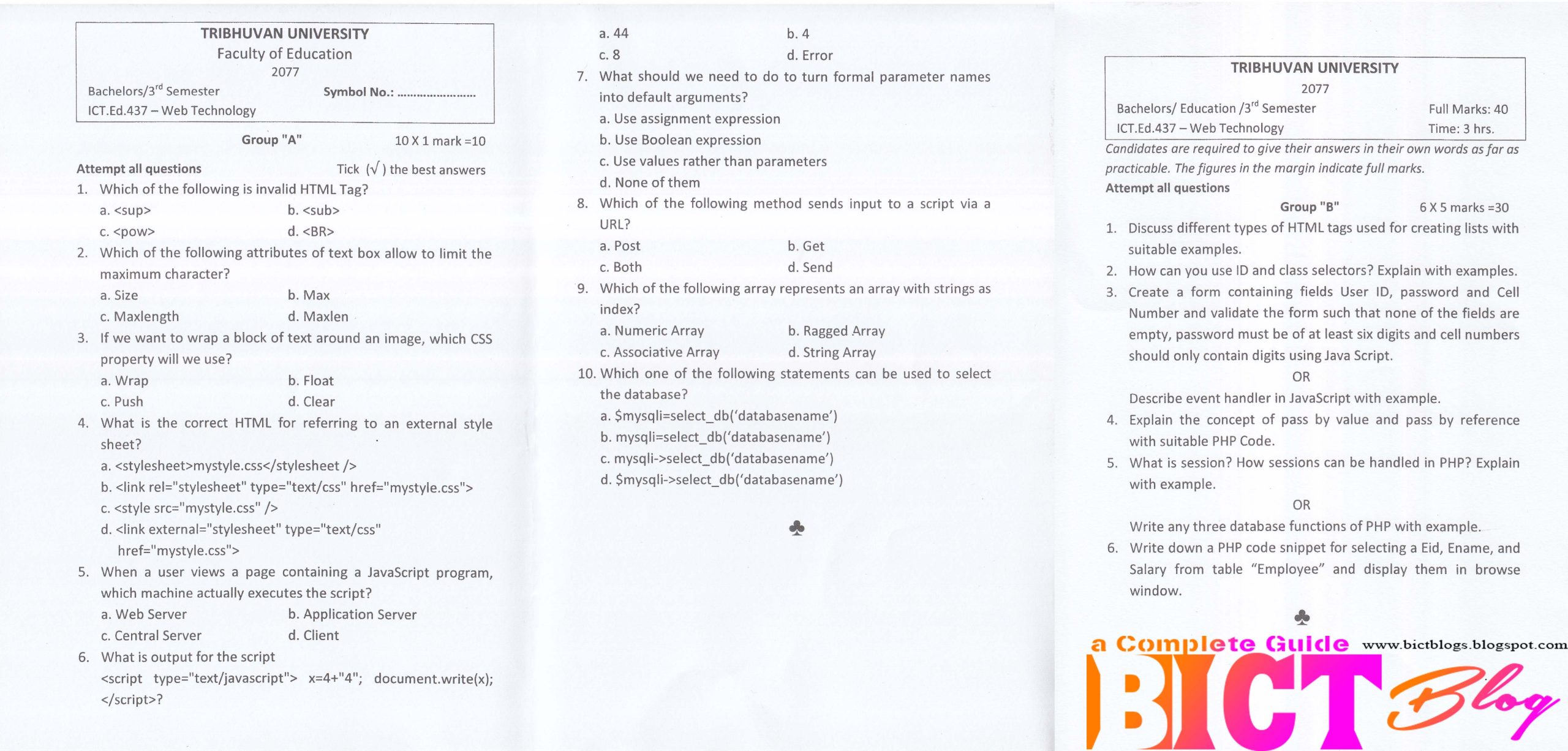
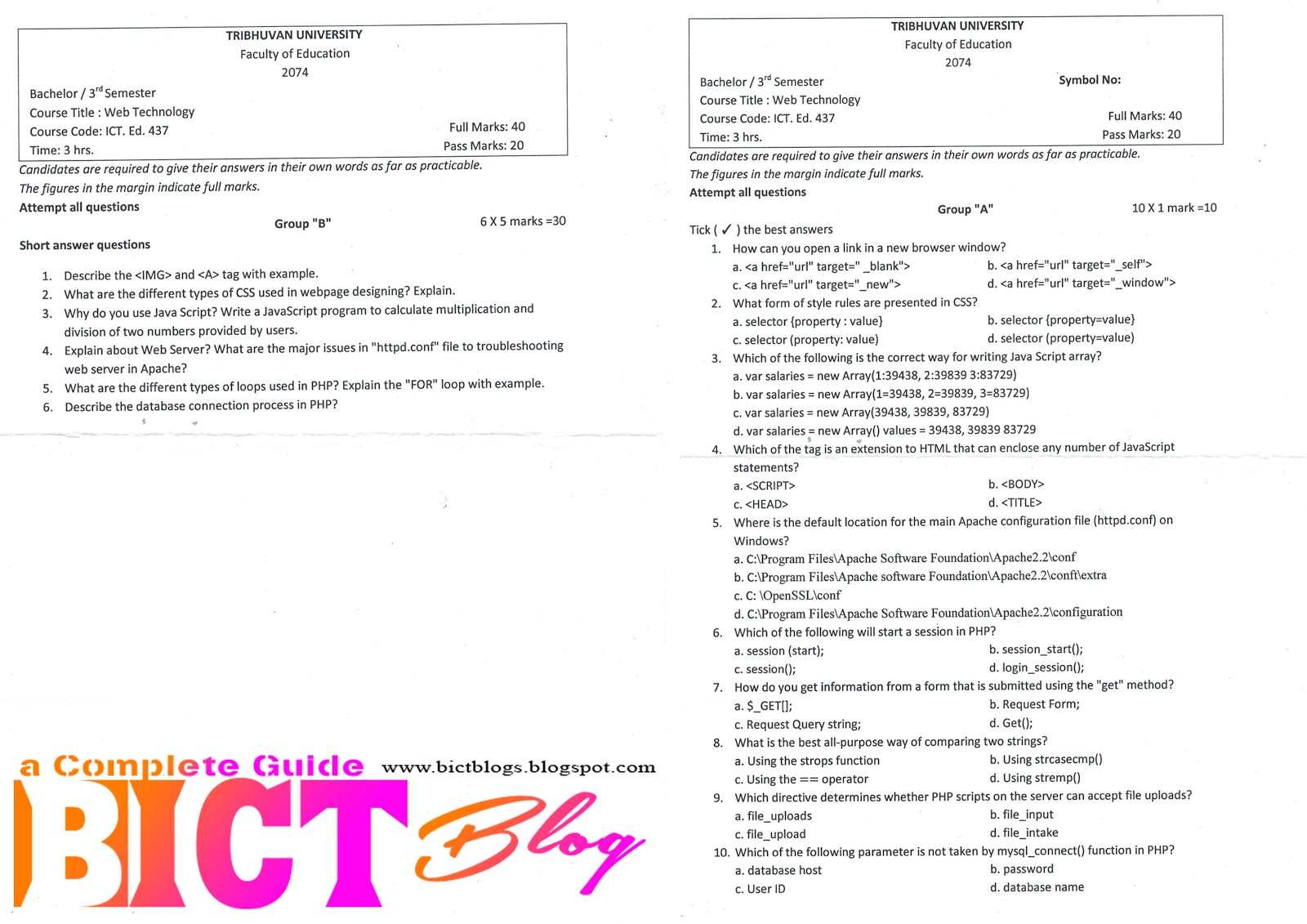
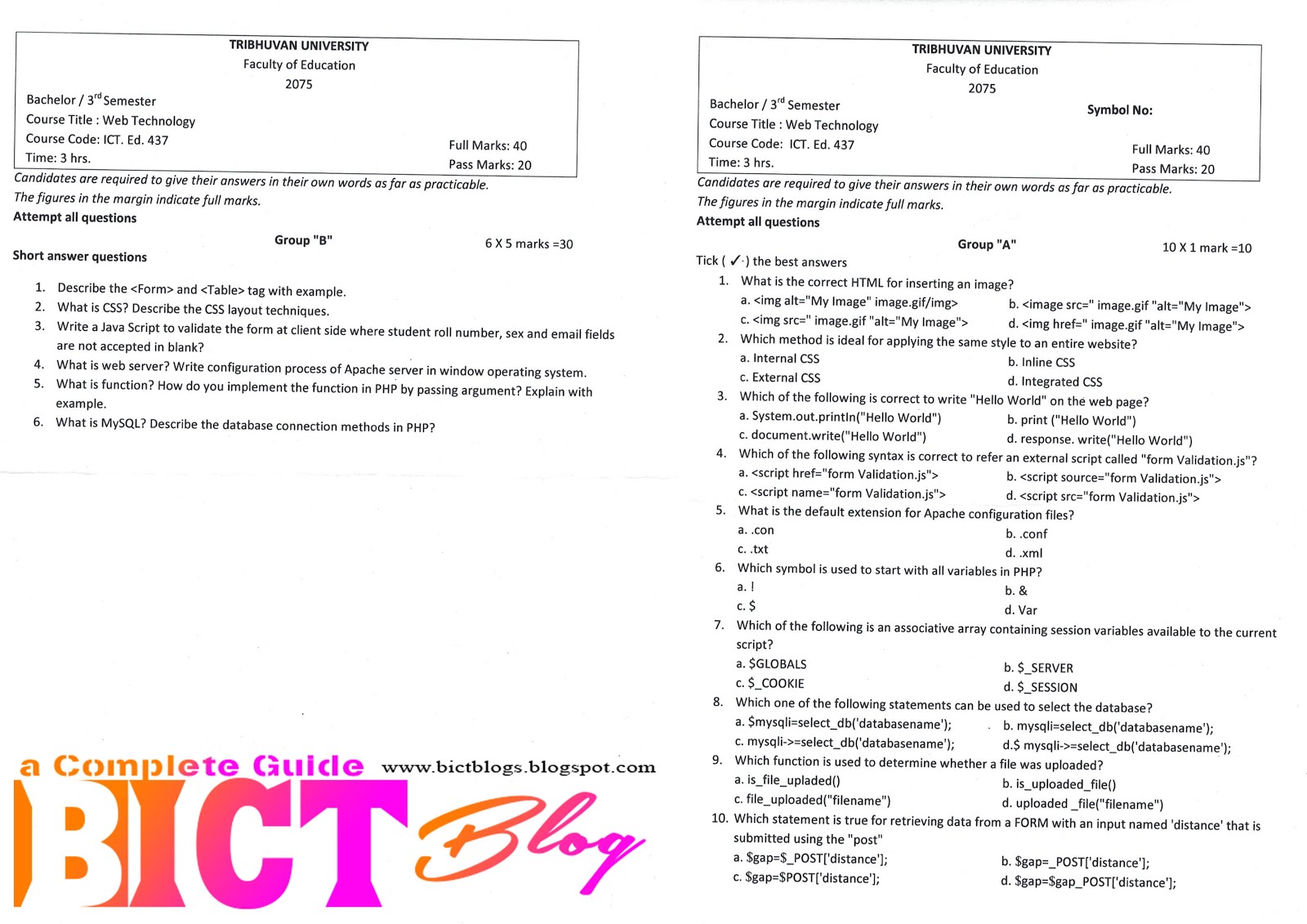
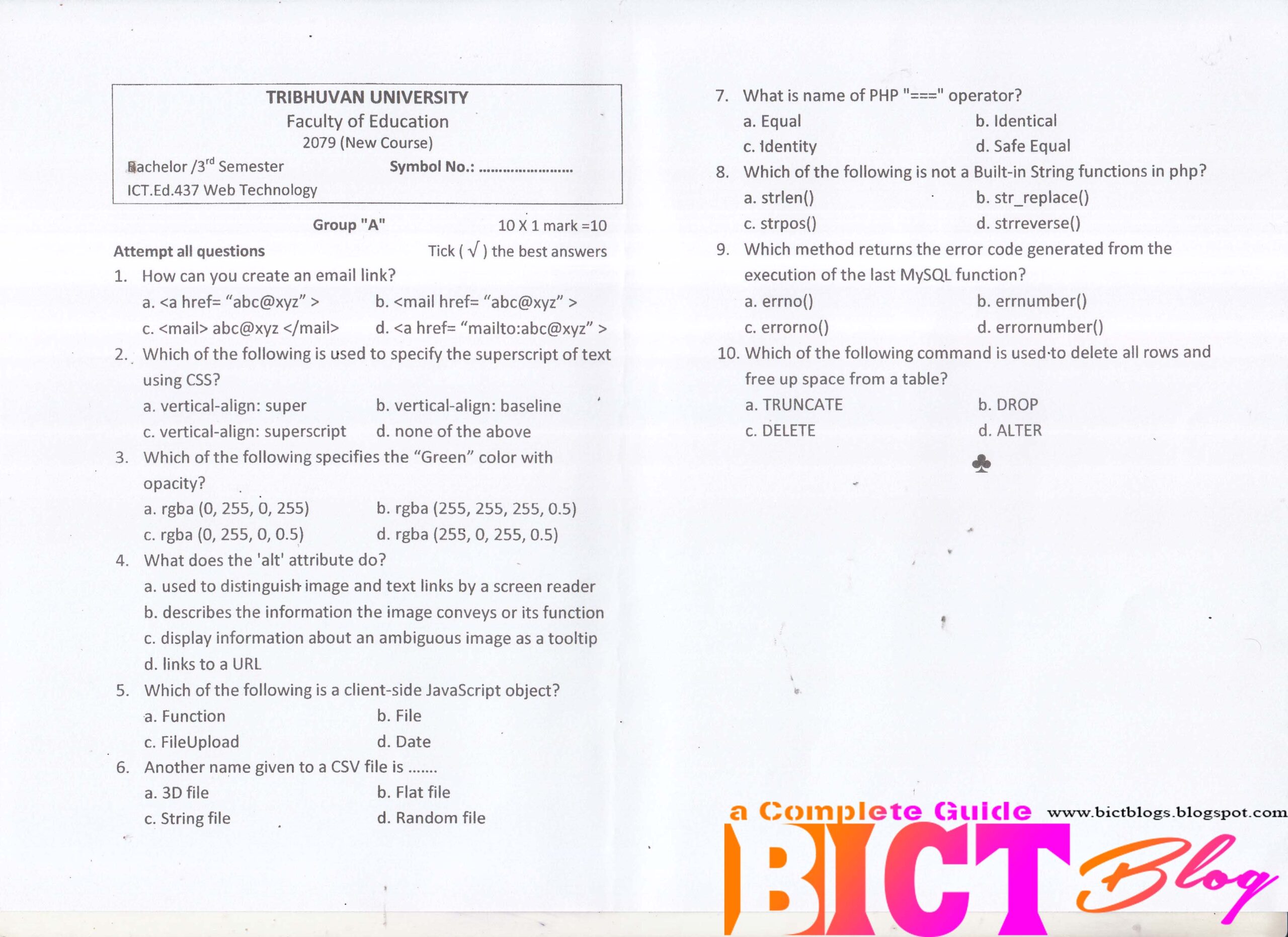
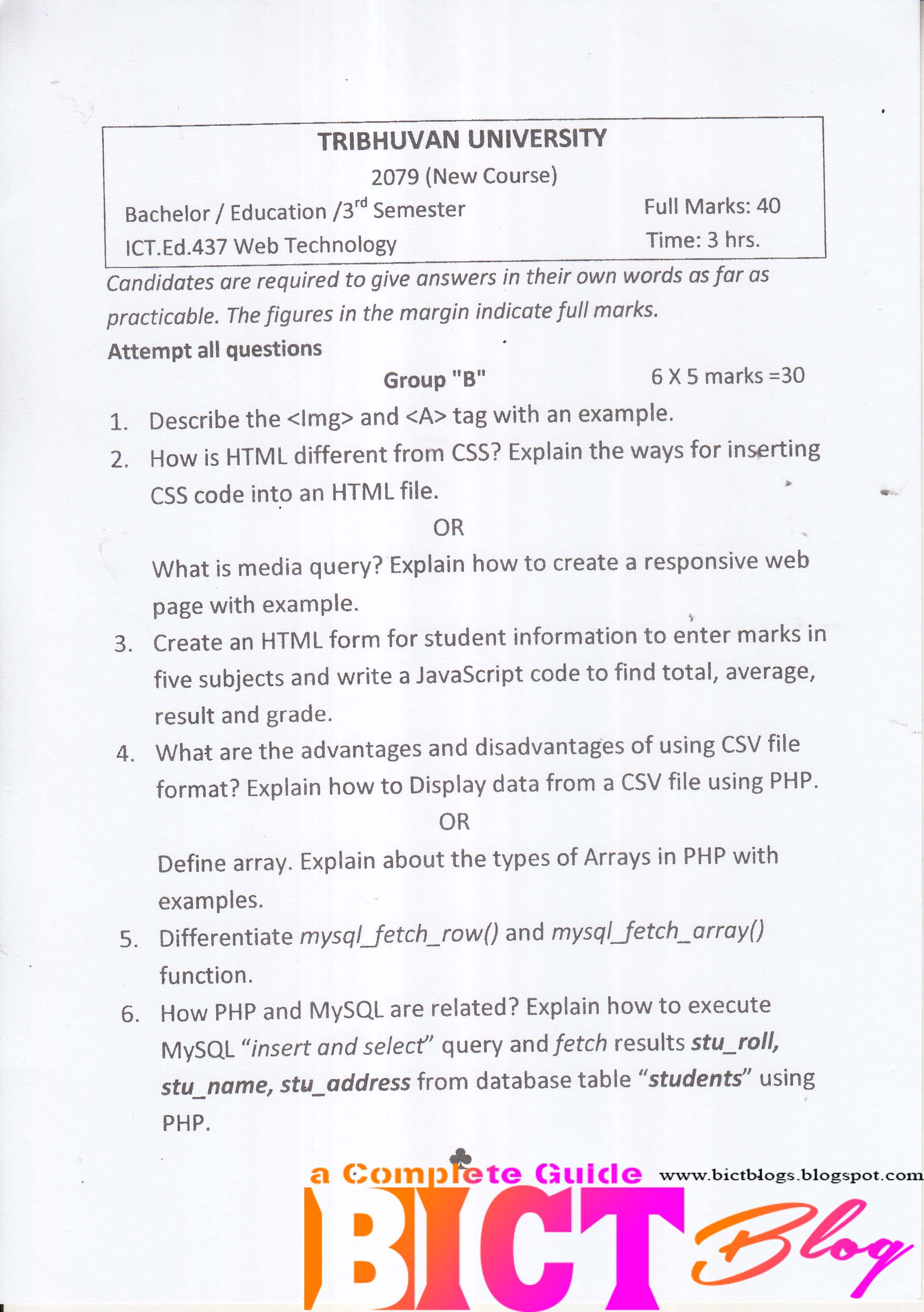
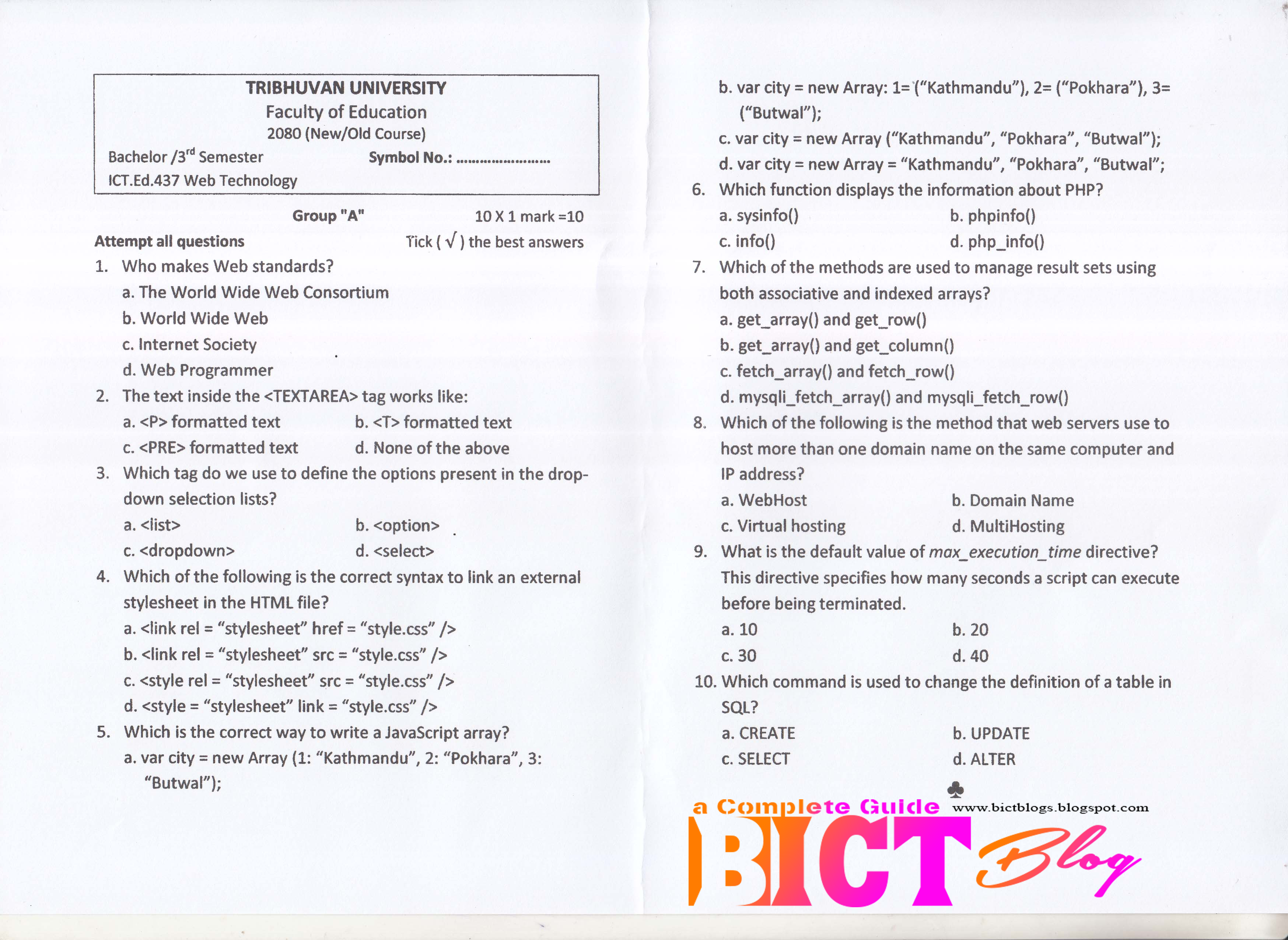
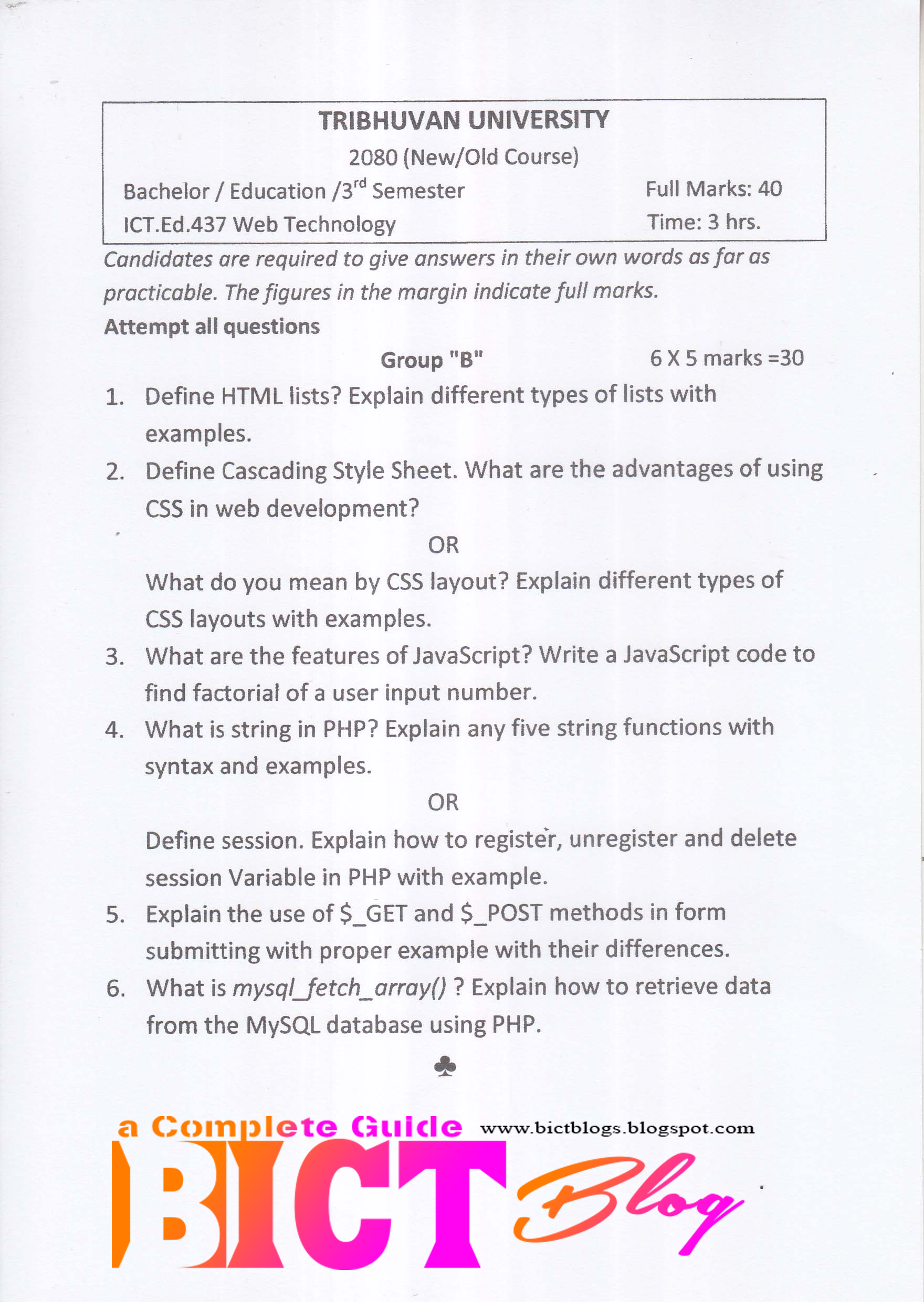
This collection brings together the official board question papers for Web Technology (Course Code: ICT.Ed.437) administered by Tribhuvan University’s Faculty of Education for Bachelor in Information and Communication Technology Education (BICTE) 3rd Semester candidates. The archive covers consecutive examination years from 2074 BS through 2079 BS, including papers reflecting the new course syllabus.
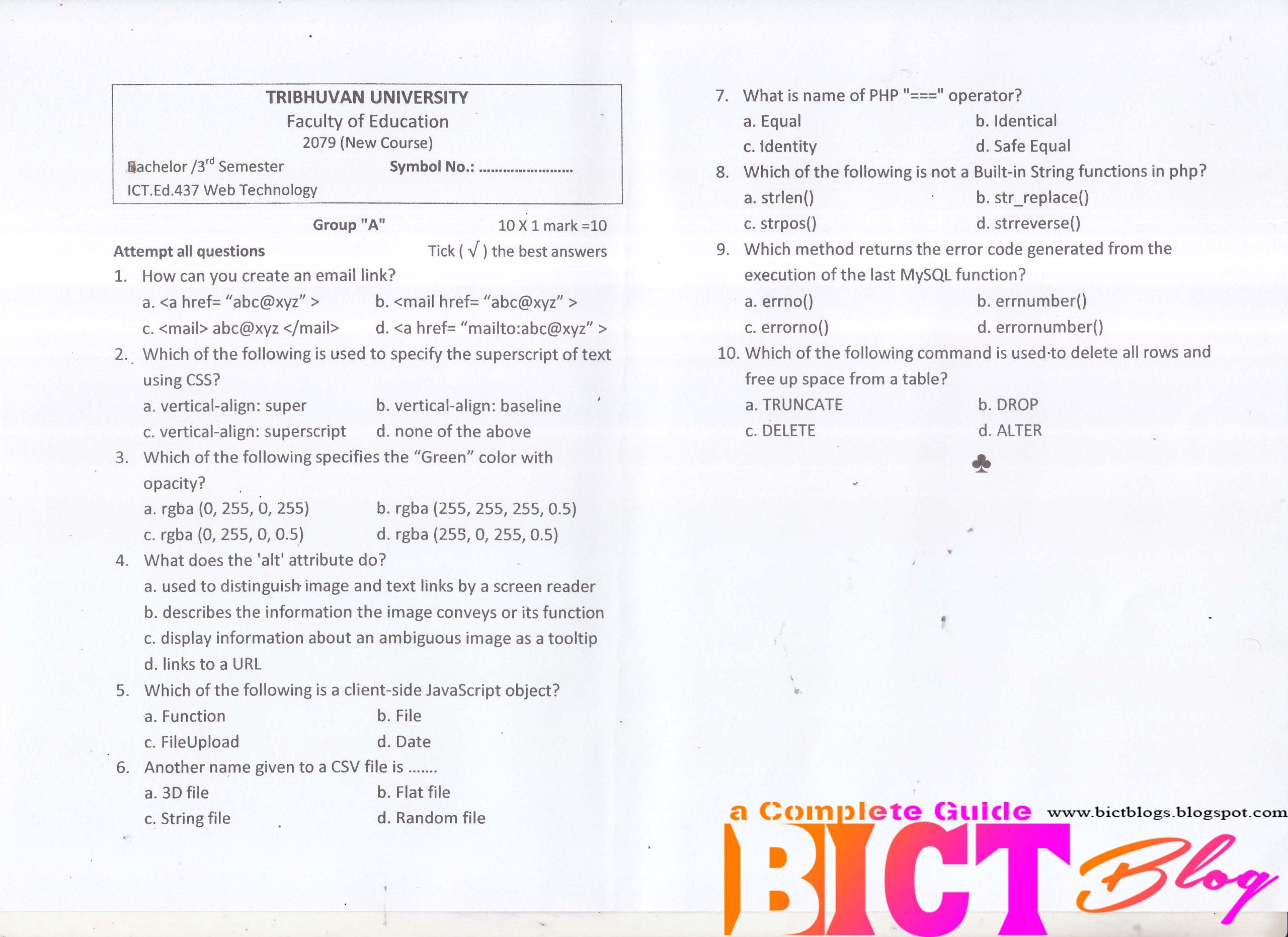
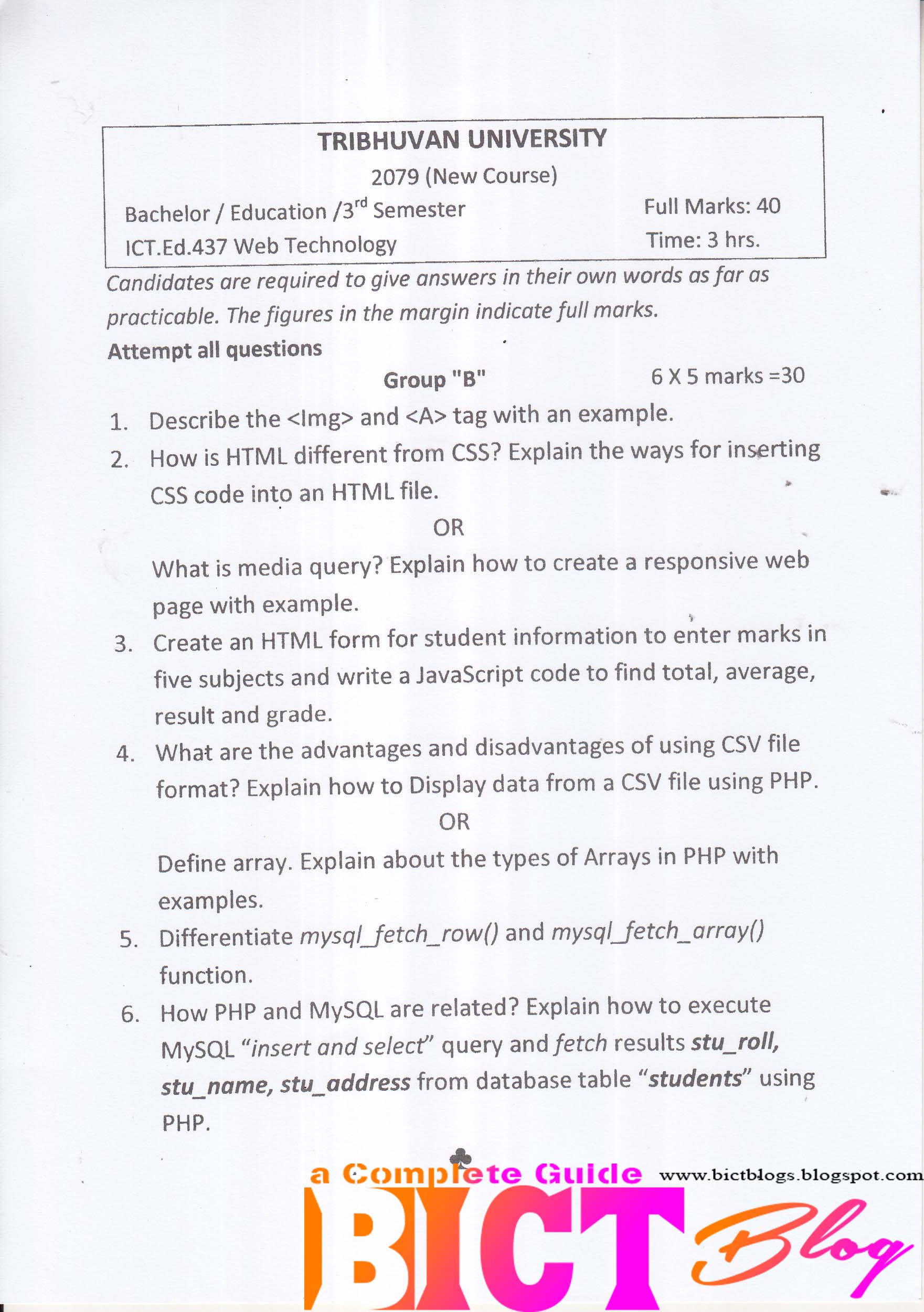
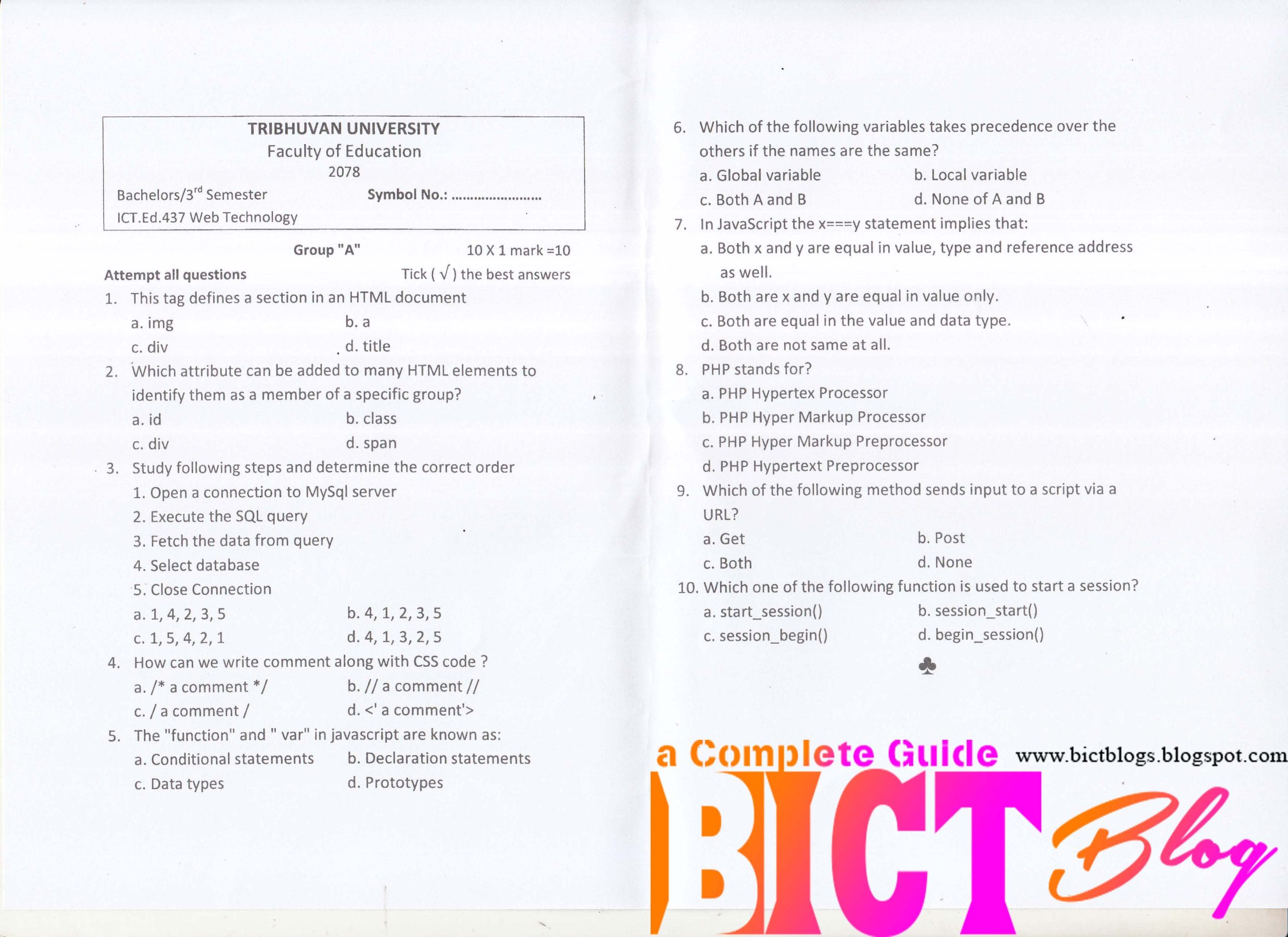
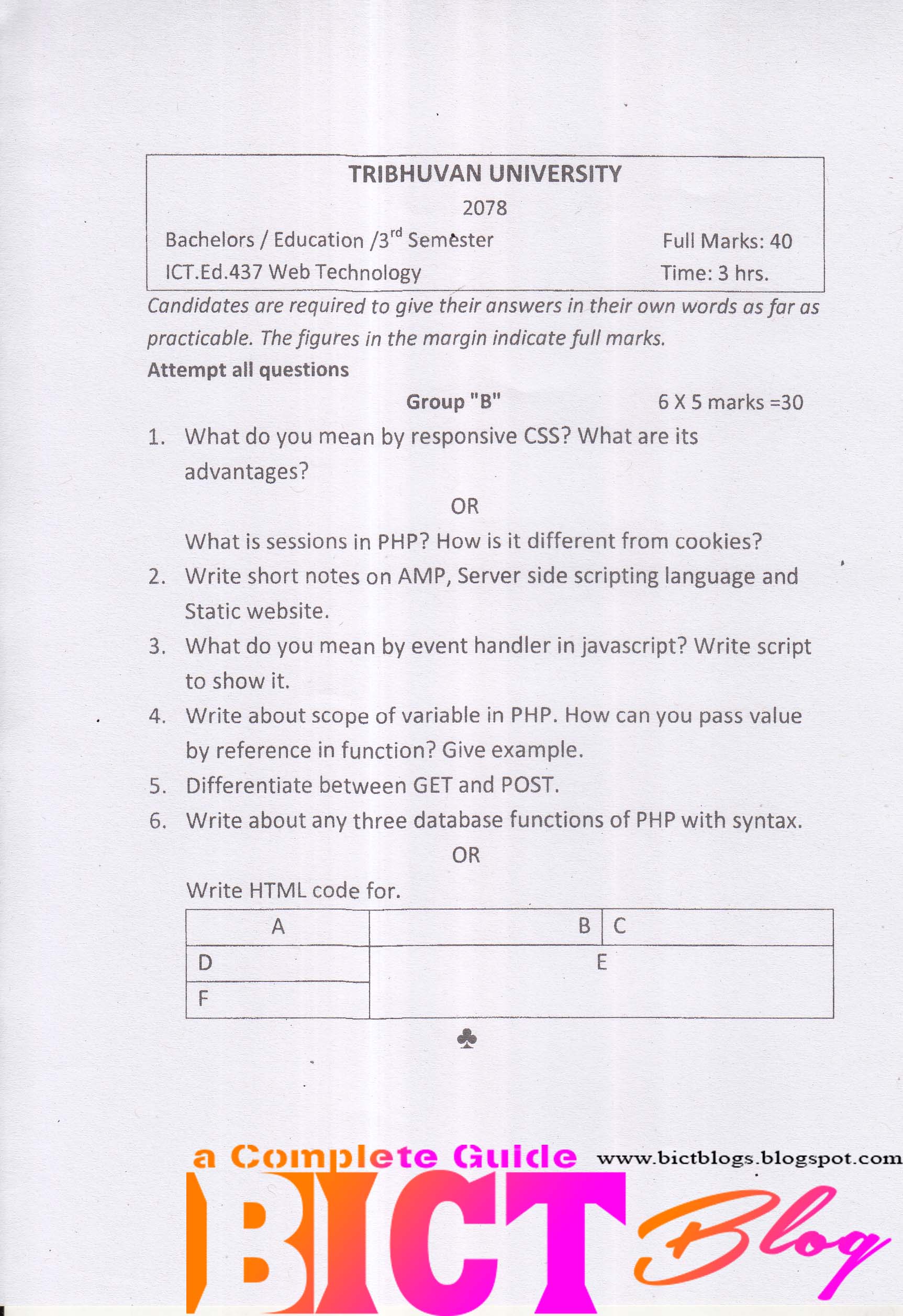
Each exam paper presents a standard university format comprising Group A multiple-choice questions and Group B descriptive questions. Working through these papers enables students to evaluate their grasp of web standards, server configurations, and database interactions before sitting for the final exam.
BICTE 3rd Semester Web Technology Question Papers 2074–2079 BS
Overview of the Web Technology Examination Paper
The Web Technology examination assesses a student’s ability to construct functional, accessible web pages and manage dynamic server-side interactions. Foundational questions explore semantic HTML elements, text markup, anchor links, embedded media, and tabular data presentations, alongside CSS layout mechanisms, style inclusion methods, and responsive media queries.
Client-side interactivity forms a substantial portion of the syllabus and examination questions. Students are evaluated on JavaScript syntax, execution behavior in client environments, event handling methods, and the creation of form validation routines that verify user input prior to form submission.
On the back-end side, the papers examine core server-side scripting concepts implemented through PHP. Common topics include variable scopes, passing parameters by value or reference, manipulating indexed and associative arrays, handling HTTP GET and POST requests, managing sessions and cookies, and basic web server configuration issues involving Apache environments.
Database connectivity is another critical assessment area. The exam prompts test candidates on integrating PHP scripts with relational databases using MySQL functions, establishing database connections, executing select and insert queries, and fetching data sets for presentation within web interfaces.
Preparation Tips for BICTE Web Technology Exams
Practice writing complete code implementations by hand on lined paper rather than relying solely on computer code editors. Hand-writing form elements, table structures, and PHP database functions trains you to remember exact syntax, opening and closing delimiters, and function argument orders without auto-completion assistance.
Pay special attention to JavaScript form validation logic, as examiners frequently ask candidates to validate user input such as empty fields, contact numbers, or passwords. Make sure your scripts define clear conditions, access form elements correctly, and return informative alerts or messages.
Master the fundamental operational differences between key web technologies and protocols. Be prepared to articulate distinctions between GET and POST transmission methods, client-side cookies versus server-side sessions, and various database row-fetching functions with concise technical comparisons and sample code.
Allocate dedicated revision time for the Group A multiple-choice questions. Reviewing built-in string functions, operator precedence, server configuration file paths, and CSS alignment properties across past papers ensures you do not surrender straightforward objective marks at the start of your examination.
Frequently asked questions
What is the structure of the TU BICTE Web Technology examination?
The Web Technology board paper is divided into two sections carrying forty marks in total. Group A features ten objective multiple-choice questions assessing definitions and syntax, while Group B includes six subjective questions requiring explanatory answers and practical code implementations.
Which web development technologies are covered in ICT.Ed.437?
The syllabus covers essential web building blocks including structural HTML markup, styling and layout with CSS, client-side scripting and form validation in JavaScript, back-end scripting with PHP, Apache web server configuration, and relational database management using MySQL.
Why should BICTE students practice past question papers from 2074 to 2079 BS?
Reviewing papers across multiple exam cycles helps students identify recurring technical topics, understand how university examiners structure coding prompts, and develop time management strategies needed to complete both theoretical explanations and handwritten code within three hours.
How should I prepare for writing code by hand in the theoretical exam?
Practice writing complete HTML form structures, JavaScript validation logic, and PHP database connection scripts on paper without using an editor or compiler. Pay close attention to tag closures, variable dollar prefixes in PHP, and SQL statement syntax to avoid losing marks on minor syntactic errors.
About Noted Insights
Noted Insights was founded by Ajay Mahato in 2022 to provide university students across Nepal with reliable academic materials, including lecture notes, question banks, and curriculum syllabi. High-quality educational resources should be accessible to all students regardless of location or economic background, equipping aspiring teachers and IT specialists with practical digital skills.
Through our expanding collection of open academic references, Noted Insights aims to support learners as they master technical subjects and prepare for professional careers in education and computing. Keep testing your coding skills on paper, stay consistent with your revision routines, and enter your board examination room with calm confidence.


