
Balancing programming labs with compulsory language subjects often leaves BICTE second semester students scrambling for revision time as board exams approach. When preparing for language and communication exams, practicing with authentic Tribhuvan University question papers is the most dependable way to understand what examiners expect.
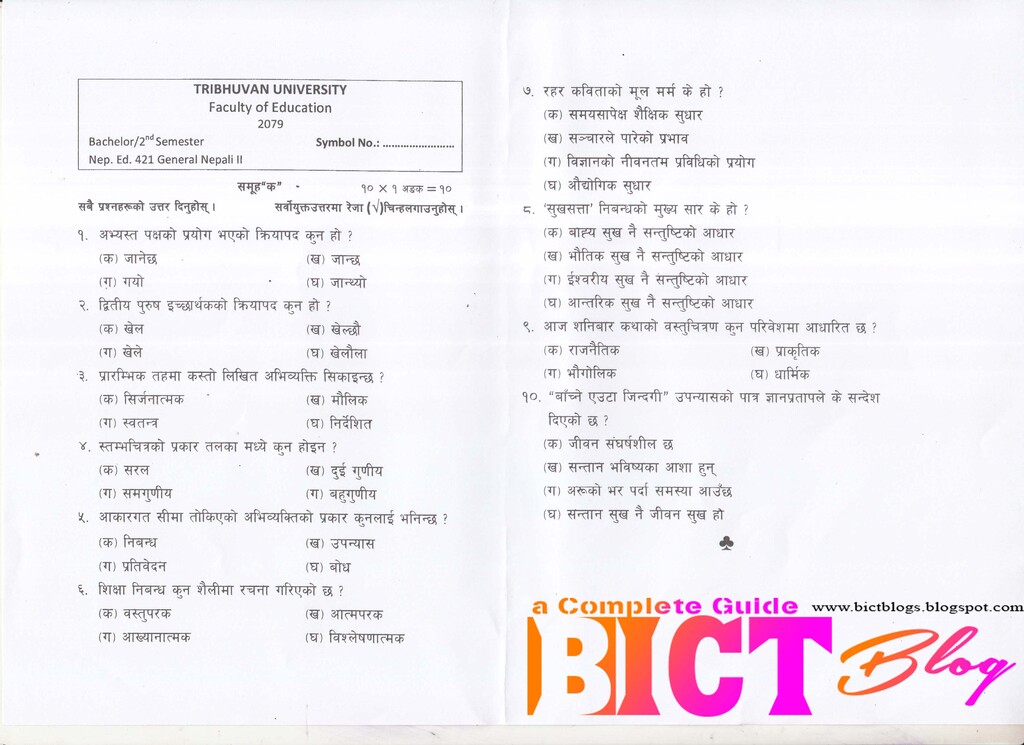
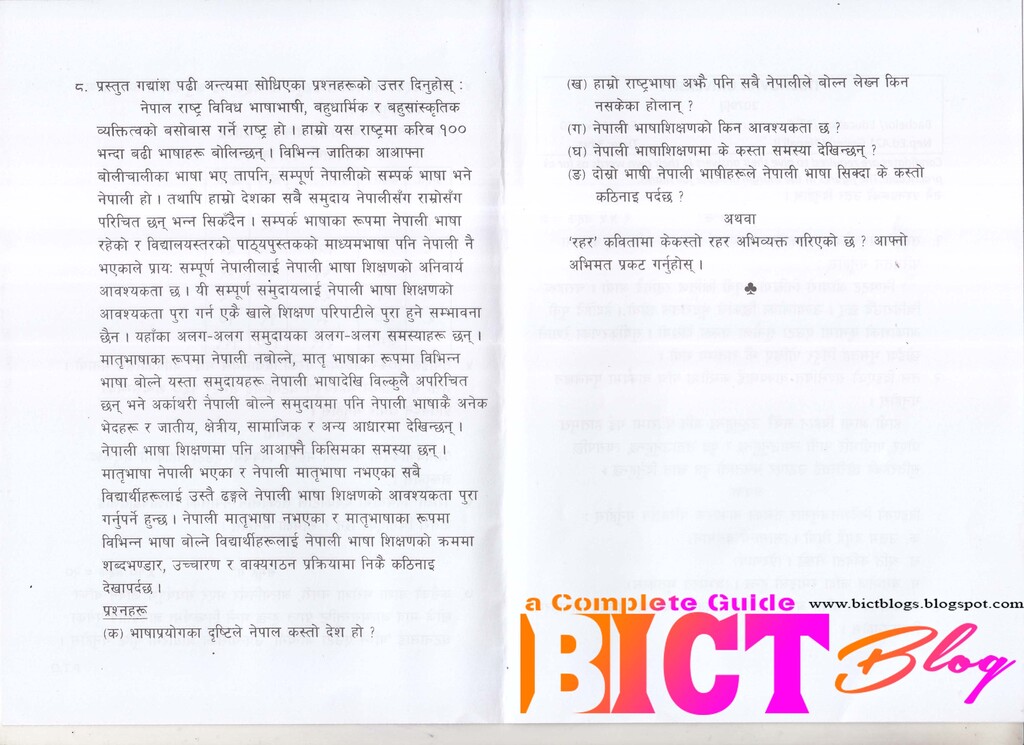
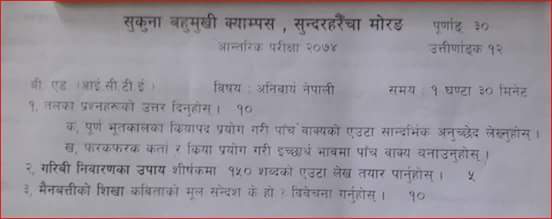
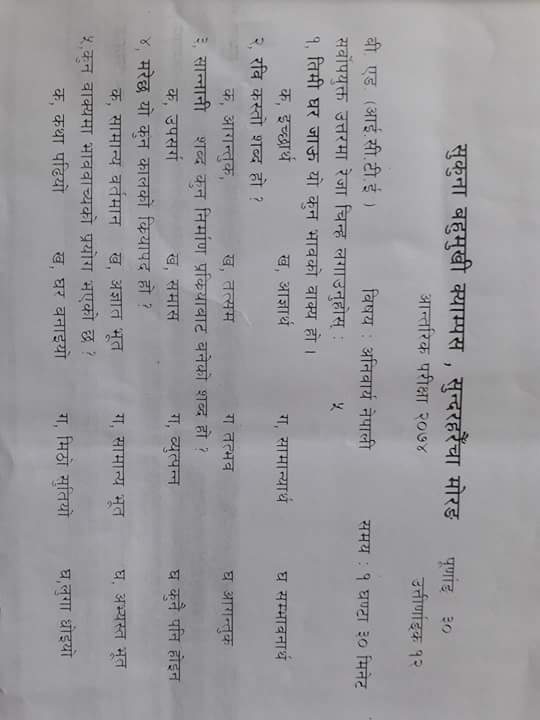
Studying Tribhuvan University BICTE 2nd semester General Nepali II old questions under course code Nep. Ed. 421 (साधारण नेपाली-२) gives you direct access to the real exam pattern. You will find official TU board examination sets from 2079 BS, including both regular and partial exam papers, alongside internal assessment papers from Sukuna Multiple Campus dated 2074 BS.
Working through these papers helps you master Nepali grammar structures, practice objective multiple-choice formats, and sharpen your analytical writing for literary and contemporary essays. Becoming familiar with actual exam questions will help you tackle the theoretical and creative writing sections with confidence.
General Nepali II Past Question Papers 2074–2079


What the General Nepali II Paper Covers
The General Nepali II curriculum evaluates a student’s grasp of functional Nepali grammar, communicative writing, data interpretation, and literary comprehension. In the board examination, questions begin with objective items that test precise grammatical concepts, including verb aspects, mood designations, cohesive grammatical devices, and basic literary identification.
The short-answer sections focus heavily on applied language skills and functional composition. Students are asked to draft coherent paragraphs using specific grammatical constraints, transform complex or compound sentences into simple structures, and convert tabular data or pie charts into descriptive prose. Practical writing tasks like event reporting, official correspondence, and formal article drafting also form a central part of this evaluation.
The subjective and long-answer questions examine reading comprehension and in-depth literary analysis. Unseen passages challenge candidates to synthesize ideas surrounding social development, inclusive education, and linguistic diversity in Nepal. Meanwhile, long-form essay prompts demand coherent arguments on contemporary issues such as environmental conservation and educational modernization.
Prescribed literary works require critical reflection rather than rote memorization. Questions frequently explore the philosophical themes in classical essays, gender perspectives in modern poetry, realistic portrayals in short stories, and social transformations depicted in Nepali novels. Demonstrating both technical accuracy and interpretive depth is key to securing top marks.
Exam Preparation Tips for General Nepali II
Begin your revision by solidifying core grammatical rules. Pay close attention to tense aspects such as habitual past (अभ्यस्त भूत) and unknown past (अज्ञात भूत), as well as sentence mood variations like optative (इच्छार्थ) and potential (सम्भावनार्थ). Practice rewriting given sample sentences according to strict grammatical instructions to ensure quick and accurate execution during the exam.
Dedicate time to functional data conversion and practical writing exercises. In recent examinations, candidates are frequently asked to interpret numerical survey tables or demographic charts into structured descriptive paragraphs. When practicing these tasks, ensure your introductory sentence states the core data clearly, followed by logical comparisons and a concise concluding summary.
Review the themes and characters of all prescribed literary texts thoroughly. Focus on the educational philosophy presented in Laxmi Prasad Devkota’s essay ‘Shiksha’, the societal critiques found in short stories such as ‘Aaja Shanibar’, the imagery of feminine resilience in poems like ‘Mainbattiko Shikha’, and the thematic evolution of characters in the novel ‘Baanchne Euta Jindagi’. Prepare concise thematic notes highlighting the main message and context of each piece.
Practice writing answers neatly within realistic time limits. Because the question paper contains multiple sections ranging from rapid objective choices to extended creative compositions, pacing is vital. Allocate dedicated time slots for objective questions, technical grammar transformations, and long essays so that you never have to rush through the concluding comprehension passage.
Frequently asked questions
What is the course code and university structure for General Nepali II?
General Nepali II is offered under course code Nep. Ed. 421 by Tribhuvan University, Faculty of Education, for second-semester undergraduate programs including BICTE and BEd. The course evaluates students through semester examinations covering objective questions, short-answer technical grammar, and descriptive literary analysis.
Which literary genres are tested in the General Nepali II exam?
The paper assesses comprehension across multiple literary forms, including modern essays, reflective poetry, realist short stories, and contemporary novels. Prominent prescribed texts include Laxmi Prasad Devkota’s essay ‘Shiksha’, poems such as ‘Rahar’ and ‘Mainbattiko Shikha’, and the novel ‘Baanchne Euta Jindagi’.
How should BICTE students practice data-to-paragraph conversion questions?
Students should examine sample statistical tables and bar or pie charts from past papers. Practice summarizing the presented numbers objectively, comparing key indicators, and writing in clear, formal Devanagari script without injecting unsubstantiated personal opinions.
Are internal assessment papers from affiliated colleges helpful for board exams?
Yes, internal assessment question papers from campuses like Sukuna Multiple Campus follow the curriculum prescribed by Tribhuvan University. Solving these internal sets helps test your readiness on foundational grammar rules, sentence transformations, and short analytical questions before sitting for the final board examination.
About Noted Insights
Noted Insights was founded by Ajay Mahato in 2022 with the core belief that education transforms lives and that high-quality learning resources should be accessible to every student across Nepal. By providing reliable question banks, syllabi, lecture notes, and reference materials, the platform aims to empower learners to achieve their academic goals and excel in their future careers.
Our vision is to build a vibrant learning community where university students have the guidance and tools needed to master technical skills alongside essential communication arts. Stay consistent with your revision, practice writing in Devanagari script every day, and approach your second semester board examinations with complete confidence.

